



403
Sorry!!
Error! We're sorry, but the page you were looking for doesn't exist.
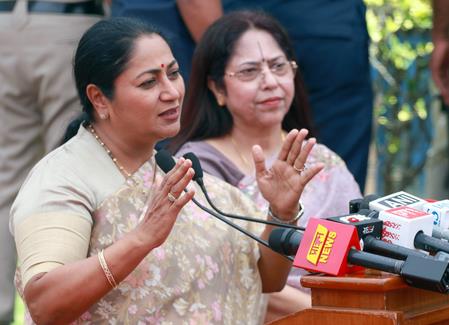
Delhi CM Rekha Gupta Joins Signature Campaign For Women Quota (Lead)
(MENAFN- IANS) New Delhi, April 10 (IANS) Delhi Chief Minister Rekha Gupta on Friday visited the Arts Faculty at Delhi University to support a signature campaign backing the Nari Shakti Vandan Act that promotes greater political representation for women.
The law reserves one-third of the women's quota in the Lok Sabha and State Legislative Assemblies.
Addressing the gathering, she underlined the urgent need to increase women's participation in governance and policymaking.
Chief Minister Gupta said meaningful change can only happen when women occupy decision-making positions, enabling them to address issues that directly affect society, families and their own lives.
She pointed to Delhi government initiatives such as 'Lakhpati Bitiya' and 'Anmol', describing them as outcomes of a sensitive and inclusive approach aimed at strengthening women's empowerment and social security.
The event also highlighted the importance of women's leadership and equal representation through messages like 'It's time for women to lead' and 'Empowered women, prosperous nation.'
The Chief Minister described the 'Nari Shakti Vandan Act' as a historic step and expressed gratitude to Prime Minister Narendra Modi for its passage. She said the legislation carries forward the journey from 'Beti Bachao' to 'Beti Badhao.'
She noted that the demand for greater political representation for women has been decades in the making.
Tracing its roots back to 1931, she said the law enacted in 2023 reflects a long and persistent struggle.
She emphasised that ensuring its effective implementation is now a collective responsibility.
The Chief Minister urged young people to actively support the initiative and help turn it into a mass movement, adding that true democratic strength lies in equal participation in decision-making.
Expressing confidence in the law's impact, CM Gupta said it would redefine political representation in the country and help build a stronger, more balanced and progressive democracy.
A large number of students, teachers and citizens attended the event and extended their support to the campaign. People were encouraged to register their participation by giving a missed call to 9667173333.
After the campaign, the Chief Minister interacted informally with students and women faculty members at a tea stall on campus.
Over tea, she listened closely to their views, experiences and suggestions.
The interaction, she said, reflected the importance of open and direct communication between public representatives and citizens, noting that the simpler and more accessible this dialogue is, the more effective and people-centric policymaking becomes.

Legal Disclaimer:
MENAFN provides the
information “as is” without warranty of any kind. We do not accept
any responsibility or liability for the accuracy, content, images,
videos, licenses, completeness, legality, or reliability of the information
contained in this article. If you have any complaints or copyright
issues related to this article, kindly contact the provider above.
Most popular stories
Market Research

More Story





Comments
No comment