






403
Sorry!!
Error! We're sorry, but the page you were looking for doesn't exist.
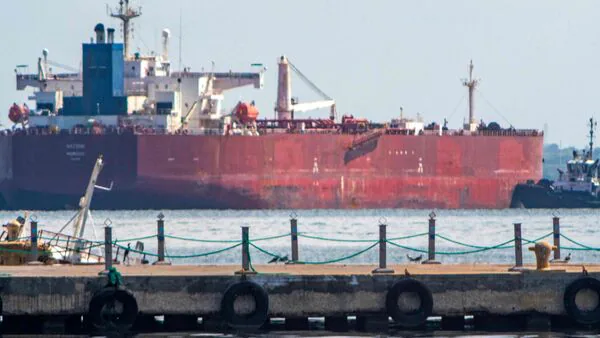
US-Sanctioned Tanker Carrying First Shipment Of Iranian Oil To India Since 2019 Gets Rerouted To China
(MENAFN- Live Mint) A US-sanctioned tanker carrying Iranian oil, the first Indian crude purchase from Tehran after 2019, has reportedly changed its course mid-way and is now heading to China. The Aframax tankerPing Shun set sail for India earlier this week, carrying about 600,000 barrels of crude oil loaded from Kharg Island around 4 March.
Ping Shun, which was built in 2002 and sanctioned by the US in 2025, is owned by China-based Nycity Shipmanagement and is often associated with transporting Iranian crude oil.
Where is Ping Shun?Ping Shun was originally scheduled to arrive at Vadinar port in Gujara on Saturday, 4 April. But according to ship-tracking data, Ping Shun is currently signalling Dongying, China, as its destination.
There is no confirmation that the destination that the ship's Automatic Identification System (AIS) transponder - a tracking system mandated on most commercial vessels - is indicating is the final, and it may not change at any time during the transit.
Also Read | Strait of Hormuz: Two Indian LPG vessels reach Gujarat's Vadinar Terminal“An Iranian crude vessel 'Ping Shun' that had been en route to Vadinar, India, over the past three days has dropped India as its declared destination near arrival and is now signalling China,” Sumit Ritolia, Lead Research Analyst, Refining and Modelling at commodity market analytic firm Kpler, told PTI.
Why did Ping Shun get rerouted?According to Ritolia, the shift in Pin Shun's destination appears to be payment-related, with sellers tightening terms and moving away from the earlier 30-60 day credit window toward upfront or near-term settlement.
It was not clear who the actual seller and buyer of the crude were.
Also Read | India's first SPM facility at IndianOil-Vadinar berths the 6,000th oil tanker“While such mid-voyage destination changes are not unprecedented with Iranian crudes, they highlight the increasing sensitivity of trade flows to financial terms and counterparty risk,” he said.
“If the payment issues are resolved, the cargo could still make its way to an Indian refinery. However, the episode underscores how commercial terms are becoming as critical as logistics in determining Iranian crude flows to other countries apart from China.”
US eases sanctions on Iranian oilIn mid-March, nearly three weeks into Operation Epic Fury, the US temporarily eased sanctions on Iranian oil for 30 days, allowing the sale of about 140 million barrels of crude oil and petroleum products already loaded on ships. The unusual move was taken in the wake of Iran's retaliatory measures to the US-Israeli strikes, including closing the Strait of Hormuz and attacks on oil and gas infrastructure in the Middle East.
This sanctions waiver allowed countries, including India, which was a major buyer of Iranian crude until the US sanctions in 2018, to resume buying oil from Tehran.
Indian purchase of Iranian oilIndia used to buy 518,000 barrels per day of Iranian oil in 2018, which slowed to 268,000 bpd between January and May 2019 when the US granted waivers to a few buyers. There have been no imports since.
It was estimated that of the 95 million barrels of Iranian oil on vessels at sea, 51 million could be sold to India, with the remaining sold to China and other Southeast Asian countries before the temporary window expires on 19 April.
Iran seeks oil payments in YuanAccording to reports, the rerouting of Ping Shun to China could be linked to the payment method. Though the US issued a 30-day waiver for the sale of Iranian crude, it is unclear how payments will be made as Tehran remains cut off from SWIFT, the global messaging network used by banks and financial institutions to securely send and receive information about financial transactions.
Also Read | Three Oman-flagged tankers enter Strait of Hormuz avoiding Iranian watersRecently, following Iran's decision to allow the transit of some vessels through the Strait of Hormuz, it has been reported that Tehran is setting up a 'toll booth' at the critical passage, where ships paying around $2 million in Chinese yuan rather than USD would be allowed to pass.
Key Takeaways- The rerouting of oil tankers reflects the changing dynamics of international oil trade influenced by sanctions and payment methods. India's previous strong reliance on Iranian oil has been severely impacted by U.S. sanctions, leading to complex trade relationships. Payment issues are becoming increasingly critical in determining the flow of Iranian oil, with sellers now favoring upfront settlements.

Legal Disclaimer:
MENAFN provides the
information “as is” without warranty of any kind. We do not accept
any responsibility or liability for the accuracy, content, images,
videos, licenses, completeness, legality, or reliability of the information
contained in this article. If you have any complaints or copyright
issues related to this article, kindly contact the provider above.
Most popular stories
Market Research

More Story






Comments
No comment