




403
Sorry!!
Error! We're sorry, but the page you were looking for doesn't exist.
Carbon Capture In Rural South Africa: Projects Show How Fighting Climate Change Can Create Rural Jobs Research
Author: Simbarashe Ndhleve
(MENAFN- The Conversation) Across the world, climate governance bodies are finding ways to capture greenhouse gas emissions from the atmosphere and store them in a place where they can't escape and warm up the planet.

This is known as carbon capture and storage. It's essential in meeting the global goal of net zero: eliminating all human-caused greenhouse gas emissions by 2050.
Forests and grasslands perform carbon storage by sucking carbon dioxide (CO2) emissions from the air and storing them underground. Reforestation, managing open grazing land (rangelands) in a sustainable way, agroforestry (planting trees on crop farms) and restoring wetlands also absorb carbon and store it in the soil.
These are all nature-based carbon capture and storage approaches.
We are a team of environmental scientists and agricultural specialists who examined 10 community-based, nature-based carbon capture and storage projects in the rural Eastern Cape province of South Africa for a new book on Green Financing in Emerging Economies. Our research assessed whether these projects were preventing climate change and benefiting rural communities.
We found that the rural carbon capture and storage projects we studied not only helped mitigate global warming. They also created lasting jobs and restored ecosystems. Our research also found that communities were more willing to participate in carbon capture and storage projects when they saw immediate livelihood gains.
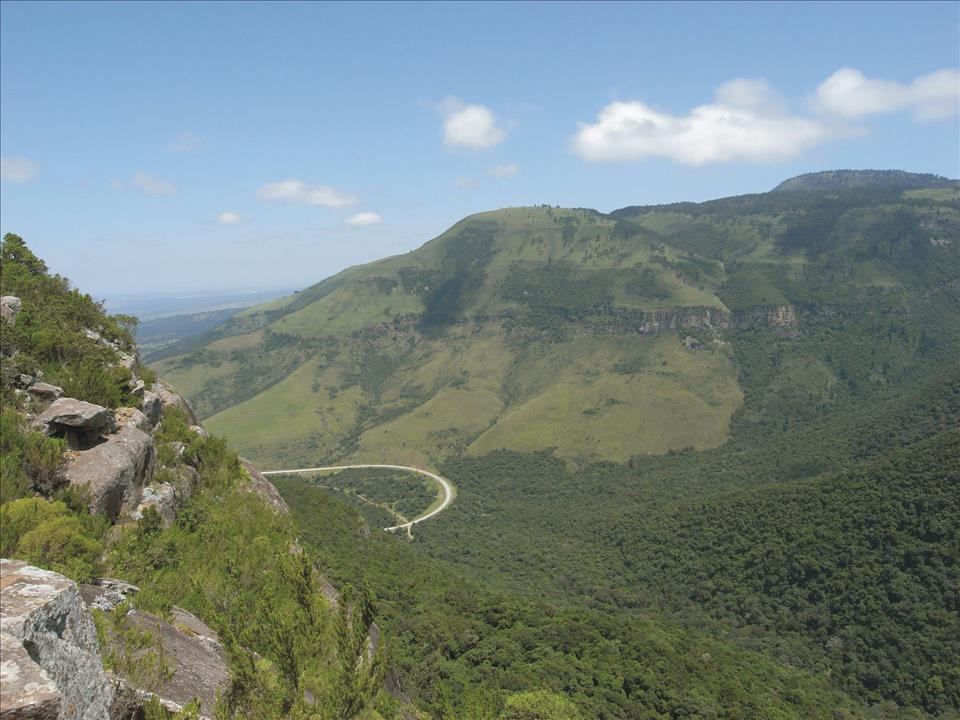
The Eastern Cape's natural potentialSouth Africa's Eastern Cape province is the second biggest in the country; it's the size of Uruguay or Tunisia. Stretching over 169,000km2, its rangelands, forests, coastal wetlands, coastlines and mountain ecosystems offer significant potential for carbon capture.
The Eastern Cape has diverse climates: humid coastal zones, subtropical zones and arid and semi-arid areas.
Read more: 'Sacred forests' in West Africa capture carbon and keep soil healthy
This is not empty land – it's used by rural communities, many of whom are farmers. They are therefore the guardians of assets that can be used for effective carbon capture projects.
Communities can earn money and other benefits when they restore land or improve soil in ways that absorb carbon. Companies or other buyers pay for each unit of carbon that is captured or avoided. Project developers and intermediaries take a share to cover costs and services. Participating communities receive payments, jobs and other benefits in return for work and their stewardship of the land.
Read more: Angola's peatlands trap carbon and clean the region's water – how we mapped this newly found landscape
South Africa is one of the most unequal societies in the world. This inequality translates into widespread poverty, unemployment and limited economic opportunities in rural areas. Community-based carbon projects offer a way to link climate action with urgently needed local development and job creation.
The province hosts a diverse portfolio of nature-based carbon capture and storage projects. Some restore natural thicket and forest that was degraded over the years by commercial farming or grazing. These include the Amathole Forest Carbon Project, Kuzuko Thicket Restoration Project, Somerset East-Eastern Cape Restoration Project, and Stutterheim Reforestation Project.
We also assessed Meat Naturally, which gives incentives to farmers if they restore communal rangelands (grazing land), and AgriCarbon, which rewards farmers who practise climate-friendly farming, such as leaving carbon in the soil by not ploughing it. These projects are all different sizes. Some are small local restoration sites involving farms and communities while others are bigger programmes spread across two or more local municipalities and the province.
Benefits for people and natureOur research found that rural carbon capture and storage projects can be more than narrow climate interventions. They can also create broad, real-world gains for people and ecosystems.
Local communities gained in several ways from the projects we reviewed. The most frequently mentioned benefit was employment creation. Projects to restore spekboom (an indigenous plant) in the Eastern Cape aim to create about 1,000 jobs and more broadly carbon projects are projected to generate around 27,600 direct jobs in land restoration, monitoring, agriculture and ecological management. In some projects, these jobs ran for several years.
They provided a critical source of income where other options were scarce. (Recent estimates place the Eastern Cape's unemployment rate at about 42.5%.)
Read more: Reviving South Africa's grasslands: Eastern Cape villagers explain the challenges they face
The projects reviewed demonstrated a range of benefits beyond jobs and income. Restoring the land improved the fertility of the soil, which was then able to hold more water. Areas attracted more bird and plant life, becoming more diverse. Communities were also able to grow more crops once the land quality improved.
Barriers and structural challengesDespite several interconnected benefits, we also found these substantial structural challenges:
- Much rural land in the Eastern Cape is communal, held by the state in trust on behalf of communities, and governed by traditional authorities and local municipalities. Communities are insecure about their long-term rights to use or benefit from the land. This makes it difficult for them to enter into long-term contracts required by carbon projects and markets.
Read more: Southern Africa's rangelands do many jobs, from feeding cattle to storing carbon: a review of 60 years of research
- Communities and local government don't yet fully understand carbon markets. This prevents them from exploiting carbon capture opportunities or managing projects effectively.
The high costs of bringing people and materials into remote rural areas to work on the projects makes them less profitable. Other costs, such as insurance, legal advice and monitoring and verification, also eat into the profits.
Read more: Not all carbon-capture projects pay off for the climate – we mapped the pros and cons of each and found clear winners and losers
- Poor roads, electricity and digital connectivity negatively affect project implementation. This infrastructure is needed for effective project management and to collect data on the amount of carbon captured and stored.
Private companies can see carbon capture and storage projects in rural areas as too risky or less profitable. Without incentives, they are often reluctant to get involved.
To realise the full potential of carbon capture and storage in the Eastern Cape and to overcome existing challenges, government, researchers, private sector partners and local communities need to work together to design and implement projects that share benefits fairly, strengthen local capacity and protect the environment.
Carbon capture and storage also needs government support in the form of investment in infrastructure such as roads and digital connectivity. If these enabling conditions are missing, the expansion of carbon capture and storage in rural areas will remain slow, uneven and likely to benefit only a few. Some communities may withdraw from such projects or be excluded from them altogether.
Read more: Yes, carbon capture and storage is controversial – but it's going to be crucial
Government, project developers and community leaders must jointly strengthen land rights, local capacity, infrastructure and fair benefit-sharing so that rural communities can fully and fairly participate in, and profit from, carbon capture and storage initiatives.
Institution:Walter Sisulu University

Legal Disclaimer:
MENAFN provides the
information “as is” without warranty of any kind. We do not accept
any responsibility or liability for the accuracy, content, images,
videos, licenses, completeness, legality, or reliability of the information
contained in this article. If you have any complaints or copyright
issues related to this article, kindly contact the provider above.
Most popular stories
Market Research

More Story






Comments
No comment