







403
Sorry!!
Error! We're sorry, but the page you were looking for doesn't exist.
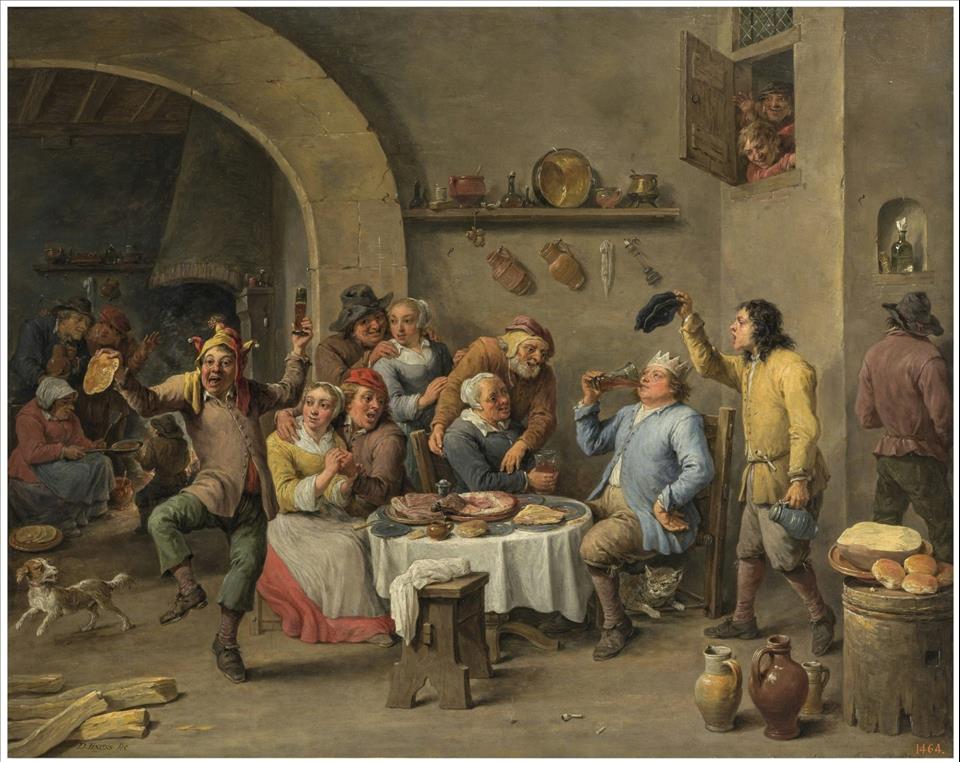
Lady Day: March 25 Was The Start Of The Year In England And Wales Until 1752
Author: Sara Read
(MENAFN- The Conversation) We associate New Year with deep mid-winter and the tidy date of January 1, but for 600 years between 1155 until 1752 in England and Wales the new year began on 25 March. This day was one of the quarter days that divided the year historically and on which rents and debts were settled. March 25 became the quarter day where annual accounts were finalised. So, around about now, we'd have been preparing to welcome in a new year alongside the warmer weather and spring blooms.

Celebrations were double as the legal and ecclesiastical calendar worked in harmony as March 25 is also Lady Day or the Feast of the Annunciation. Falling exactly nine months before Christmas Day, for Christians it marks when the archangel Gabriel informed Mary that she was shortly to bear a son.
Feast days are normally days of indulgence and merrymaking, but Lady Day normally falls in Lent, a time of abstinence. This meant, for some, Lady Day was a temporary lightening of Lenten restrictions.
Also known as Annunciation Day, Lady Day has sometimes fallen on Good Friday, as it did in 1608. This day is the opposite of a feast day, marking the crucifixion and death of Christ, which is observed through fasting and abstinence. The poet John Donne reflected on this crossover in 1608 in Upon the Annunciation where he saw it as an opportunity to be extra pious:
So for Donne, this was a day of fasting and reflection to commemorate both the coming of Christ and his death.
SuperstitionsLady Day has many associated superstitions. An anonymous pamphlet printed in 1721 called When my Lord Falls in my Lady's Lap, England Beware of a Great Mishap takes its title from an old saying that means that it is unlucky when Lady Day falls on or near Easter Sunday. The author proceeds to run through the many calamities that have happened on such inauspicious occasions.
For instance, it tells of how in 1117 the heir to Henry I, William Adelin was drowned in the sinking of the White Ship along with 300 other souls. The author hasn't got their facts quite straight here as this disaster happened in November 1120. By Victorian times, this superstition about Lady's day falling near Easter Sunday was considered old fashioned with The Hampshire Advertiser describing it as a“former ill omen” in its 21 March 1846 edition.
CustomsLady's Day is still celebrated in some parts of the UK. In Hampshire, The Tichborne Dole on Lady's Day dates back to around 1150. Mabella (or Isabella), Lady de Tichborne of Alresford, made a deathbed request that an annual donation of bread, baked with grains from her lands, be made in her memory to the parish poor.
Her rather less charitably minded husband, Sir Roger, agreed on condition that his benevolence was limited to crops from just the land that she could walk around while carrying a single burning log from the fire. According to the legend, the dying Mabella crawled her way around some 23 acres before the flame went out. This area is still known as“The Crawls”.
It's said Mabella left a curse on the house that if ever the dole was stopped the family line would die out. Specifically, she vowed that a generation of seven sons would be followed by a generation of seven daughters. The dole continued uninterrupted until 1794 and it would seem that Mabella's curse came to pass when the last male Tichborne had a family of seven daughters. And so, the custom was reinstated.
A film, The Tichborne Curse, was released in 1947. The reinstated Dole is still taking place today. Adults from the parishes of Tichborne and Cheriton are entitled to claim one gallon (2kg) of flour, and children half a gallon each.
Always in AprilThe dating system in the US, Britain and Ireland changed in 1752 when these countries adopted the Gregorian calendar. Then the legal New Year in these countries became the same as it had been in Scotland for the last century and a half: January 1.
However, it wasn't just the year start that needed adjusting, as the new calendar was now out by several days. This meant that in England, 11 days were“lost” as Wednesday September 2 1752 was followed by Thursday September 14 1752 in order to right things. The jump must have been very disconcerting if we consider how much the clocks going forward an hour throws us out for a while.
In Britain, the legacy of the old-style dating system lives on in our tax system. Where the new tax year was March 25 (the old New Year) it was moved to April 5, and later to April 6, due to the leapfrog in dates 1752.
This day became Old Lady Day. April 6 day now stood in for the financial aspects of the quarter day, which meant this was the date in which new leases on farms and land began and often farm labouring families moved into new tied housing on that day as they signed new year long contracts. Author Thomas Hardy includes this in his 1891 novel Tess of the d'Urbervilles. Tess is hired on a farm upon“her agreeing to remain till Old Lady-Day”.
So March 25 may be a day that for most goes by with little notice now but it was once a major holiday that marked the beginning of the new year.
Institution:Loughborough University

Legal Disclaimer:
MENAFN provides the
information “as is” without warranty of any kind. We do not accept
any responsibility or liability for the accuracy, content, images,
videos, licenses, completeness, legality, or reliability of the information
contained in this article. If you have any complaints or copyright
issues related to this article, kindly contact the provider above.
Most popular stories
Market Research

More Story








Comments
No comment