




403
Sorry!!
Error! We're sorry, but the page you were looking for doesn't exist.
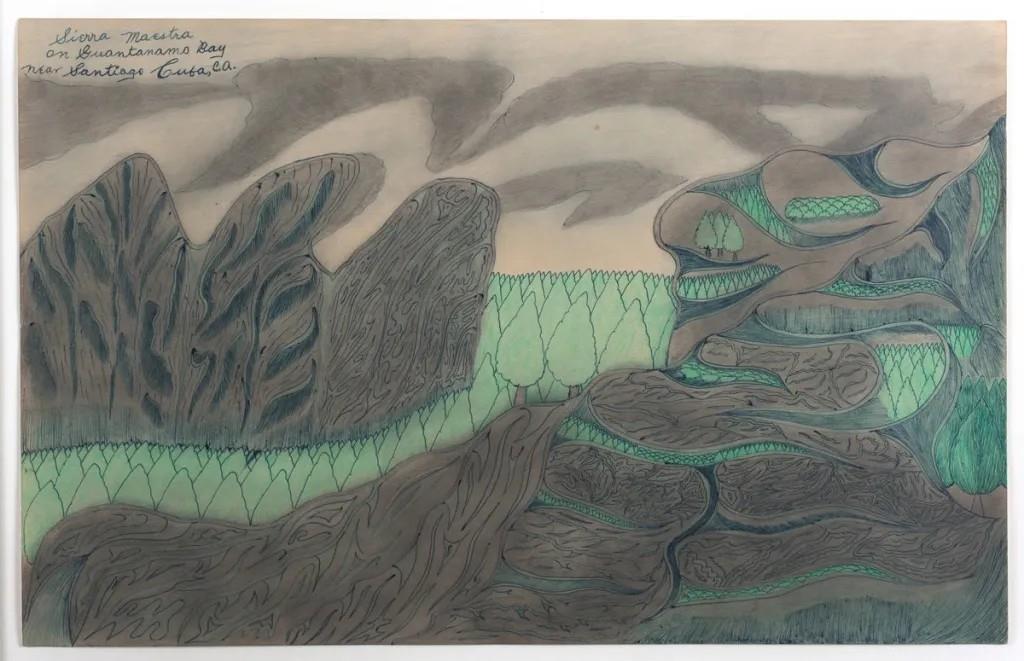
The Best Booths At The 2026 Outsider Art Fair
(MENAFN- USA Art News)
Outsider Art Fair Tests the Edges of a Category as the Market Moves In
The Outsider Art Fair has long been a place where the art world's usual hierarchies loosen: self-taught visionaries share the floor with folk traditions, vernacular practices, and artists whose lives and circumstances have kept them far from the mainstream. This year, that openness feels less like a niche position than a sign of a category in motion - one that is expanding in definition even as it gains institutional and market traction.
Outsider art, once framed primarily around self-taught production, now functions as a broader umbrella for makers working outside the conventional art system, whether by choice or by circumstance. At the same time, the field's visibility has been rising in precisely the venues that once seemed least likely to embrace it. Recent years have seen outsider work take on a significant presence in major exhibitions and biennials, including an upcoming Minnie Evans show at the Whitney Museum of American Art and the 2024 Venice Biennale.
The market has followed. Christie's now stages an annual auction devoted to outsider art, a telling marker of how quickly the category has moved from the margins toward the center of collecting culture. Against that backdrop, the Outsider Art Fair occupies an increasingly complex role: it is both a stakeholder in a growing market segment and a platform that continues to stretch the meaning of“outsider” beyond any single definition.
That tension - between consolidation and expansion - is legible in the fair's installations. One of the most striking gestures is the return of Susan Cianciolo's“Run Store” (2000), a resurrection of the indie fashion designer's hybrid project that blurs art, clothing, and domestic objects. The presentation includes garments and home goods by Cianciolo alongside work by 40 friends, students, and past collaborators, underscoring how outsider frameworks can also encompass collaborative, scene-based production that sits adjacent to contemporary art.
Nearby, the Gallery of Everything offers a very different kind of focus: a solo booth dedicated to self-taught Gullah artist Sam Doyle (1906–1985). The pairing of these two presentations - one rooted in a networked, fashion-inflected practice, the other in a singular vernacular voice - captures the fair's widening bandwidth.
As in past editions, the fair also makes room for dramatically different price points and display strategies. Ricco Maresca's pared-down installation brings together high-value works by three towering figures of 20th-century outsider art: Bill Traylor, Martín Ramírez, and Henry Darger. In close proximity, Keith de Lellis opts for density, hanging affordable vernacular photographs, photo albums, and works on paper in a crowded, salon-style arrangement. Among the discoveries is an early silkscreen by photographer Roy DeCarava.
Elsewhere, a scholarly presentation of proto-Surrealist works at Cavin Morris sits comfortably beside the exuberant, deliberately chaotic booths of workshop-based programs such as New York's Fountain House Gallery - a reminder that outsider art's ecosystem includes both rigorous connoisseurship and community-centered production.
The fair's annual curated booth, titled“From the North,” offers one of the clearest arguments for outsider art's expanding geography and art-historical reach. Organized by Canadian galleries Elca London and Feheley Fine Arts (which also maintains its own booth at the fair), the presentation centers on the community of Kinngait - known as Cape Dorset until 2020 - in Nunavut, northern Canada. Kinngait has produced internationally recognized Inuit artists including Kananginak Pootoogook, Pitseolak Ashoona, and Kenojuak Ashevak, a legacy closely tied to the West Baffin Eskimo Cooperative, an art studio founded in 1959.
“From the North” brings together prints made between 1959 and 2009 at Kinngait Studios, described as Canada's oldest printmaking studio. Among the notable works is an early print by Canadian Inuit artist Kenojuak Ashevak, whose signature curvilinear forms helped define the graphic language associated with Kinngait printmaking. The booth also includes“Carrying Suicidal People” (2011), a colored-pencil drawing by Canadian Inuit artist Shuvinai Ashoona (b. 1961). The work's emotional force aligns with Ashoona's broader practice, which often confronts the difficult realities of contemporary Indigenous life.
Another standout comes from Fleisher/Ollman, a longtime participant in the fair. The gallery is showing works by 20th-century figures such as American artist William Edmondson, American artist Joseph Yoakum, and American artist James Castle, while also foregrounding a group of seven sculptures by the Philadelphia Wireman - an unknown maker whose works were discovered abandoned in a Philadelphia alley in the late 1970s. Built from found materials - pens, nails, jewelry, scraps of plastic, and other small objects - and bound with wire, tape, or rubber bands, the sculptures read as intimate accumulations of urban detritus. One piece stands out for an unusual element: printed packaging, a rarity in the Wireman's output, lending the work a Pop art–adjacent charge.
Taken together, these presentations suggest why the Outsider Art Fair remains a bellwether. As institutions and auction houses increasingly validate the category, the fair continues to argue - sometimes quietly, sometimes provocatively - that“outsider” is less a fixed label than a shifting set of questions about training, access, community, and the many ways artists build worlds beyond the mainstream.

Legal Disclaimer:
MENAFN provides the
information “as is” without warranty of any kind. We do not accept
any responsibility or liability for the accuracy, content, images,
videos, licenses, completeness, legality, or reliability of the information
contained in this article. If you have any complaints or copyright
issues related to this article, kindly contact the provider above.
Most popular stories
Market Research

More Story





Comments
No comment