




403
Sorry!!
Error! We're sorry, but the page you were looking for doesn't exist.
How Enterprises Use Mac Virtualization To Improve IT Efficiency And Reduce Costs
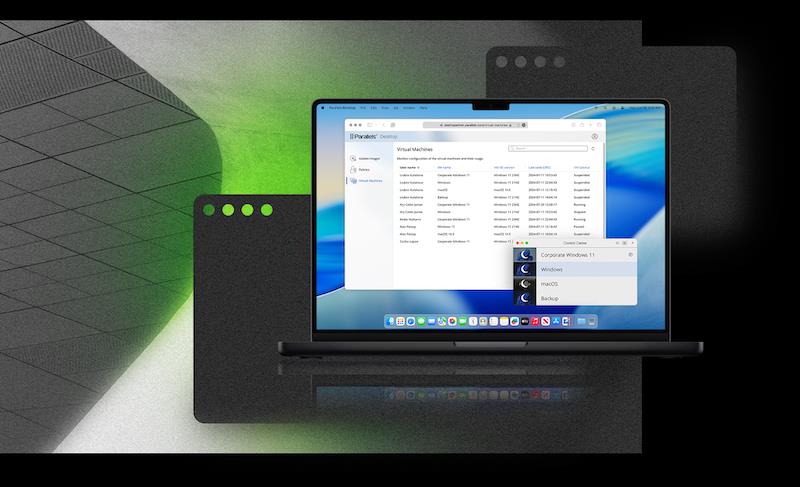
(MENAFN- Robotics & Automation News) With the new changes in the IT infrastructure, Mac virtualization has become one of the prime tools for enterprises looking to boost the overall efficiency of their IT operations.
Together, they leverage this technology in a manner that simplifies processes, reduces costs, and enables heterogeneous business requirements.
Knowing how Mac virtualization affects the workflow increases the productivity of teams when converting to virtual desktops and helps them adapt quickly without the need to invest in any new hardware.
Streamlined Resource ManagementVirtualization enables teams to run multiple OSs on the same Mac hardware using solutions like Parallels Desktop for Enterprise. This decreases the functionality requirement of the hardware and also saves space on the ever-crowded office floor.
Instead, IT managers allocate resources more flexibly, providing computing power where needed without the need to purchase additional equipment. This tactic not only makes the most out of the budget but also preserves performance levels by utilizing existing assets optimally.
Enhanced Testing EnvironmentsDevelopers often need multiple system configurations to test their software. Virtual Macs provide isolated environments where teams can safely experiment without impacting production-level systems.
It speeds up development cycles as testers speedily switch between OS, identifying and reporting issues at an early stage. Trustworthy testing environments give teams the ability to provide better quality products to customers.
Simplified Maintenance and UpdatesMac virtualization also makes routine maintenance simple. Updates, patches, and security measures are centrally managed by IT professionals, ensuring every virtual instance is kept secure and up-to-date.
With centralized control, fewer updates are missed, which in turn helps reduce vulnerabilities. It also helps minimize disturbances to employees' daily tasks.
Flexible Application DeploymentVarious enterprises rely on limited software that is only compatible with certain operating systems. Virtual Macs allow organizations to leverage applications without needing to purchase new computers for their employees.
This flexibility enables teams to add new tools at a relatively brisk pace, which makes it helpful in regard to the ever-changing business needs.
Cost Savings and Budget OptimizationInstead of dedicating an entire machine to every single task or user, Mac virtualization solves this issue by offering shared systems. Businesses spend less on hardware, electricity, and maintenance by consolidating workloads.
This can help in utilizing the saved money for other strategic projects, promoting growth and innovation. Affordable equipment prices also help scale up the operations more easily for expansionary firms.
Secure Remote AccessWith remote work expected to grow, it's important to preserve secure access to the tools that you need. With virtualization, your employees can access their working environment from anywhere while adhering to security requirements.
IT departments manage permissions and track usage, ensuring the security of sensitive data while enabling flexible practices. It helps maintain business continuity when anything unforeseen or disruptive approaches the premises.
Disaster Recovery PreparednessMac virtualization supports backup and recovery options that are efficient. Administrators capture snapshots of virtual machines to quickly restore them in the event of a failure or data loss.
Such features help mitigate the impact of technical issues on business operations by reducing downtime. A successful disaster recovery plan ensures that organizations can uphold confidence among customers and business partners.
Efficient Software Licensing ManagementThe process of managing software licenses can be difficult and expensive. The whole process is made simpler with virtualization because now you can have centralized tracking and allocation.
IT teams can better monitor usage and ensure compliance with licensing agreements. This helps minimize the possibility of penalties and also prevents businesses from paying for licenses that they will never use.
Scalable Training SolutionsConsistent environments are often required for training new employees or rolling out new software/hardware updates. Everyone involved in the training has the same environment due to virtual Macs.
With this consistency, learning curves are drastically shortened, and the confidence in utilizing company systems increases. A scalable training platform also supports onboarding teams, both remote and in-person.
ConclusionThe Mac virtualization is still changing the way enterprises utilize their resources, manage remote teams, and remain operational. With this approach, organizations can build agile, secure, and economical IT infrastructures.
Enhanced productivity, efficient use of resources, and streamlined processes help ensure teams are prepared to tackle the next challenge with confidence.

Legal Disclaimer:
MENAFN provides the
information “as is” without warranty of any kind. We do not accept
any responsibility or liability for the accuracy, content, images,
videos, licenses, completeness, legality, or reliability of the information
contained in this article. If you have any complaints or copyright
issues related to this article, kindly contact the provider above.
Most popular stories
Market Research

More Story








Comments
No comment