




403
Sorry!!
Error! We're sorry, but the page you were looking for doesn't exist.
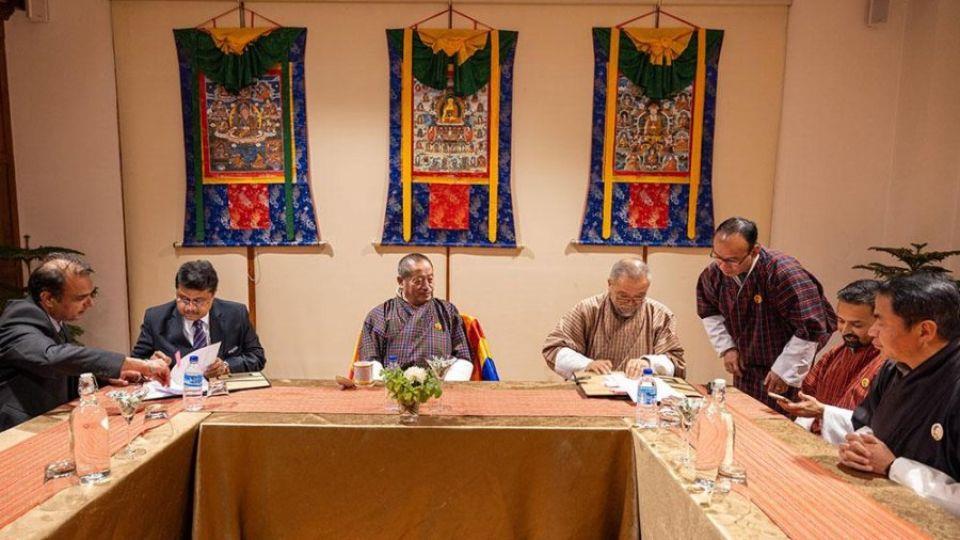
India And Bhutan Deepen Power Partnership
(MENAFN- The Arabian Post)

Energy cooperation between India and Bhutan has moved into a sharper operational phase, with both governments signalling alignment on stalled hydropower projects, new transmission corridors and a longer-term framework for electricity trade that underpins Bhutan's public finances and supports India's clean-energy transition.
Officials from the two sides held detailed consultations this week focused on accelerating work at the Punatsangchhu hydropower complex and reviving momentum on the long-discussed Sankosh project, while also reviewing cross-border transmission upgrades needed to evacuate power to the Indian grid. The talks came against the backdrop of rising electricity demand in eastern and northern India and Bhutan's dependence on hydropower exports for fiscal stability.
The centrepiece remains the Punatsangchhu projects on the Punatsangchhu river, split into two plants. Punatsangchhu-I, designed for 1,200 MW, has faced prolonged delays following geological surprises that required major redesign of the dam structure and stabilisation of slopes. Officials familiar with the discussions said construction schedules are now being re-sequenced, with civil works and electro-mechanical installations aligned to a phased commissioning plan rather than a single completion date. Punatsangchhu-II, with a capacity of 1,020 MW, is at a more advanced stage, and planners are focusing on synchronising turbine commissioning with downstream transmission readiness.
Attention has also returned to the Sankosh Hydroelectric Project, a 2,560-MW venture long seen as a potential game-changer for Bhutan's export capacity. Earlier hesitations over cost, resettlement and environmental impacts had pushed the project into limbo. The latest exchanges indicate a renewed willingness to revisit the detailed project report, reassess financing structures and examine whether a modular execution approach could reduce upfront risks. For Bhutan, Sankosh represents scale and revenue predictability; for India, it offers a large block of firm renewable power that complements solar and wind additions.
See also UAE and India step up talks on civil aviation tiesBeyond generation, transmission infrastructure featured prominently. Power evacuation from central and western Bhutan requires high-capacity lines linking to India's eastern grid, where load centres are expanding. Officials reviewed progress on new substations and high-voltage corridors, with an emphasis on synchronising completion timelines to avoid stranded generation. Grid planners also discussed redundancy and resilience, reflecting lessons from weather-related disruptions and the need for stable cross-border flows during peak demand periods.
The partnership rests on an established model in which Indian public sector utilities assist with project execution and financing, while Bhutan retains ownership and earns export revenue. Hydropower accounts for a significant share of Bhutan's gross domestic product and exports, making timely commissioning critical for debt servicing and social spending. Delays at Punatsangchhu have weighed on fiscal projections, prompting a stronger push for resolution.
For India, the engagement fits into a broader regional energy strategy. Hydropower imports from Bhutan provide dispatchable renewable electricity that balances variable solar output, particularly during evening peaks. Policymakers view this as complementary to domestic clean-energy targets and as a stabilising factor for grid operations. Electricity trade with Bhutan also aligns with New Delhi's neighbourhood-first approach, where infrastructure and energy ties reinforce diplomatic relations.
Technical experts involved in the discussions highlighted the importance of geotechnical due diligence and adaptive engineering, especially in Himalayan terrain prone to landslides and seismic activity. Updated monitoring systems, revised dam designs and contingency buffers are being incorporated to mitigate risks that previously caused setbacks. Financing terms are also under review to manage cost escalations without overburdening Bhutan's balance sheet.
See also Mistral AI weighs Bengaluru base to deepen engineering pushCommercial arrangements formed another strand of the talks. Officials examined tariff structures, power purchase agreements and the scope for longer-tenure contracts that provide revenue certainty. There was also discussion on integrating future Bhutanese hydropower into emerging regional electricity markets, which could eventually allow surplus power to be traded beyond bilateral arrangements, subject to regulatory clearances.
Notice an issue? Arabian Post strives to deliver the most accurate and reliable information to its readers. If you believe you have identified an error or inconsistency in this article, please don't hesitate to contact our editorial team at editor[at]thearabianpost[dot]com. We are committed to promptly addressing any concerns and ensuring the highest level of journalistic integrity.

Legal Disclaimer:
MENAFN provides the
information “as is” without warranty of any kind. We do not accept
any responsibility or liability for the accuracy, content, images,
videos, licenses, completeness, legality, or reliability of the information
contained in this article. If you have any complaints or copyright
issues related to this article, kindly contact the provider above.
Most popular stories
Market Research

More Story








Comments
No comment