





403
Sorry!!
Error! We're sorry, but the page you were looking for doesn't exist.
India-EU FTA To Boost Labour-Intensive Exports With Zero Tariffs
(MENAFN- AsiaNet News)
The conclusion of the India-European Union Free Trade Agreement (FTA) marked a significant boost for India's labour-intensive export sectors, with tariffs on most Indian goods entering the EU reduced or cut to zero.
Finalised on Tuesday, the trade agreement is expected to come into force sometime next year and is designed to deliver gains to both economies, according to Kotak Institutional Equities Research. Indian exporters stand out as the key beneficiaries. Almost all labour-intensive exports, such as textiles, apparel, leather, seafood, plastics, gems and jewellery, will now enjoy zero- or reduced-tariff access to the EU market. These sectors previously faced higher duties than other Indian exports. Nearly 28 per cent of India's exports to the EU in 2024-45 were of labour-intensive sectors, according to the Kotak report.
Key Benefits for Indian Exporters
"Indian exporters will benefit from 0 per cent tariff on almost all exports to the EU, especially in labour-intensive sectors, while the EU's access to India's consumer market will entail greater competition in some of the domestic sectors. This deal also potentially places a medium to long-term hedge against US tariff policy and geopolitical uncertainties," the report read.
Beyond immediate tariff relief, the agreement provides a medium-term opportunity for India to diversify export destinations. With the EU representing a large and stable import market, the FTA may gradually offset potential headwinds from other major trading partners.
Sector-Specific Impact
Sectors such as textiles and apparel, which previously faced EU tariffs of around 10-12 per cent, are expected to see meaningful gains once the deal becomes effective. Lower tariffs on EU machinery, automobiles, metals, plastics, spirits and beverages are likely to intensify domestic competition in India while reducing input costs for certain import-dependent industries. Notably, India has excluded sensitive agriculture and dairy sectors from the scope of the FTA, safeguarding farmers.
Services Trade and Professional Mobility
Services trade is another important pillar of the India-EU deal. Provisions include easier mobility for Indian professionals, EU commitments across 144 services sub-sectors, ranging from IT to professional and education services, and a framework for a future social security agreement for Indian workers in Europe.
Strategic Importance and Timeline
While the near-term impact will be limited until implementation, Kotak Institutional Equities views the FTA as a strategically important hedge and a structurally positive step for India's external sector over the medium to long term. "We see this FTA as a potential hedge against US tariff uncertainties over the medium term. The deal is likely to encourage diversification of labour-intensive Indian exports to the EU from the US. However, the immediate impact will be limited with the deal being effective from sometime in CY2027/FY2028," the Kotak report read.
Historic Agreement Finalised
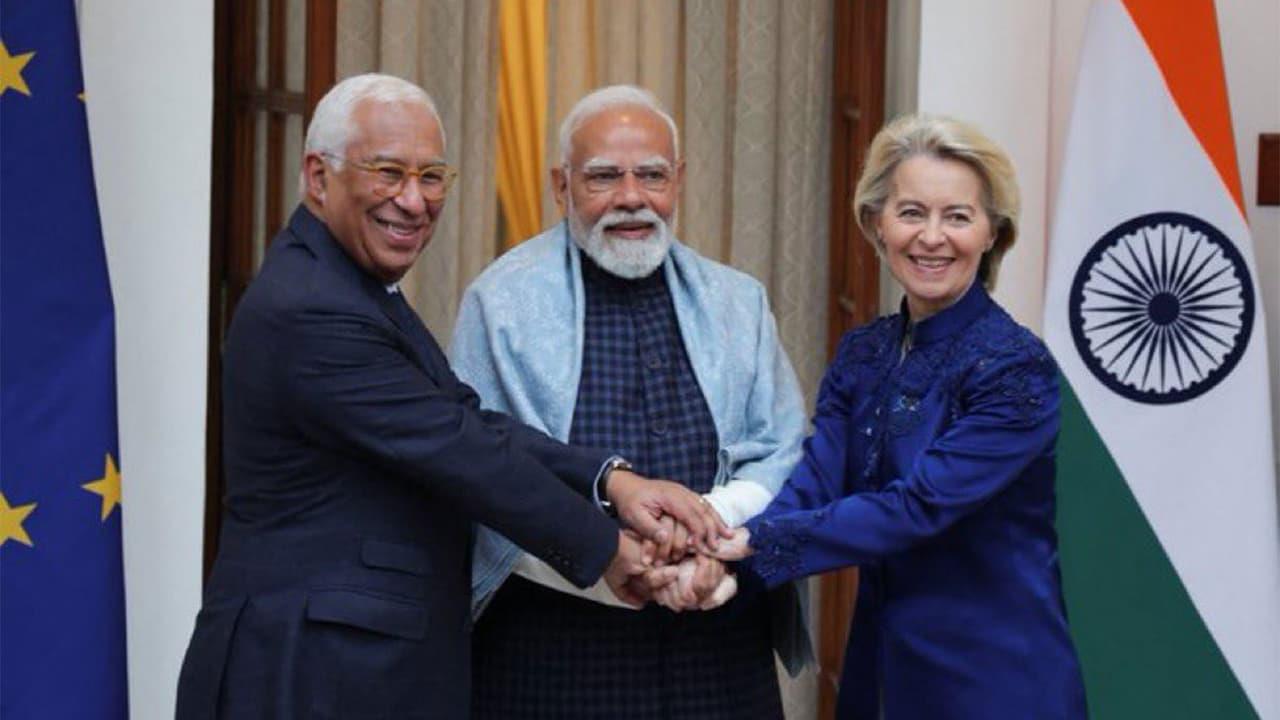
Prime Minister Narendra Modi and European Commission President Ursula von der Leyen, yesterday, jointly announced the conclusion of the India-European Union Free Trade Agreement (India-EU FTA) at the 16th India-EU Summit, held during the visit of the European leaders to India. This announcement marks a historic milestone in India-EU economic relations and trade engagement with key global partners.
The FTA comes after intense negotiations since the re-launch of negotiations in 2022. The announcement of the FTA today marks the culmination of years of sustained dialogue and cooperation between India and the EU, demonstrating the political will and shared vision to deliver a balanced, modern, and rules-based economic and trade partnership.
India-EU Trade at a Glance
The European Union is one of India's largest trading partners, with bilateral trade in goods and services growing steadily over the years. In 2024-25, India's bilateral trade in goods with the EU stood at Rs 11.5 Lakh Crore (USD 136.54 billion) with exports worth Rs 6.4 Lakh Crore (USD 75.85 billion) and imports amounting to Rs 5.1 Lakh Crore (USD 60.68 billion). India-EU trade in services reached Rs 7.2 Lakh Crore (USD 83.10 billion) in 2024.
India and the EU are the 4th and 2nd largest economies, comprising 25 per cent of Global GDP and account for one third of global trade. Integration of the two large diverse and complementary economies will create unprecedented trade and investment opportunities. (ANI)
(Except for the headline, this story has not been edited by Asianet Newsable English staff and is published from a syndicated feed.)
Legal Disclaimer:
MENAFN provides the
information “as is” without warranty of any kind. We do not accept
any responsibility or liability for the accuracy, content, images,
videos, licenses, completeness, legality, or reliability of the information
contained in this article. If you have any complaints or copyright
issues related to this article, kindly contact the provider above.
Most popular stories
Market Research

More Story







Comments
No comment