




403
Sorry!!
Error! We're sorry, but the page you were looking for doesn't exist.
Azerbaijan Turns S. Caucasus Into Renewables Hub - 'Win-Win' Partnership For Investors
(MENAFN- Trend News Agency)
BAKU, Azerbaijan, January 21. Azerbaijan,
traditionally associated with oil and gas extraction, is taking a
strategic step toward diversifying its economy and creating
renewable energy infrastructure, which can transform the country
into a regional green energy hub.
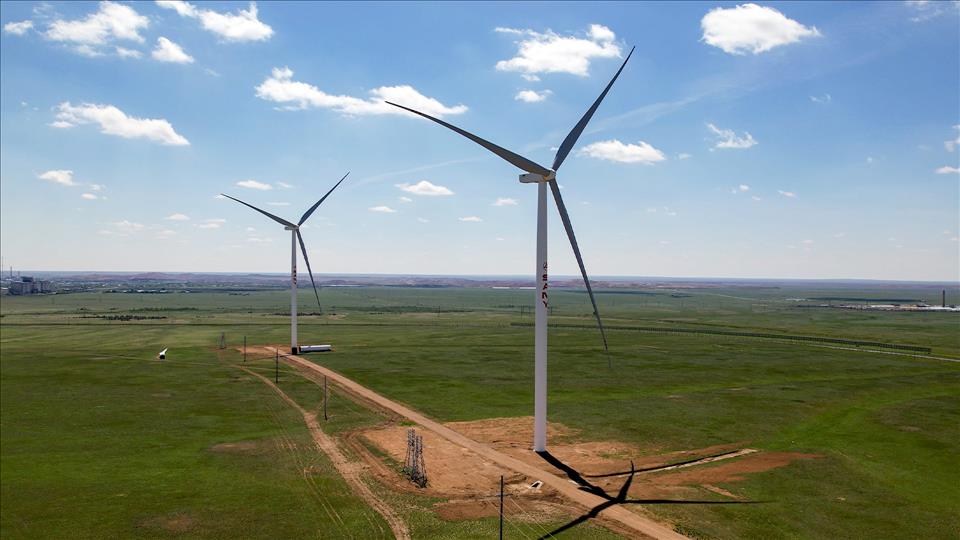
The country has already implemented two large-scale renewable energy projects in collaboration with foreign companies. On January 8, 2026, the Khizi–Absheron wind power plant, with a capacity of 240 MW, was officially opened. Built by the Saudi company ACWA Power, the plant is expected to generate one billion kWh of electricity annually, saving up to 220 million cubic meters of natural gas and preventing the emission of over 400,000 tons of CO2. The Garadagh solar power plant, with a capacity of 230 MW, implemented in collaboration with the UAE's Masdar and launched on October 26, 2023, generates about 500 million kWh annually, which equals saving 110 million cubic meters of natural gas and preventing the emission of 200,000 tons of CO2.
Speaking at an event titled“Azerbaijan Executive Breakfast” in Davos, President of the Republic of Azerbaijan Ilham Aliyev outlined ambitious plans for expanding renewable energy.
"In the coming six years, we will dramatically increase our capacity to generate energy from solar and wind. In other words, by 2032, we expect to have eight gigawatts of solar and wind energy, because there is a lot of sun and a lot of wind, and we see great potential. We have already contracted several projects, and now we are thinking about storage capacity," said the head of state.
The industry development forecasts suggest that the share of renewable energy in electricity production will reach 25% by 2027 and 30% by 2030. The first stage of the program, by the end of 2027, aims to introduce about 2 GW of capacity, prioritizing domestic consumption. Over the following years, more than 6 GW is expected to be added, focusing on electricity exports and energy supply to data centers, which will attract European and international investors.
The largest projects include:
-
The Shafag solar power plant (240 MW) in Jabrayil, in
collaboration with bp. It uses a "virtual energy transfer" model,
where electricity is sent to Baku, and local production helps
reduce emissions by 260,000–330,000 tons of CO2 annually. Total
investment in the project is $200 million.
The Mega project by Masdar: Bilasuvar Solar Plant (445 MW),
Neftchala Solar Plant (315 MW), and a 240 MW wind station in
Absheron and Garadagh. The Bilasuvar solar plant will use over
943,000 solar panels, generating electricity to cover 4–5% of the
country's energy needs.
The Gobustan solar power plant (100 MW), implemented by
Universal International Holdings Limited (China), will produce
around 260 million kWh annually, saving 57 million cubic meters of
gas and reducing CO2 emissions by 124,000 tons.
The Ufug and Shams plants, each with 50 MW capacity in the
Jabrayil district, in collaboration with Nobel Energy, will provide
206 million kWh annually and save 44 million cubic meters of
gas.
These projects demonstrate the active involvement of foreign investments in the development of renewable energy.
"I think that investing in Azerbaijan now, with its renewables, fossil fuels, AI, and data centers, is in the interest of European companies," President Ilham Aliyev emphasized.
Excess capacity makes Azerbaijan particularly attractive to investors, including those interested in data centers and digital infrastructure.
The development of renewable energy is closely linked to the formation of international "green" energy corridors: Caspian Sea – Black Sea – Europe, Central Asia – Azerbaijan, Azerbaijan – Türkiye – Europe, and Azerbaijan – Türkiye – Georgia – Bulgaria. These routes strengthen the country's role as a transit and export hub for 'clean' energy, opening opportunities for regional integration and reducing Europe's energy dependence on hydrocarbons.
In terms of economic efficiency, renewable energy projects offer a win-win situation: Azerbaijan gains economic diversification, technological and investment flows, while international investors gain access to stable, cheap, and clean energy with high export potential. Against the backdrop of the EU's climate goals and the global demand for green energy, the South Caucasus, with its center in Azerbaijan, is gradually becoming a key regional hub.
Azerbaijan demonstrates strategic vision and readiness to become a regional leader in renewable energy. With large-scale plans for 2032, participation of foreign investors, development of international corridors, and a focus on export, the country is creating a platform for sustainable economic growth and energy security for the region and Europe.

Legal Disclaimer:
MENAFN provides the
information “as is” without warranty of any kind. We do not accept
any responsibility or liability for the accuracy, content, images,
videos, licenses, completeness, legality, or reliability of the information
contained in this article. If you have any complaints or copyright
issues related to this article, kindly contact the provider above.
Most popular stories
Market Research

More Story





Comments
No comment