




403
Sorry!!
Error! We're sorry, but the page you were looking for doesn't exist.
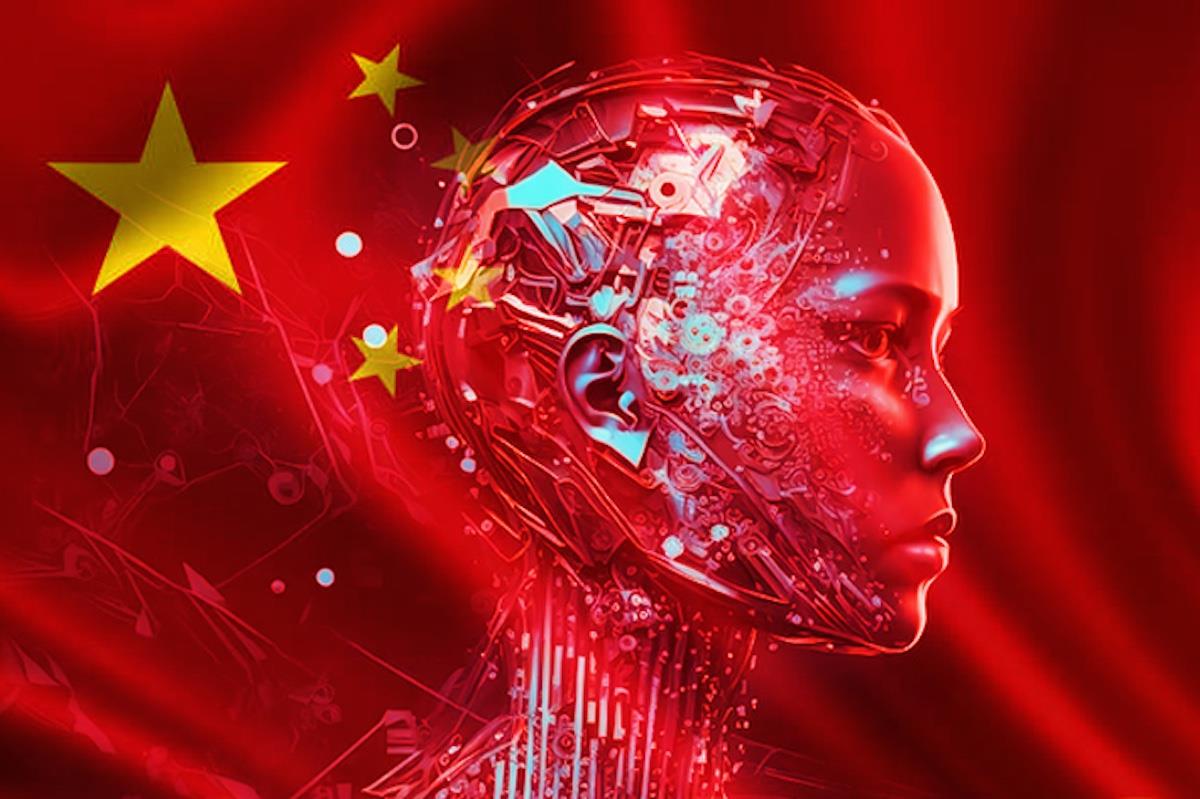
Why China's AI Models Will Have Greater Global Appeal
(MENAFN- Asia Times)
While most American artificial intelligence (AI) firms focus on building ever-larger, proprietary models locked in corporate clouds, China is executing an altogether different plan. Its ambition is not merely to create intelligent machines, but to weave intelligence into the very fabric of society itself.
Last year, the Chinese government announced plans to make AI a utility, a public service as affordable and ubiquitous as electricity and broadband. The country plans to embed AI technology deeply across society to become the world's first AI society by 2035.
AI will permeate all aspects of Chinese society, from production and services to governance and welfare. The central government provides the foundational framework (policy direction, national data standards, etc.), while private companies compete to build and deploy services within the national framework.
The Chinese government designated domestic tech giants like Baidu, Tencent, iFlytek as anchor platform providers for AI services. The real technical prowess lies in integrating all these platforms and services. China is building what some analysts call a giant national nervous system.
Turnkey AIThe goal of creating a fully AI-driven society in 10 years seems ambitious but Chinese companies are well-positioned to make it a reality. For one, China, as the factory of the world, produces much of the required hardware that will drive the AI revolution, save for the most advanced AI chips developed in the US.
Chinese tech companies now deploy AI in turnkey projects, or fully integrated solutions that combine software, hardware, data and operations, delivered to governments or industries as a complete system. They are becoming the norm rather than the exception.
For instance, Baidu's Apollo Autonomous Driving Platform is not just self-driving software, but a turnkey autonomous mobility system for autonomous buses and taxis, smart road infrastructure, AI mapping, sensors and cloud coordination. Municipalities receive a complete mobility package and operational support.
Latest stories Asia's nuclear reckoning and the crisis of US deterrence Why China and Russia blinked as US moved on Venezuela All the reasons Trump should resist regime change in IranHuawei delivers turnkey AI systems for industrial zones, ports and energy infrastructure. It provides AI-enabled access control, safety monitoring, predictive maintenance for power grids and factories, and integrated networks (5G), data centers and AI software. Huawei typically provides end-to-end solutions: chips, networks, cloud and AI applications.
Tencent's WeChat Health platform integrates AI-powered symptom checkers and triage tools to guide users to appropriate care. AI diagnostic aids for reading CT scans or retinal images are being deployed in community clinics and county hospitals. This extends the reach of scarce specialist expertise to underserved populations and directly supports the goal of equitable access.
The AI model extends beyond megacities. In agriculture, platforms like Pinduoduo and Alibaba's rural e-commerce networks provide farmers with AI-driven tools. They include smartphone apps that diagnose crop diseases from a photo and predictive models for yield and optimal pricing. Even small farmers are integrated into smart supply chains.
Open source AIOpen source plays a strategic role in China's AI and the broader technology landscape. Unlike in the West, where open source is often framed as an ideological commitment to openness or decentralization, China treats open source as a development accelerator and coordination mechanism.
By releasing models, frameworks, and software stacks as open source or“open-weight” (i.e., downloadable trained parameters of AI programs), Chinese companies and research institutions enable thousands of developers, startups, universities and local governments to build on shared foundations.
In response to export controls and reliance on foreign platforms, China has built domestic alternatives across chips, operating systems, cloud platforms and AI frameworks. Open standards help ensure interoperability and reduce lock-in to foreign vendors, all in line with the government's broader direction.
Open source fits China's traditional emphasis on collective problem-solving and standardization. Shared platforms make it easier to align industry, academia, and government around common technical roadmaps. This is crucial for large-scale projects such as smart cities, industrial automation, and energy systems.
Going globalChina's AI model has particular appeal in the Global South. For many emerging economies, the Western approach – renting access to expensive, proprietary AI systems via cloud APIs – creates financial and institutional barriers. China offers an accessible low-cost alternative: AI as shared infrastructure, designed for broad deployment rather than elite use.
This strategy is implemented through integrated development packages rather than standalone technologies. With initiatives such as the Digital Silk Road, Chinese firms bundle AI systems with energy grids, 5G networks, data centers and training programs. This integrated pathway to digital modernization aligns with state-led growth models common across Asia, Africa and the Middle East.
Alibaba Cloud and Tencent provide AI-driven commerce and payment platforms in Africa and Latin America. Chinese firms Hikvision and Dahua are exporting smart city solutions to Southeast Asia and Latin America and expanding their presence in African telecommunications networks.
China's broader digital ecosystem, including Alibaba Cloud, Tencent Intelligent Healthcare, AI diagnostic tools, and agricultural tech, is also reaching Global South markets through cloud services and partnerships.
As the Chinese model spreads abroad, the underlying collectivist worldview travels with it, embedded in infrastructure and code rather than in explicit ideology.
Invisible infrastructureWhat ultimately distinguishes China's AI approach is not only its technical or economic logic, but its cultural one. Beneath the AI ecosystem of smart cities, cloud platforms and AI-enabled services lies a Confucian orientation that prioritizes collective benefit, coordinated governance and pragmatic problem-solving.
Sign up for one of our free newsletters-
The Daily Report
Start your day right with Asia Times' top stories
AT Weekly Report
A weekly roundup of Asia Times' most-read stories
By 2035, if China succeeds in integrating AI across society, intelligence is likely to function as invisible infrastructure . AI would no longer appear mainly as standalone applications, but as a background capability quietly coordinating systems at scale.
Cities would operate as integrated organisms, with traffic, energy use, emergency services, logistics, and environmental monitoring continuously optimized through real-time data and predictive models. Healthcare would shift toward prevention, using AI-assisted diagnostics and population health forecasting to extend care beyond major hospitals into local clinics.
In industry and agriculture, AI would act as a force multiplier rather than a replacement for labor. Factories, ports and farms would use predictive systems to reduce waste, improve safety and balance supply and demand, while smaller firms and rural producers access advanced tools through shared platforms.
Governance would become more anticipatory and technocratic, relying on simulation, risk modeling and early-warning systems to manage social, financial and environmental pressures. Culturally, this future reflects longstanding Chinese preferences for coordination, pragmatism and collective benefit.
The defining feature would be systemic coherence: a society wired for efficiency, stability and long-term planning, with intelligence distributed throughout the social fabric rather than concentrated at the top. The Chinese model may thus quietly reshape not only technology markets but also how societies understand AI itself.
Sign up here to comment on Asia Times stories Or Sign in to an existing accounThank you for registering!
An account was already registered with this email. Please check your inbox for an authentication link.
-
Share on X (Opens in new window)
Share on LinkedIn (Opens in new window)
LinkedI
Share on Facebook (Opens in new window)
Faceboo
Share on WhatsApp (Opens in new window)
WhatsAp
Share on Reddit (Opens in new window)
Reddi
Email a link to a friend (Opens in new window)
Emai
Print (Opens in new window)
Prin

Legal Disclaimer:
MENAFN provides the
information “as is” without warranty of any kind. We do not accept
any responsibility or liability for the accuracy, content, images,
videos, licenses, completeness, legality, or reliability of the information
contained in this article. If you have any complaints or copyright
issues related to this article, kindly contact the provider above.
Most popular stories
Market Research

More Story







Comments
No comment