




403
Sorry!!
Error! We're sorry, but the page you were looking for doesn't exist.

TDK Rolls Out STRIDE Positioning Software For Wearables
(MENAFN- The Arabian Post)
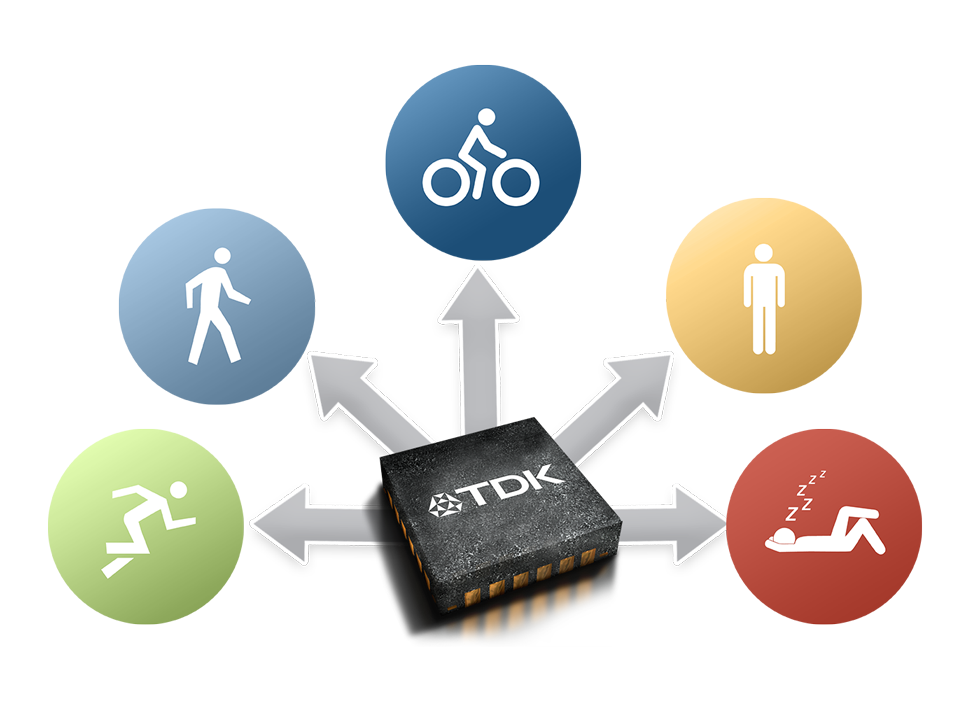
TDK has unveiled STRIDE, a low-power, real-time positioning software platform aimed at wearables and connected IoT devices, marking a push to strengthen its presence in software-defined sensing alongside its established sensor hardware business. The launch positions the Tokyo-based electronics group to compete more directly in applications where accurate location tracking must operate continuously on constrained batteries, such as smartwatches, fitness bands, asset tags and industrial monitoring devices.
STRIDE is designed to fuse data from multiple motion and environmental sensors to deliver precise indoor and outdoor positioning while keeping energy consumption low. TDK said the platform runs on modest processing resources, allowing device makers to integrate advanced location features without upgrading hardware or sacrificing battery life. The company framed the release as a response to growing demand for always-on tracking in consumer and industrial devices, where satellite navigation alone is insufficient or too power-hungry.
The software leverages TDK's long-standing expertise in micro-electromechanical systems, particularly inertial measurement units, magnetometers and barometric pressure sensors. By combining these inputs with adaptive algorithms, STRIDE can estimate movement, orientation and altitude in real time, even in environments where GPS signals are weak or unavailable. This approach is increasingly sought after by manufacturers building devices that must function indoors, underground or in dense urban settings.
Wearables are a primary target. Smartwatches and fitness trackers increasingly rely on precise location to measure distance, pace and elevation, but continuous GPS drains batteries quickly. STRIDE's sensor-fusion model aims to reduce reliance on satellite signals by using motion patterns to interpolate position between fixes. For device makers, this promises longer battery life without compromising tracking accuracy, a trade-off that has constrained design choices for years.
See also Adobe expands Firefly with prompt-led video editingIoT deployments represent another growth avenue. Asset tracking in logistics, smart factories and healthcare facilities often requires accurate positioning within buildings, where GPS performs poorly. TDK said STRIDE can support these use cases by enabling devices to determine their location using onboard sensors alone, reducing the need for external infrastructure such as beacons. This capability could lower deployment costs and simplify maintenance for large-scale installations.
The launch also reflects a broader industry shift toward software as a differentiator in sensor-centric markets. While hardware performance has steadily improved, competition has intensified and margins have tightened. By offering a proprietary software layer that enhances the value of its sensors, TDK is seeking to move up the value chain and deepen relationships with device manufacturers. Analysts note that this mirrors strategies adopted by other component suppliers that bundle software development kits and algorithms with physical components.
TDK's move comes as demand for spatial awareness accelerates across sectors. Augmented reality applications, context-aware health monitoring and autonomous industrial systems all depend on reliable positioning data. Regulatory pressure in areas such as worker safety and asset traceability is also driving adoption. Against this backdrop, solutions that minimise power draw while maintaining accuracy are gaining traction.
Company executives have emphasised that STRIDE is designed to be flexible, supporting a range of operating systems and processor architectures. This is intended to ease integration for customers with diverse product lines and shorten development cycles. TDK indicated that the software can be tuned for different use cases, allowing manufacturers to prioritise accuracy, latency or power efficiency depending on application requirements.
See also Amazon faces mounting pressure over drone delivery setbacksThe release builds on TDK's investments in digital capabilities over the past several years. Traditionally known for electronic components such as capacitors and sensors, the group has expanded into software and system solutions to address changing customer needs. This strategy aligns with broader efforts among Japanese electronics firms to offset slower growth in commodity components by targeting higher-value segments.
Competition in low-power positioning is intensifying. Semiconductor vendors, software specialists and platform providers are all vying to supply solutions for wearables and IoT. TDK's advantage lies in its ability to tightly integrate software with its own sensor portfolio, potentially delivering optimised performance that is harder for standalone software providers to match. Whether this translates into widespread adoption will depend on how quickly customers can deploy STRIDE in commercial products and how it performs across diverse real-world conditions.
Notice an issue? Arabian Post strives to deliver the most accurate and reliable information to its readers. If you believe you have identified an error or inconsistency in this article, please don't hesitate to contact our editorial team at editor[at]thearabianpost[dot]com. We are committed to promptly addressing any concerns and ensuring the highest level of journalistic integrity.

Legal Disclaimer:
MENAFN provides the
information “as is” without warranty of any kind. We do not accept
any responsibility or liability for the accuracy, content, images,
videos, licenses, completeness, legality, or reliability of the information
contained in this article. If you have any complaints or copyright
issues related to this article, kindly contact the provider above.
Most popular stories
Market Research

More Story








Comments
No comment