




403
Sorry!!
Error! We're sorry, but the page you were looking for doesn't exist.
How Worried Should We Be That Political Leaders Keep Making Oblique Nazi References?
Author: David L Collinson
(MENAFN- The Conversation) Several high-profile political leaders have in recent months been seen apparently dabbling in Nazi allusions. In many cases, dog whistle messages send oblique signals to supporters. These are pitched at a frequency that most listeners can't hear but are meaningful to those seeking confirmation of their own views.

When challenged, the people using these tactics often respond with strong and furious rebuttals. After emphasising their shock that they would be associated with Nazi imagery or ideas, they typically go on the offensive. They express indignation and moral outrage. Then, they demand an apology.
These hostile counterattacks often place their critics on the defensive. If the allusion to the Nazis becomes too obvious to deny, perpetrators typically claim they weren't aware of the historical association and insist it was all an innocent mistake.
This is the dog whistle playbook: strategic ambiguity followed by belligerent counterattack, and then, if needed, plausible deniability.
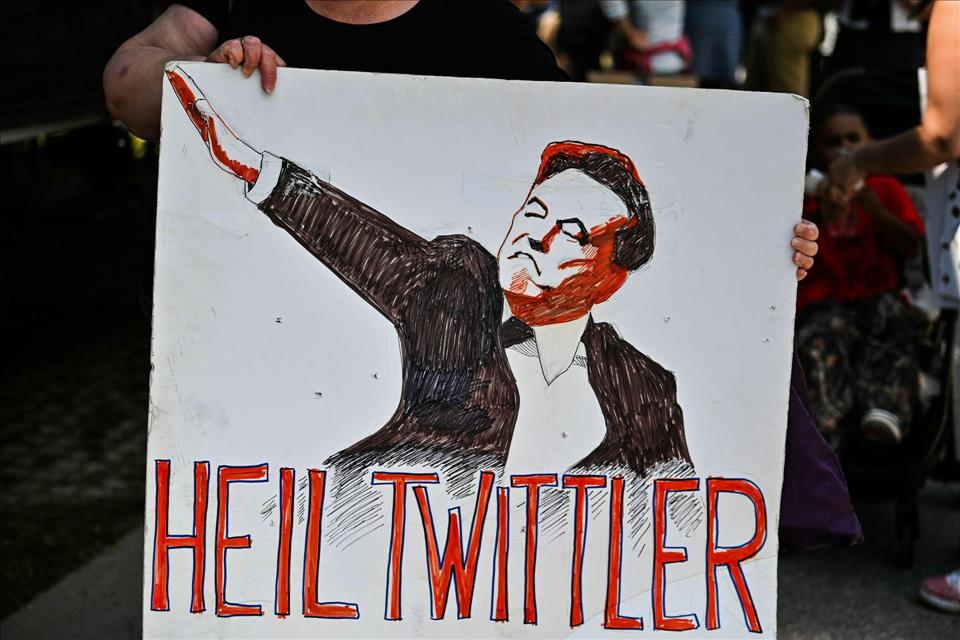
Of the many recent cases of Nazi allusions, Elon Musk's straight-arm salute – a gesture he performed twice at a rally celebrating Donald Trump's second inauguration – is one of the most notorious.
Far from denying he'd made the gestures, Musk went on the attack dismissing criticisms as“pure propaganda”. He argued that critics in the Democratic party were conducting“ideological witchhunts” and needed“better dirty tricks” because Adolf Hitler references are “sooo tired”. Musk also made a series of Nazi-themed puns on social media.
One month later, Steve Bannon, Donald Trump's one-time chief strategist and key figure in the Maga movement, also made a straight-arm salute at the conservative political action conference. Unlike Musk, Bannon denied any Nazi intent, describing the gesture as a “wave”. While Bannon was able to insist this wasn't a Nazi salute, his critics' outrage might have helped send a signal to Nazi sympathisers, reinforcing their loyalty and support.
Within the space of a few weeks in 2025, two senior figures in the Maga movement had been engulfed in controversies surrounding alleged Nazi salutes. For years, Trump has flirted with Nazi imagery, given comfort and even pardons to far-right extremists and been reluctant to criticise white supremacists. In November 2025 Trump reposted an AI-generated image of himself in front of what looked a lot like a Nazi eagle emblem (but without the swastika).
He has called political opponents “vermin” and argued that immigrants are “poisoning the blood of our country”. These words are associated with Hitler. Trump has also been quoted as saying“Hitler did some good things” and for asking US generals to be more like those of the Third Reich.
The dictator's playbookIn Germany, dog whistles are a particularly sinister aspect of far-right politics, communicating coded signals that appear to convey a secret admiration for the Nazis. Such messages are often innocent enough to pass over the heads of the masses, yet iconic enough to resonate with others.
In 2024 Björn Höcke, one of the leading figures of the Alternative for Germany (AfD) party, was found guilty of knowingly using a Nazi slogan“Alles für Deutschland” at a rally. This slogan is forbidden under German law. It was the central slogan of the SA or Storm Troopers, Hitler's paramilitary group from the Weimar years. Höcke insisted he was innocent because he was unaware of the Nazi links.
And if we reexamine Hitler's own playbook, his speech to workers at the Siemens Dynamo Works factory in November 1933 never mentioned the word“Jews”. When Hitler talked of a“small rootless international clique” his supporters knew exactly to whom he was referring. Once Hitler had consolidated the power of the Nazis, this gave them, and many others, permission to vilify and scapegoat Jews more explicitly. In effect, the permission-giving facilitated the incremental usurpation of power.
While substantial differences clearly exist between the Third Reich and contemporary politics, there also seem to be disturbing overlaps. Rather than ensuring their messages could never be confused with Nazi references, some leaders seem comfortable using dog whistle signals and strategic ambiguity, hostile counterattacks and plausible deniability.
Some Nazi allusions might be viewed as innocent mistakes or as historical accident but their continued prevalence is starting to look like more than a coincidence.
Institution:Lancaster University

Legal Disclaimer:
MENAFN provides the
information “as is” without warranty of any kind. We do not accept
any responsibility or liability for the accuracy, content, images,
videos, licenses, completeness, legality, or reliability of the information
contained in this article. If you have any complaints or copyright
issues related to this article, kindly contact the provider above.
Most popular stories
Market Research

More Story








Comments
No comment