



403
Sorry!!
Error! We're sorry, but the page you were looking for doesn't exist.
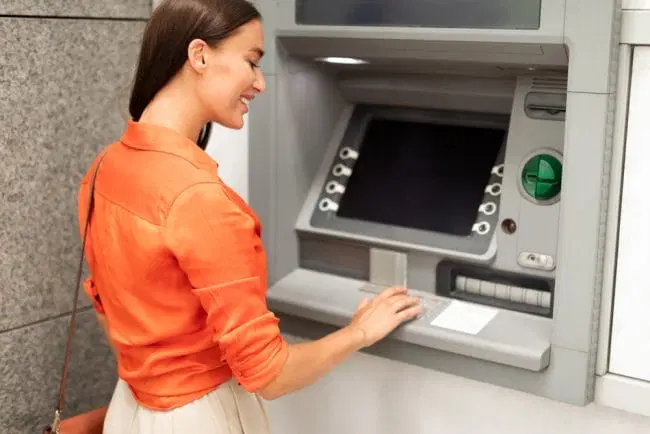
5 Reasons We Are Flagging Your Cash Withdrawals In 2026
(MENAFN- Budget and the Bees)
In 2026, using cash feels almost rebellious. With digital wallets, biometrics, and instant transfers dominating the economy, walking into a branch to withdraw a stack of physical currency is becoming a rare event. Because of this shift, financial institutions are on high alert. Tellers are no longer just customer service agents; they are the front-line defense against money laundering and complex fraud schemes.
While you might view your money as yours to do with as you please, banks are under strict federal mandates to monitor the flow of currency. The scrutiny is tighter than ever, and the algorithms are faster. If you have felt a teller hesitate or ask probing questions lately, it wasn't just curiosity. Here are five reasons why bank tellers are flagging your cash withdrawals this year.
1. You Are“Structuring” Your TransactionsThe most common way innocent people get into trouble is by trying to avoid the government's radar. Everyone knows the $10,000 rule: banks must report any cash transaction over that amount to the IRS. Consequently, some customers try to get clever. They withdraw $9,000 today and $2,000 tomorrow, thinking they are outsmarting the system.
In banking terms, this is called“structuring,” and it is actually a federal crime. Tellers are trained to spot this pattern immediately. If you consistently keep your withdrawals just under the reporting threshold, it triggers a Suspicious Activity Report (SAR). Ironically, by trying to avoid attention, you are guaranteeing it.
2. Your Withdrawal Doesn't Match Your“AI Profile”Banks in 2026 rely heavily on predictive artificial intelligence. Your account has a digital profile that learns your spending habits, your income cycles, and your typical cash needs. If you have withdrawn $200 a week for five years and suddenly request $8,000 on a Tuesday, the system flashes a warning before the teller even counts the bills.
This is known as a behavioral anomaly. While it might just be for a used car or a contractor, the bank views it as a potential account takeover or a sign of elder fraud. Therefore, the teller is required to slow the transaction down and verify your identity with extra layers of security.
3. You Appear Distressed or CoachedScammers have become incredibly sophisticated, often keeping victims on the phone during a transaction. Tellers are trained to look for non-verbal cues that suggest coercion. Are you looking at your phone constantly? Do you seem nervous or fearful? Are you reading from a note?
If a teller asks,“What is this cash for?” they aren't being nosy; they are doing a safety check. If you look at a companion for the answer or seem unable to explain why you need the money, the teller will flag the transaction to protect you from potential theft.
4. You Are“Branch Hopping”In the past, people could visit three different branches in one afternoon to withdraw cash without triggering a centralized alert. However, modern banking systems are instant and interconnected. If you withdraw $3,000 at the downtown branch and then drive to the suburban branch an hour later for another $3,000, the teller at the second location already knows.
This behavior, often called“smurfing,” is a classic money laundering tacti. Even if you are just running errands and it is convenient for you, the velocity of the withdrawals looks suspicious. As a result, the bank may freeze your account temporarily to investigate the source and destination of the funds.
5. Refusing to Answer Standard QuestionsPrivacy is important, but in the banking world, silence is suspicious. When a teller asks the purpose of a large withdrawal, they are fulfilling“Know Your Customer” (KYC) regulations. If you get defensive, angry, or say“It's none of your business,” you immediately escalate the situation.
A vague answer coupled with hostility is a primary red flag. Tellers are instructed to document the customer's reaction. While you don't need to provide an itemized receipt of your plans, a simple, reasonable explanation goes a long way. Conversely, refusing to cooperate forces the bank to assume the worst.
The Era of TransparencyThe days of anonymous banking are effectively over. While you certainly have the right to access your cash, understanding how the system works can save you from an awkward interrogation or a frozen account. Tellers aren't trying to make your life difficult; usually, they are just trying to keep their jobs and protect your assets.
Have you ever had a transaction questioned by a bank employee? Share your experience in the comments below.

Legal Disclaimer:
MENAFN provides the
information “as is” without warranty of any kind. We do not accept
any responsibility or liability for the accuracy, content, images,
videos, licenses, completeness, legality, or reliability of the information
contained in this article. If you have any complaints or copyright
issues related to this article, kindly contact the provider above.
Most popular stories
Market Research

More Story







Comments
No comment