





403
Sorry!!
Error! We're sorry, but the page you were looking for doesn't exist.
Top CMMS Use Cases That Reduce Maintenance Costs
(MENAFN- Robotics & Automation News) Top CMMS Use Cases That Reduce Maintenance Costs
January 1, 2026 by Sam Francis
Most teams these days notice that their maintenance costs are rising. The budget gets used up due to unexpected downtime, overtime hours, emergency services, part replacement orders, and so on.
If this is also happening with your maintenance team, then you are not alone. Wondering about the reason for such hiked costs for maintenance? The answer is simple: you may lack proper visibility, and your operations might be running on guesswork.
Major reasons costs increase while running maintenance operations are when things are not centralized and streamlined, and proper planning is not involved. So, teams are always paying for the surprises. This is where a CMMS (Computerized Maintenance Management System) changes everything.
It reduces costs by setting up a system that eliminates waste, reduces breakdowns, prepares you beforehand, notifies you of repairs or replacements, and helps you make smarter decisions.
In this article, we will break down practical CMMS use cases that lower maintenance costs and add to the overall efficiency of your operations.
How is CMMS a Cost-Saving Tool First?One of the main reasons businesses streamline their operations is to save costs. When things are under control, it automatically leads to cost savings.
A reliable CMMS helps you achieve this simply by providing better visibility, consistency, and automation. These features stop minor problems from turning into expensive ones.
Suppose someone asks you about the asset that cost you the most money last quarter, would you be able to answer within a minute? If your answer is no, a CMMS can help you change that.
A CMMS pulls all the crucial information together, giving you a clear picture of which machines are slipping, which preventive maintenance was missed, and what parts are being wasted. When you see the clear data and identify the pattern, you can decide to increase your savings.
CMMS Use Cases That Reduce Maintenance CostsIt's clear now that CMMS is a cost-saving tool, so let's move on to exploring some use cases of CMMS that reduce maintenance costs below.
Scheduling Preventive Maintenance with PrecisionBefore any breakdown happens, there are many warning signals that teams miss. These surprise breakdowns are easily avoidable and cost-effective if the team's time is spent on the right maintenance. A CMMS helps you schedule PM based on what actually makes sense, like manufacturer guidelines, usage hours, or even simple condition readings.
Moving from Time-Based to Condition-Based PMOne of the most effective cost-saving features of a CMMS is its condition-based triggers. Through this, you do not have to service a machine just because a calendar says so, but when the data says so. For example, you only schedule a servicing when vibration spikes, when runtime hits a threshold, or when temperature drifts.
This custom maintenance saves you from replacing or servicing the whole thing and uses your budget only when it's needed. This will also avoid under-maintenance or over-maintenance of machinery, thus saving you a lot of money.
Cutting Down Wasted Technician TimeLabor costs use a considerable portion of the budget. But when technicians spend half the time hunting for information instead of actually fixing things, this labor cost adds up.
A CMMS removes this wasted time by providing all the data in one place. It streamlines everything, from tasks, instructions, SOPs, and checklists to asset history. When teams know exactly what needs to be done, it saves time and money.
Prioritizing High-Impact Work AutomaticallyFixing the wrong thing first is another way to drain your funds. When teams do not have clear visibility, they chase low-priority tasks while the high-impact issues keep mounting up. This leads to two expensive mistakes: unnecessary labor cost increases and a high-impact issue that later becomes an expensive repair.
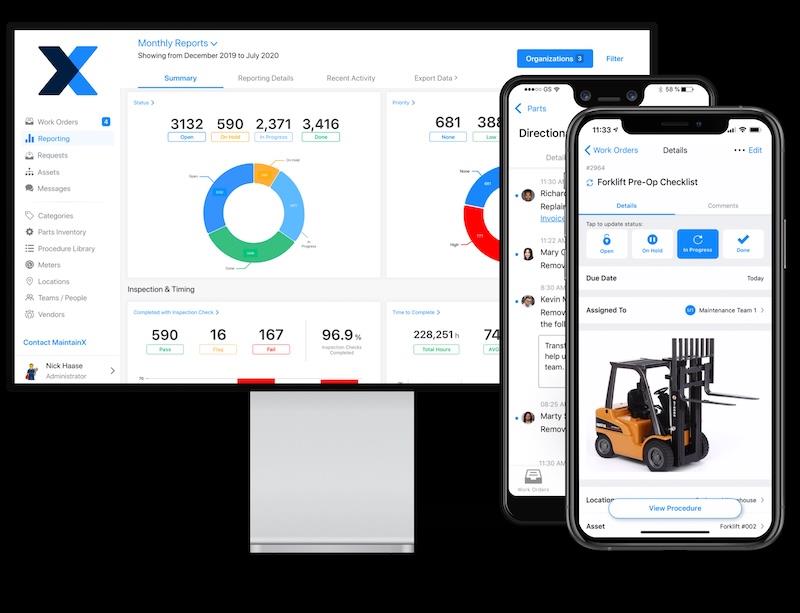
Dashboards in a CMMS make the priorities clear. You can see overdue PMs, critical assets, or jobs that can cause downtime if ignored. With this knowledge, managers can assign the labor in the right place and save on unnecessary overtime expenses.
Avoid Rush Orders and Emergency Shipping FeesOne of the fastest ways to disrupt a budget is emergency part purchases. When a critical part stops functioning, it brings the entire operation to a halt.
Teams end up paying huge overnight shipment fees or buying a product that is available at that point and not cost-effective. A CMMS can avoid this mess by tracking parts usage and notifying you when the inventory is low.
This will help you avoid another costly mistake of over-ordering or double-ordering. A CMMS syncs the purchasing data, stock levels, etc., so that different supervisors working on different sites know what is already in stock, avoiding the chances of duplication or guesswork.
ConclusionA reliable CMMS has many use cases that deal with different kinds of cost leaks. Unexpected downtime, wasted labor, over-ordering parts, or paying emergency shipping costs for the lack of parts – all these issues can easily be avoided with better visibility. That is exactly what CMMS offers.
Most teams do not roll out all the features at once. You can start slow with better PM scheduling or inventory alerts and notice the reduced costs. Once your team gets the momentum, cost savings will become a natural part of how your team operates on a daily basis with the help of a CMMS.

Legal Disclaimer:
MENAFN provides the
information “as is” without warranty of any kind. We do not accept
any responsibility or liability for the accuracy, content, images,
videos, licenses, completeness, legality, or reliability of the information
contained in this article. If you have any complaints or copyright
issues related to this article, kindly contact the provider above.
Most popular stories
Market Research

More Story








Comments
No comment