







403
Sorry!!
Error! We're sorry, but the page you were looking for doesn't exist.
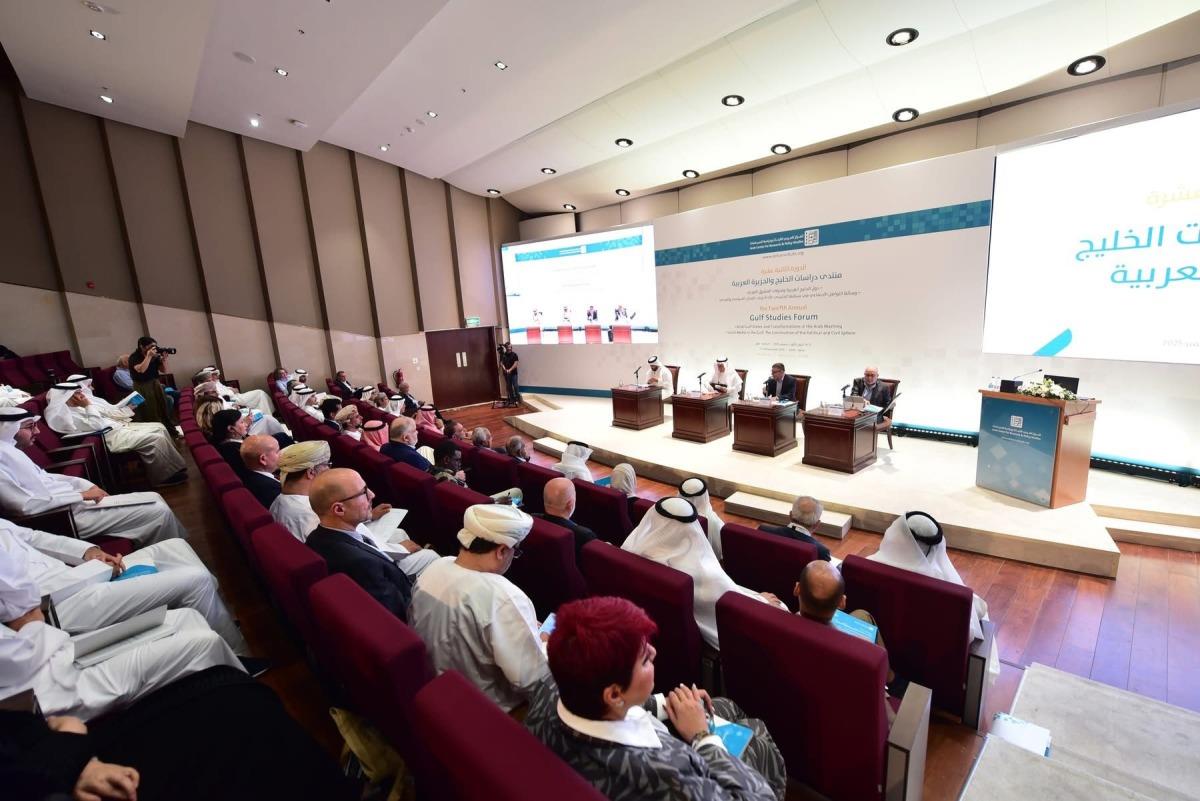
Twelfth Annual Gulf Studies Forum Sets Off In Doha
(MENAFN- The Peninsula)
The Peninsula
Doha, Qatar: The twelfth annual Gulf Studies Forum opened yesterday in Doha. The event is organized by the Arab Center for Research and Policy Studies and runs from December 13-14, 2025.
This year's forum is structured around two parallel tracks: the first examines“Arab Gulf States and Transformations in the Arab Mashreq”, while the second addresses“Social Media in the Gulf: The Construction of the Political and Civil Sphere”. Across both tracks, 40 researchers from the Gulf and beyond are presenting their papers over a total of 16 sessions.
The opening session was introduced by Alanoud Al-Khalifa, a researcher in the ACRPS Gulf and Arabian Peninsula Studies Unit. She noted that this year's forum convenes amid an exceptionally sensitive regional moment characterized by overlapping major transformations that require a renewed reflection on the Gulf's position and possible roles in the region's future.
Operation Al-Aqsa Flood and the subsequent genocidal war on Gaza, she said, inaugurated a new era in the Mashreq, with repercussions extending to Lebanon, Yemen and Iraq, followed by the fall of the Assad regime in Syria.
Although these shifts do not appear Gulf-centred, the Gulf region has been deeply affected and occupies a central position in their trajectory. Parallel to this turbulent context, Al Khalifa highlighted another equally significant phenomenon: the use of social media in the Gulf states.
The Gulf states now rank among the highest globally in digital usage, opening up new questions posed by digitization of the state, identity, privacy, law, economy, and the symbolic representation of society, with a specific focus on social media.
The forum opened with a first session on“Arab Gulf States and Transformations in the Arab Mashreq”, chaired by Marwan Kabalan. Abdullah Al-Shaiji presented“The Repercussions of Al-Aqsa Flood and Transformations in the Arab Mashreq for the GCC States”, arguing that Al Aqsa Flood represented a strategic turning point reshaping maps of influence and alliances.
Asaad Saleh Al-Shamlan presented“GCC States and Mashreq Transformations: Determinants of Engagement and Response”, arguing for a regional order anchored in deep integration that supports developmental ambitions and strengthens resilience against challenges. Khalid Al-Khulaifi's paper,“Gulf Minilateralism: A New Mode of Cooperation amid Mashreq Transformations” argued that the Gulf is witnessing a shift in regional cooperation patterns, with the decline of traditional blocs in favour of“minilateralism” as a pragmatic alternative for coordination.
The second session, chaired by Abdul Hadi Alajmi, focused on“Transformations in the Arab Mashreq and the Implications for the Gulf States”. Abdullah Al-Ghailani's paper,“GCC Security amid Mashreq Transformations: Between Absent Consensus and Multiple Threats”, called for a new strategic vision that enhances Gulf autonomy, builds internal consensus, and reassesses positions on key issues – foremost the Palestinian cause – to strengthen Gulf agency and geostrategic positioning in the Mashreq.

Legal Disclaimer:
MENAFN provides the
information “as is” without warranty of any kind. We do not accept
any responsibility or liability for the accuracy, content, images,
videos, licenses, completeness, legality, or reliability of the information
contained in this article. If you have any complaints or copyright
issues related to this article, kindly contact the provider above.
Most popular stories
Market Research

More Story



Comments
No comment