




403
Sorry!!
Error! We're sorry, but the page you were looking for doesn't exist.

Does India Need A 'Right To Disconnect' Law For Better Work-Life Balance?
(MENAFN- Live Mint)
Limited access to decent work

Also Read | After labour codes, Centre to focus on job-intensive sectors in FY27 bud High burnout rates
Right to disconnect: will it help?
Indians work some of the longest hours in a week globally. Unsurprisingly, therefore, Indian employees also report high levels of burnout. Yet our productivity is among the lowest worldwide even as digital connectivity has expanded work hours.
While Infosys founder Narayana Murthy insists that Indians should work more than 70 hours a week (labour laws cap it at 48 hours) for“nation building", Lok Sabha MP Supriya Sule has introduced the Right to Disconnect Bill 2025 in the winter session of Parliament, which seeks to empower employees to decline work-related calls or messages outside their scheduled work hours.
Since the bill was introduced by an opposition MP, it may not have the votes required for approval, but it has certainly put the spotlight on workers' health. Mint examines what different surveys and reports show about India's work-life balance.
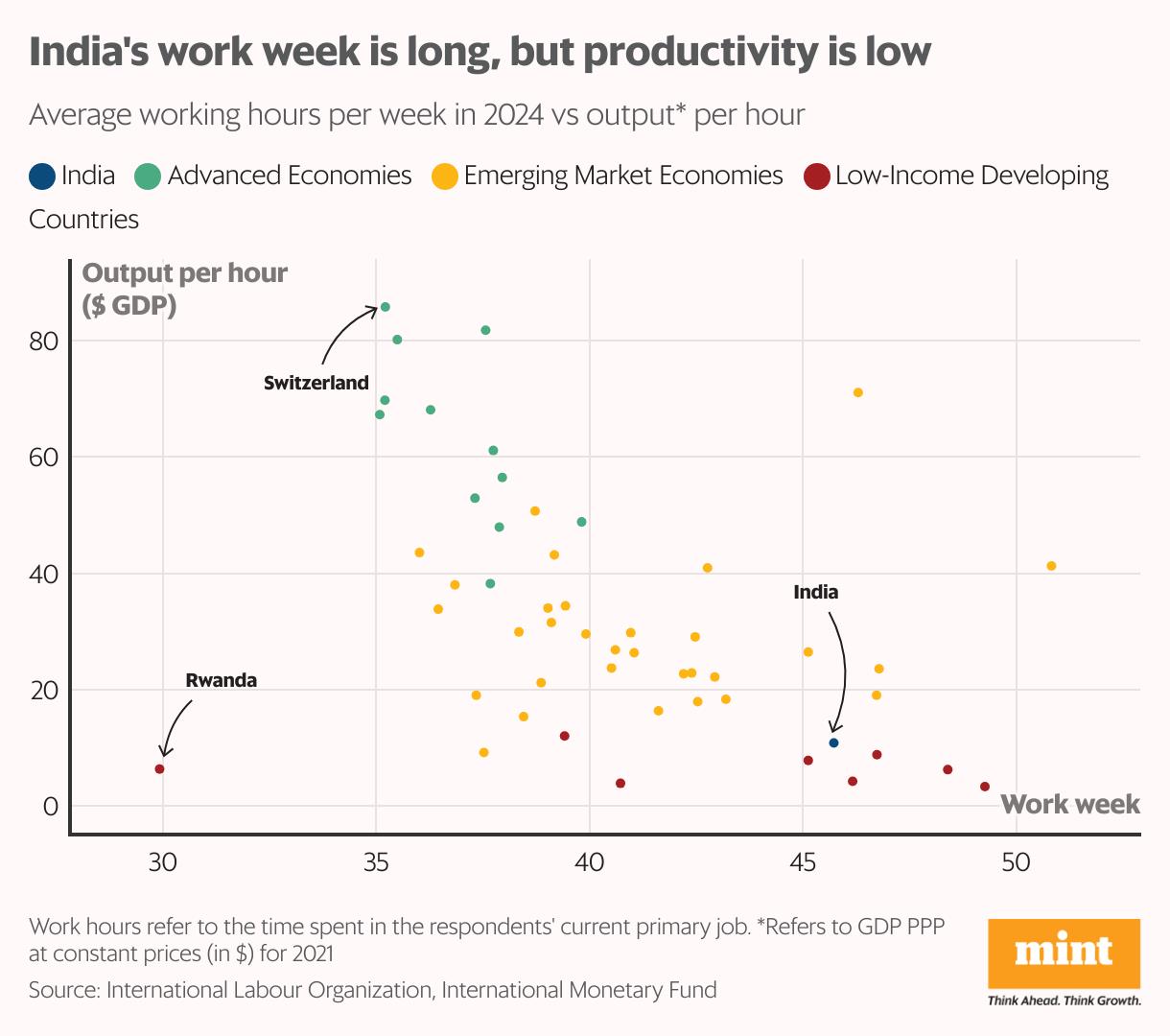
Also Read | Productivity needs focus, not long hours, says Viraj Bahl of Ve Long hours, low productivityIndians worked more than 45 hours a week on average in 2024 - the ninth highest globally, according to the International Labour Organization. But in terms of productivity, India delivered an output of $10.8 per hour, one of the lowest globally and the second-lowest among emerging economies.
The problem is rooted in outdated skills, widespread informality, uneven job opportunities beyond big cities, and health issues caused by exploitative work cultures- factors that collectively erode cognitive performance and motivation.
Data from the ILO shows that advanced economies tend to achieve higher productivity while working fewer hours per week. Take Switzerland, for example. The average work week there is about 35.2 hours, the fourth-lowest in the world, but it delivers an output of nearly $86 per hour-the highest globally.
Limited access to decent work
India's score in the global labour rights index 2024 was 65 out of 100, falling in the category of 'limited access to decent work'. The score has remained unchanged since 2022 and is down by two points since 2020.
Weak labour protections often mean unstable jobs, unpredictable hours, limited safety nets, and little bargaining power - all of which worsen burnout and reduce long-term productivity.
A further breakdown of the scores across various parameters on a scale of 100 shows that India lags severely in fair treatment, with a score of 20, followed by freedom of association, employment security, and family responsibilities. The labour rights index is part of a biennial report jointly released by the WageIndicator Foundation and Centre for Labour Research that assesses labour laws worldwide.
Also Read | After labour codes, Centre to focus on job-intensive sectors in FY27 bud High burnout rates
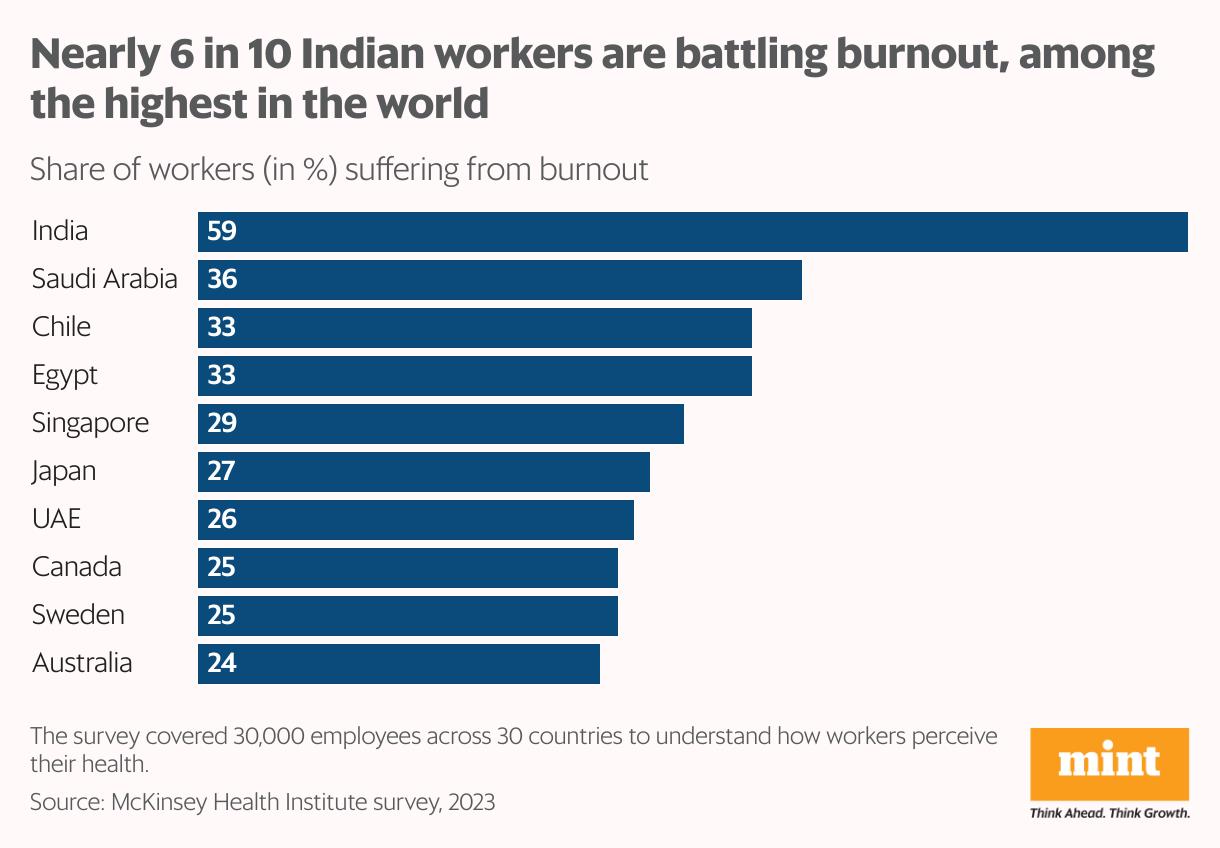
For many Indians, especially those in formal jobs, burnout has quietly become a normal part of working life. The 2023 McKinsey Health Institute report showed that 59% of Indian workers were burnt out, the highest among the 30 countries surveyed.
The symptoms paint an even more worrying picture: 67% say their thinking feels foggy, 62% feel drained, 59% wake up with a reluctance to work, and 58% feel emotionally overloaded. And yet, nearly half of these workers continue to function at high levels, even as growing pressures steadily wear them down, the report said.
Right to disconnect: will it help?
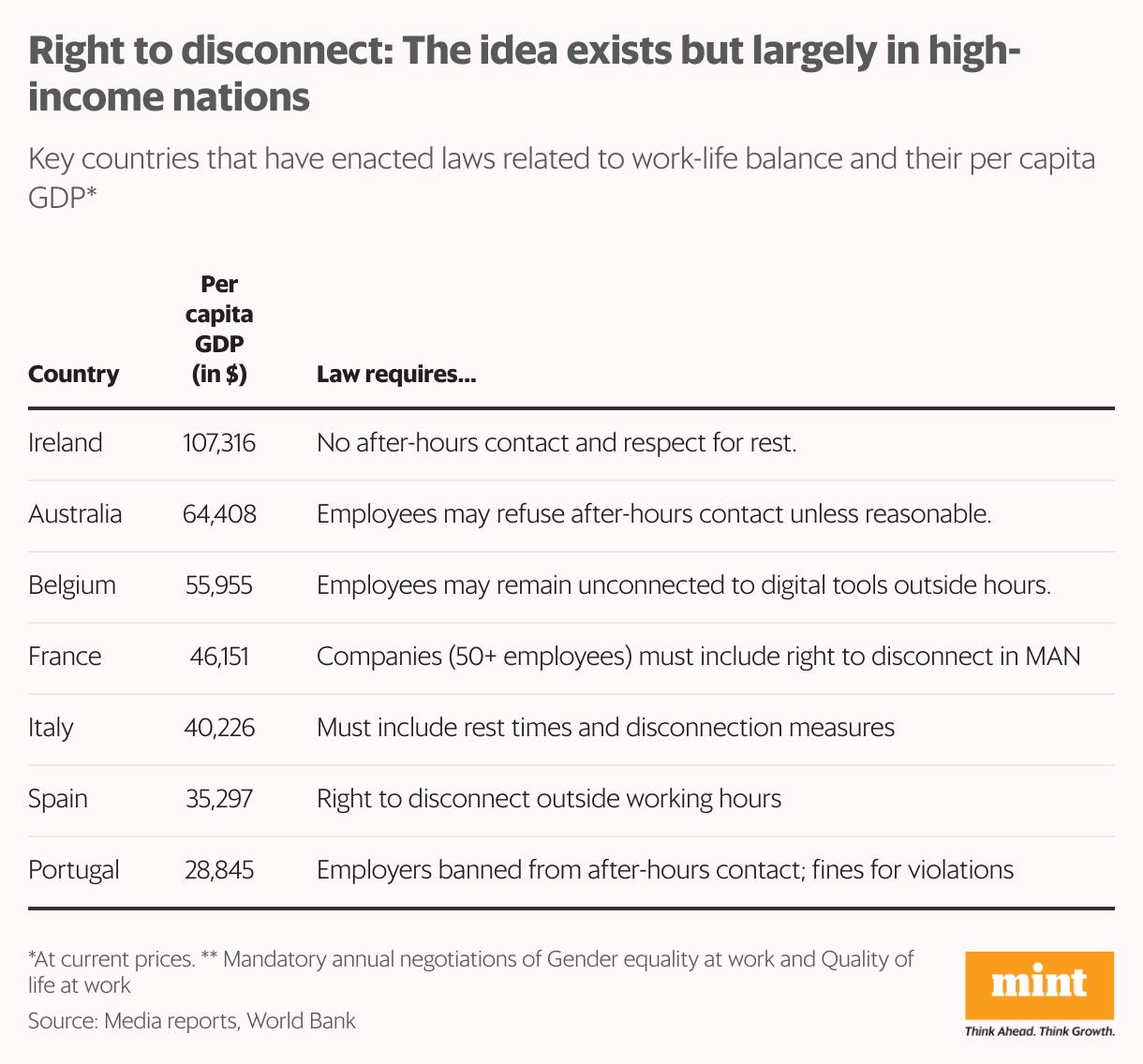
Technological innovation and digital integration has further skewed the work-life balance. While the call for Indians to work harder to has merit, this can also be done by prioritizing productivity over the number of hours worked or availability after work hours. While workers in many low- and middle-income economies work long hours with low productivity, laws mandating the right to disconnect are limited to a handful of high-income countries.
Moreover, only a small part of the formal workforce, primarily in the professional services sector, is likely to benefit from such a law in India. India may need broader laws to ensure workers aren't stuck with long, unproductive work hours.
Also Read | S. Mahendra Dev: India's labour reforms promote both inclusion and productiv
Legal Disclaimer:
MENAFN provides the
information “as is” without warranty of any kind. We do not accept
any responsibility or liability for the accuracy, content, images,
videos, licenses, completeness, legality, or reliability of the information
contained in this article. If you have any complaints or copyright
issues related to this article, kindly contact the provider above.
Most popular stories
Market Research

More Story







Comments
No comment