




403
Sorry!!
Error! We're sorry, but the page you were looking for doesn't exist.
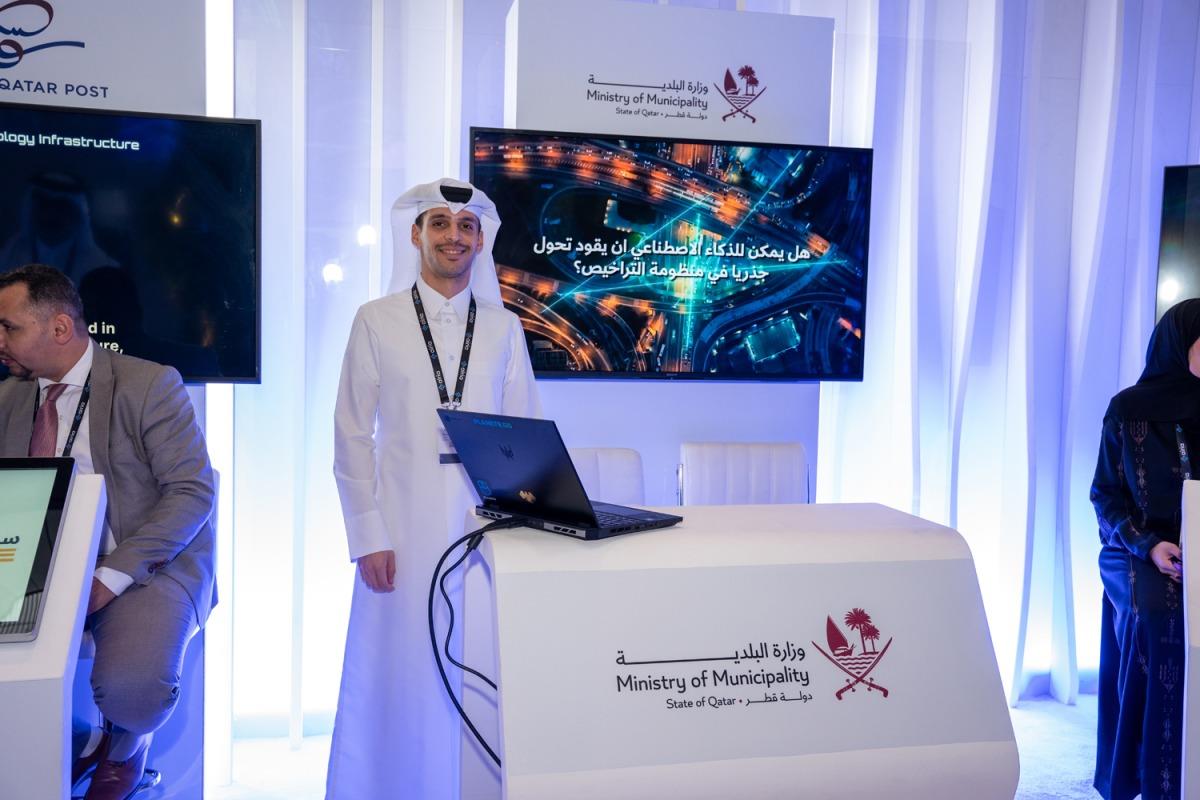
Qatar Showcases 20 National AI Projects At World Summit AI Qatar 2025
(MENAFN- The Peninsula)
The Peninsula
Doha, Qatar: The World Summit AI – Qatar 2025 witnessed the unveiling of the 'Qatar AI Pavilion,' which brought together more than 20 national AI-driven projects developed by over 14 government and private institutions.
The pavilion demonstrated the significant progress achieved by Qatar in developing and adopting artificial intelligence technologies, and its growing role in shaping an advanced digital future aligned with the Digital Agenda 2030 and Qatar National Vision 2030.
The Qatar AI Pavilion showcased a comprehensive set of projects supported by the Government AI Program, a national initiative led by the Ministry of Communications and Information Technology (MCIT) in partnership with global and local technology companies to develop innovative AI solutions that enhance public service quality and accelerate digital transformation across government entities.
MCIT presented advanced projects including the AI-enhanced Human Resources System, which automates the full recruitment lifecycle, from application filtering to intelligent interviews that evaluate candidates and support interviewers, through to final assessment.
The Ministry also showcased the Smart Tendering System, designed to autonomously generate tender documents, conduct technical evaluations, and assess submissions using specialised AI models.
The pavilion also highlighted the AI-Powered Legislation System developed by the Council of Ministers Secretariat General to support legislative drafting through automated benchmarking, compliance checks, and analytical reporting, significantly accelerating and improving the legislative process.
The ministry also highlighted several AI and machine-learning tools that enhance labour market governance, operational efficiency, and policy development.
The Ministry also introduced three intelligent assistants for: single-window service customers, users of the Ministry's website, and single-window employees receiving real-time guidance to improve service efficiency.
The Ministry of Municipality showcased its AI-powered Building Permit System, which analyses engineering drawings digitally and extracts essential data, reducing permit issuance time to roughly two hours while improving accuracy and processing speed.
The Ministry of Awqaf and Islamic Affairs showcased AI agents developed for the Islam Web platform to provide reliable religious guidance based on verified sources.
The Ministry also developed AI solutions to make Friday sermons accessible to non-Arabic speakers through advanced translation and language-processing technologies Museums presented the 'AI Museum Tour,' an AI-powered cultural experience that allows visitors to explore museums, heritage sites, and public artworks in a personalised and seamless way.
The platform offers instant artwork recognition, intelligent contextual explanations, and customized routes based on user interests. It also includes creative tools such as the Arts Lab for reimagining artworks.
In the field of Arabic language innovation, Hamad Bin Khalifa University - a member of Qatar Foundation - presented the updated release of Fanar 2.0, the Arabic generative AI model developed by the Qatar Computing Research Institute.
The new release demonstrated advanced capabilities in understanding and generating Arabic text with linguistic and cultural accuracy, supporting future applications in media, education, and government digital services.

Legal Disclaimer:
MENAFN provides the
information “as is” without warranty of any kind. We do not accept
any responsibility or liability for the accuracy, content, images,
videos, licenses, completeness, legality, or reliability of the information
contained in this article. If you have any complaints or copyright
issues related to this article, kindly contact the provider above.
Most popular stories
Market Research

More Story





Comments
No comment