




403
Sorry!!
Error! We're sorry, but the page you were looking for doesn't exist.
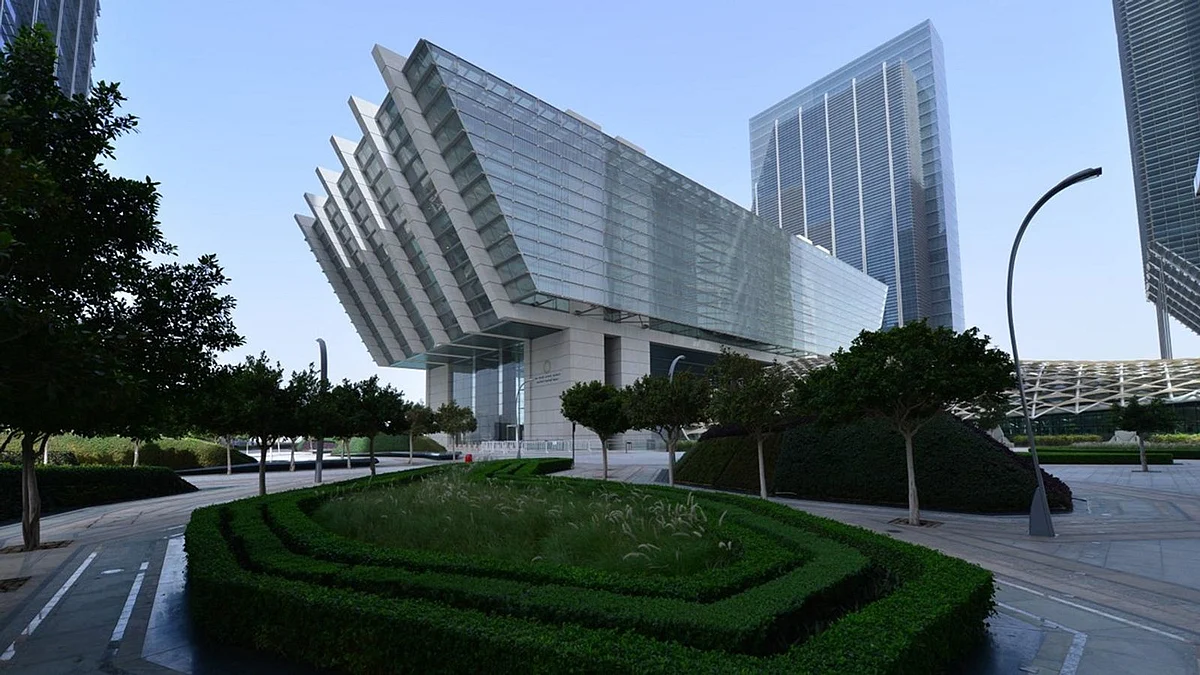
Capital Corridors: How The UAE Is Redrawing The Global Map For Investment
(MENAFN- Khaleej Times)
As Abu Dhabi Finance Week comes to a close, it does so in a global environment defined by complexity and constrained by statecraft – but there is an inherent opportunity for those who can bridge the world's flows of capital, talent, and technology.
Few countries have demonstrated this capability as clearly, or as convincingly, as the UAE). Today, the UAE stands at the intersection of Europe, Asia and Africa not merely as a banking or trading hub, but as a capital corridor linking continents and economies – the UAE has become a financial centre where global capital flows are engineered, not simply channelled.
Recommended For YouThe evidence is unmistakable. As per a Bank of America estimate, in 2025, the UAE's GDP is expected to reach Dh2.1 trillion, (up from Dh1.8 trillion in 2024) and grow at a robust 4 per cent. Perhaps of greater significance is the fact that non-oil economic activity contributes over 75 per cent of total output – the highest share in the nation's 54-year history. Non-oil GDP expanded around 5 per cent in the same year, reflecting a diversified economy built on trading, logistics, finance, services, industry, and innovation. These are not temporary gains; they are the direct result of decades of forward planning and relentless focus from the UAE's inspired and visionary Leadership.
At the international level, the UAE has become one of the world's most influential global investors, underpinned by sovereign wealth funds with $3 trillion in assets. Sheikh Tahnoon Bin Zayed Al Nahyan, Deputy Ruler of Abu Dhabi, has formulated the investment strategy for the UAE and has deployed vast sums in his role as Chairman of Adia, ADQ and IHC. In March 2025, the UAE and the United States announced a $1.4 trillion, 10-year investment framework spanning AI, advanced manufacturing, data infrastructure and clean energy – an unprecedented sovereign commitment that signals the UAE's determination to shape the next generation of global industries.
And this is not an isolated example. The country's technology partnerships increasingly command global attention. The $1.5 billion G42–Microsoft collaboration, announced in 2024 to accelerate AI adoption and digital infrastructure, is one such symbol of how the UAE is positioning itself at the centre of future innovation networks and taking this across borders. It is also instructive to note that the largest FDI deployed in Africa comes from the UAE – roughly US$200 billion and growing, a third of which is dedicated to green energy.
The statement of intent is definitive and exemplified by the following transactions: all publicly reported – (i) the take-private of Aligned Data Centers ($40 billion enterprise value), where MGX was part of a consortium that included AIP and BlackRock's GIP; (ii) Adnoc's acquisition of Covestro (€15 billion enterprise value); and (iii) Mubadala Capital's acquisition of CI Financial ($12 billion enterprise value). These illustrate both the scale and depth of UAE-linked capital internationally.
Inbound capital tells the same story. With $45.6 billion in FDI in 2024, and a global ranking of second for greenfield projects, the UAE continues to attract companies, innovators and investors seeking stability, scale and access to global markets. This dual dynamic – outbound capital at sovereign scale and inbound investment at record levels – is the hallmark of a mature global capital corridor.
What sets the UAE apart is that the Government formulates a vision for the future and deploys capital strategically to build knowledge systems and world-class infrastructure. An excellent example of forward thinking was the strategic appointment of Omar Al-Olama as UAE Minister of AI in October 2017, the first appointment of a dedicated Minister of AI globally. Across Abu Dhabi and Dubai, sovereign wealth funds and leading institutional investors are directing capital into AI and advanced compute, hyperscale data centres, deep-technology manufacturing, renewable energy and green hydrogen, world-class logistics infrastructure, healthcare excellence, and advanced education.
These are the engines of long-term competitiveness. Bank of America's research shows that economies capable of investing simultaneously in physical infrastructure, digital capability, and human capital experience stronger, more resilient growth. The UAE is among the few countries achieving this at scale and has become a destination of choice for today's global talent pool.
This transformation is reinforced by the evolution of the country's capital markets – another essential pillar of the nation's strategy. Abu Dhabi Global Market, now the largest international financial centre in the MENA region, recorded more than 11,100 active licences at the end of H1 2025, with assets under management rising 42 per cent year-on-year.
Alongside this growth are strategic partnerships with global asset managers including BlackRock and Apollo, bringing liquidity, global standards and deeper institutional engagement. Down the road from Abu Dhabi, the Dubai International Financial Centre has roughly 8,500 active companies with a total workforce of over 50,000 professionals managing AUMs in excess of $1 trillion. The UAE's capital markets have entered a stage where they are not only supporting domestic growth but increasingly integrated into the world's major financial systems.
Underlying all this progress is a vital competitive advantage: the UAE has become a global centre of mobility. It attracts exceptional talent from across the world through its stability, safety, openness, infrastructure and quality of life. Diversity and inclusion here are not aspirational goals; they are lived realities that expand the country's capacity for innovation. In a world where talent drives technology – and technology drives capital – the UAE's ability to mobilise people is a defining strength.
As Abu Dhabi Finance Week convenes under the theme“Engineering the Capital Network,” it is clear the UAE is not just participating in global capital flows – it is helping shape the architecture through which those flows move. It is creating the networks, institutions and knowledge ecosystems that will define the next decade of economic connectivity.
Having spent more than 30 years in the UAE, I have witnessed its evolution from an ambitious young economy into one of the world's most strategically connected global hubs. What has always distinguished the region is the consistency of its vision and the discipline of its execution. Today, those attributes have positioned the UAE at the centre of a new global architecture – a place where capital, technology and talent converge.
For investors and institutions, the message is clear. The UAE is not simply a destination for capital – it is a platform for global connectivity and global ambition. It is a corridor linking continents, industries and ideas. And as the world gathers in Abu Dhabi this week, one truth is evident: the UAE is no longer influenced by global capital flows – it is helping define them.
The writer is President MENA at Bank of America.

Legal Disclaimer:
MENAFN provides the
information “as is” without warranty of any kind. We do not accept
any responsibility or liability for the accuracy, content, images,
videos, licenses, completeness, legality, or reliability of the information
contained in this article. If you have any complaints or copyright
issues related to this article, kindly contact the provider above.
Most popular stories
Market Research

More Story






Comments
No comment