




403
Sorry!!
Error! We're sorry, but the page you were looking for doesn't exist.
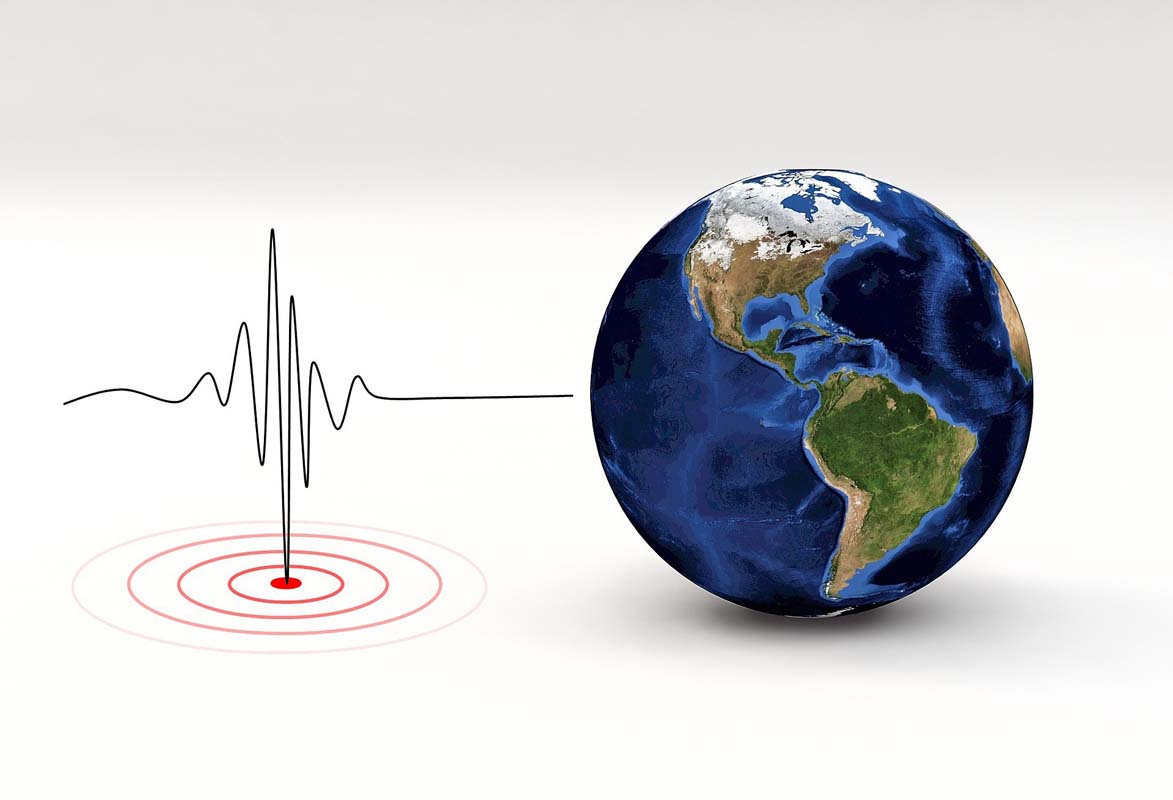
Climate change results in mountain glaciers disappearing rapidly
(MENAFN) Scientists warn that mountain glaciers are rapidly vanishing due to climate change, posing severe risks to water resources for millions and increasing the likelihood of both land- and weather-related disasters, according to recent reports. The United Nations has designated 2025 as the International Year of Glaciers’ Preservation, with this year’s International Mountain Day on Dec. 11 emphasizing the theme: “Glaciers matter for water, food and livelihoods in mountains and beyond.”
Recent assessments indicate that between 2000 and 2020, mountain glaciers lost an average of 267 gigatons of ice annually. Reports also note that 2023 recorded the fastest rate of glacier loss in history. Climate projections paint a dire picture: even if global warming is kept to 1.5°C, roughly half of the world’s mountain glaciers will disappear by the century’s end; at 2°C of warming, 60%–70% are projected to vanish, and nearly all could be lost if temperatures rise by 3°C.
Istanbul Technical University Professor Orhan Ince, speaking about the TerrArctic Mega Grant Project, highlighted the rapid and irreversible changes affecting high-mountain ecosystems. “The consequences are staggering,” Ince said. “In the Himalayas alone, 1.9 billion people’s water supply is at risk. South America faces 12%–22% higher water stress in agricultural regions. Global hydropower production could drop 8%–12% by 2050. In Türkiye, seasonal river flows critical for drinking water and irrigation may decline 20%–25% by mid-century. These losses are irreversible, but they can still be slowed.”
Ince stressed that glacier shrinkage is no longer limited to isolated mountain systems but is approaching near-total extinction in several regions. “The European Alps have already lost 65% of their glacier volume since 1970, Alaska–Yukon more than 30%, and parts of the Himalayas over 40%,” he noted.
Melting glaciers are also driving an increase in geological hazards, including landslides, flash floods, and glacial lake outburst floods, while disrupting ecosystems and destabilizing global atmospheric patterns. In Türkiye, glaciers on Mount Agri (Ararat), the Cilo-Sat range, Kackar Mountains, and Mount Erciyes have shrunk dramatically over the last four decades, with ice losses ranging from 40%–60%. “Glaciers on Mount Agri have shrunk by more than half since the 1980s. In the Kackar range, glaciers are retreating 10–20 meters (33-66 feet) per year on average,” Ince said.
These reductions threaten water systems in Türkiye’s Eastern Black Sea region, affecting agricultural irrigation, hydropower generation, and groundwater recharge, while increasing landslide risks. Arctic warming, occurring three to four times faster than the global average, is further altering precipitation and temperature patterns across mountain belts from the South Caucasus to the Himalayas.
The TerrArctic Mega Grant Project, funded by the Russian Ministry of Science and Higher Education and led by Tyumen State University, conducts field measurements in Siberia’s taiga forests, tundra transition zones, and thawing permafrost regions. Ince warned that the ongoing glacier-fed water losses could force at least 30 million people to leave their homes between 2030 and 2050.
To slow glacier collapse, Ince called for immediate steps, including high-resolution monitoring via Lidar, GNSS, Sentinel satellites, and high-altitude drones; early-warning hydrological models for flash floods and glacial lake outbursts; and urgent global reductions in CO₂ and black carbon emissions. “Without those measures,” he concluded, “today’s extreme glacier loss will become a permanent feature of daily life after 2050.”
Recent assessments indicate that between 2000 and 2020, mountain glaciers lost an average of 267 gigatons of ice annually. Reports also note that 2023 recorded the fastest rate of glacier loss in history. Climate projections paint a dire picture: even if global warming is kept to 1.5°C, roughly half of the world’s mountain glaciers will disappear by the century’s end; at 2°C of warming, 60%–70% are projected to vanish, and nearly all could be lost if temperatures rise by 3°C.
Istanbul Technical University Professor Orhan Ince, speaking about the TerrArctic Mega Grant Project, highlighted the rapid and irreversible changes affecting high-mountain ecosystems. “The consequences are staggering,” Ince said. “In the Himalayas alone, 1.9 billion people’s water supply is at risk. South America faces 12%–22% higher water stress in agricultural regions. Global hydropower production could drop 8%–12% by 2050. In Türkiye, seasonal river flows critical for drinking water and irrigation may decline 20%–25% by mid-century. These losses are irreversible, but they can still be slowed.”
Ince stressed that glacier shrinkage is no longer limited to isolated mountain systems but is approaching near-total extinction in several regions. “The European Alps have already lost 65% of their glacier volume since 1970, Alaska–Yukon more than 30%, and parts of the Himalayas over 40%,” he noted.
Melting glaciers are also driving an increase in geological hazards, including landslides, flash floods, and glacial lake outburst floods, while disrupting ecosystems and destabilizing global atmospheric patterns. In Türkiye, glaciers on Mount Agri (Ararat), the Cilo-Sat range, Kackar Mountains, and Mount Erciyes have shrunk dramatically over the last four decades, with ice losses ranging from 40%–60%. “Glaciers on Mount Agri have shrunk by more than half since the 1980s. In the Kackar range, glaciers are retreating 10–20 meters (33-66 feet) per year on average,” Ince said.
These reductions threaten water systems in Türkiye’s Eastern Black Sea region, affecting agricultural irrigation, hydropower generation, and groundwater recharge, while increasing landslide risks. Arctic warming, occurring three to four times faster than the global average, is further altering precipitation and temperature patterns across mountain belts from the South Caucasus to the Himalayas.
The TerrArctic Mega Grant Project, funded by the Russian Ministry of Science and Higher Education and led by Tyumen State University, conducts field measurements in Siberia’s taiga forests, tundra transition zones, and thawing permafrost regions. Ince warned that the ongoing glacier-fed water losses could force at least 30 million people to leave their homes between 2030 and 2050.
To slow glacier collapse, Ince called for immediate steps, including high-resolution monitoring via Lidar, GNSS, Sentinel satellites, and high-altitude drones; early-warning hydrological models for flash floods and glacial lake outbursts; and urgent global reductions in CO₂ and black carbon emissions. “Without those measures,” he concluded, “today’s extreme glacier loss will become a permanent feature of daily life after 2050.”

Legal Disclaimer:
MENAFN provides the
information “as is” without warranty of any kind. We do not accept
any responsibility or liability for the accuracy, content, images,
videos, licenses, completeness, legality, or reliability of the information
contained in this article. If you have any complaints or copyright
issues related to this article, kindly contact the provider above.
Most popular stories
Market Research

More Story






Comments
No comment