




403
Sorry!!
Error! We're sorry, but the page you were looking for doesn't exist.
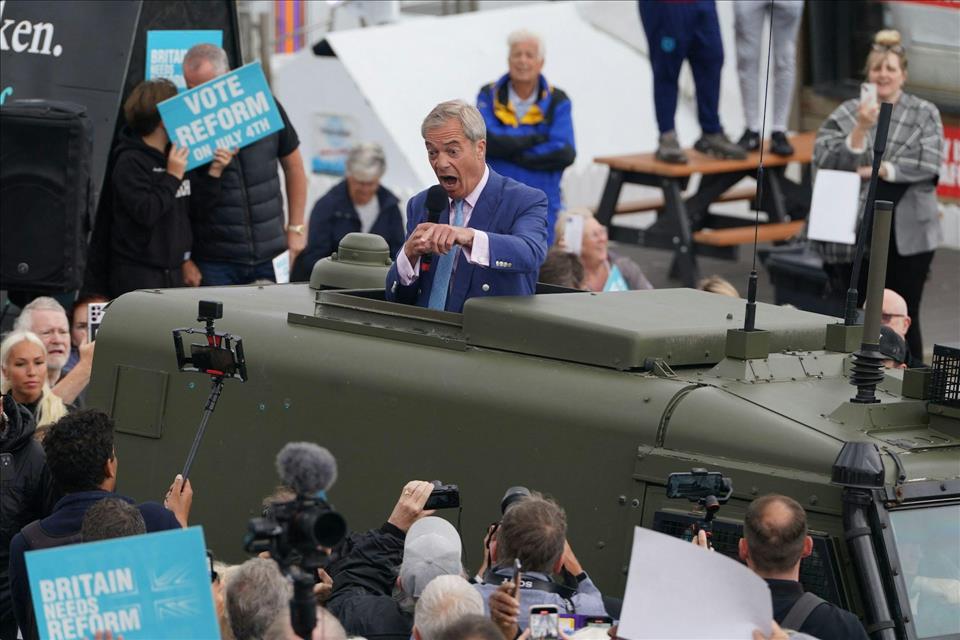
Nigel Farage Accused Of Breaking Election Spending Laws The Situation Explained
Author: Sam Power
(MENAFN- The Conversation) Nigel Farage has found himself in hot water over accusations that he failed to report that his 2024 election campaign in Clacton went over the spending limit of £20,660.72. Richard Everett, a former Reform councillor (who has since left the party – or been expelled, depending what you read), has submitted documents to the police.
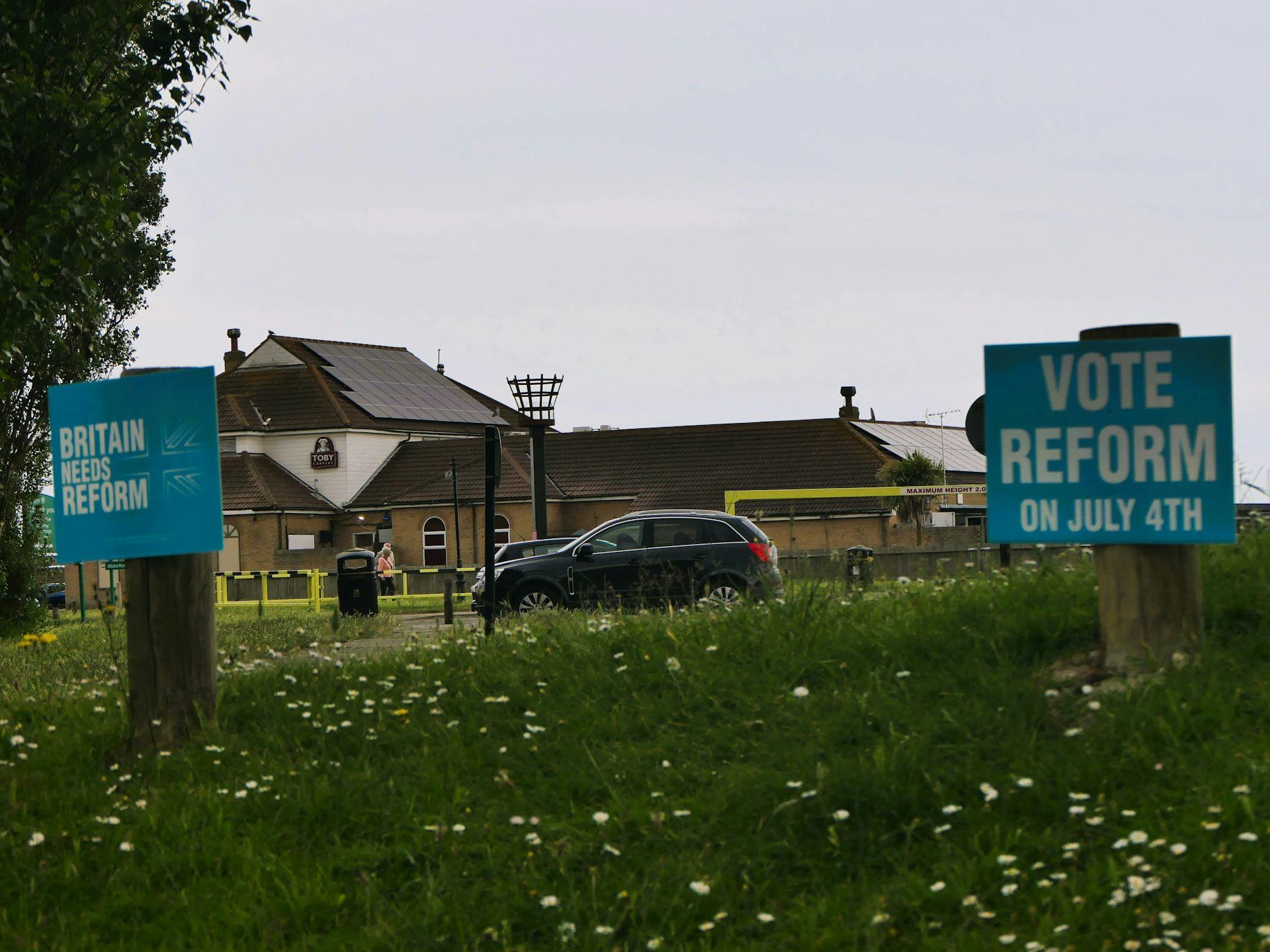
Reform campaign signs in Clacton in 2024. Shutterstock/GregSawyer

Election spending in the UK is beyond complex. It is so hard to understand that it has been compared to a“Jane Austen-style intricate dance... all sorts of daring and dicey moves are permissible, provided you know precisely where to step and when, and how not to upset the crowds”.
Nowhere is this truer than when it comes to spending limits. There are, in fact, two spending limits for general elections (well, there's actually more than two but let's not go there). Each party has a certain amount to spend at the national level and each candidate has a spending limit for their constituency campaign. Candidate spending is money spent to promote their individual candidacy (or criticise a local opponent), party spending is more general material that promotes a party.
This is largely thanks to a historical quirk. Candidate spending has been limited since the Corrupt and Illegal Practices (Prevention) Act of 1883. And because national campaigning didn't really exist back then, that was largely that. Things changed in 2000 when – alongside other reforms – limits were placed on national-level party spending, which by then was, by then, very much a thing.
Both spending limits vary, but the 20k limit for Clacton is a reasonable rule of thumb to extrapolate across other constituencies. Party spending limits, again as a rule of thumb, are £34.1 million (if a party stands across England, Scotland and Wales). So, quite a difference.
As you'd imagine, parties make all kinds of daring moves to get what looks an awful lot like candidate spending into their much larger national budgets. You might, for example, target national messages (so party spending) at target constituencies – and, as long as you don't mention the candidate, that's party spend.
You can still end up in hot water, though. Just ask the 30 or so Conservative MPs (and their staff) who were embroiled in an election expenses episode following the 2015 general election. In this instance the Tories drove a battle bus packed with activists drove around 33 target constituencies and reported most of their spending as party, rather than constituency, spending.
How bad is this for Farage?With the police looking into the claim, there's only so much one can say, but there are several reasons to think the Clacton spend is not going to be too much of a problem for team Farage. Firstly, there's a very basic matter of the statute of limitations on cases of this kind. You only have a year to report suspected offences and we're already more than a year out from the election.
While prosecutors can have that limit waived in certain circumstances, a further complication of electoral law is that candidate offences (for now) are managed by the police and party offences by the Electoral Commission. The police are very reluctant to get involved in party politics so it would be surprising if they actively pursued the case against Farage.
Reform campaign signs in Clacton in 2024. Shutterstock/GregSawyer
We also don't know how much more than his £20k limit Farage is accused of spending. If it's a small amount, the Crown Prosecution Service (CPS) may not feel it in the public interest to pursue a case.
The burden of proof is also incredibly high. I suspect that the offence the CPS will be investigating is the same as the Tory battle bus affair, so 82(6) of the Representation of the People Act 1983. This states that“if a candidate or election agent knowingly makes the declaration required by this section falsely, he shall be guilty of a corrupt practice”. So, the CPS does not just have to show the overspend, it has to show that the candidate knew they were overspending.
There's also the complicating factor that this is Farage's constituency, and he effectively is the Reform party. Given that he is the face of all Reform campaigning, we have to wonder, truly, in this instance where candidate spending begins and party spending ends. Or, put differently, considering how easy it would be in theory to disguise candidate spending at party spending in these particular (and peculiar) circumstances you'd. Election law is a complicated dance after all, but this is little more than a two-step.
These headlines come at a tricky moment for Farage as he has faced over a week of allegations that he made racist comments during his school days. That said, I doubt there'll be any great panic in Reform HQ. For one, even Everett has suggested that Farage was“blissfully unaware” of the omissions. If charges are brought, it will likely not be against him and therefore easily blamed on his local agent or other administrators.
Also, as I suggested way back in 2016, accounting just isn't very sexy. Again, the battle bus saga is instructive here as it was genuinely big news at the time. Some even thought it had the potential to become the new expenses scandal. But it didn't. One person was convicted, while everyone else was acquitted and moved on.
Attacking electoral law is also fertile ground for Farage. He has already turned a defence over racism allegations into an attack on his opponents, there's very little to suggest he won't do the same here. He and his supporters generally relish the prospect of a skirmish with the establishment.
This would be, put lightly, a shame. Election law is hard to understand and mistakes happen, but that doesn't mean those enforcing it are pen pushers looking for wrongdoing to punish. We may well live in the age of the politics of grievance and hot air, but just this once it would be nice to let the process play out.
Institution:University of Bristol

Legal Disclaimer:
MENAFN provides the
information “as is” without warranty of any kind. We do not accept
any responsibility or liability for the accuracy, content, images,
videos, licenses, completeness, legality, or reliability of the information
contained in this article. If you have any complaints or copyright
issues related to this article, kindly contact the provider above.
Most popular stories
Market Research

More Story





Comments
No comment