




403
Sorry!!
Error! We're sorry, but the page you were looking for doesn't exist.
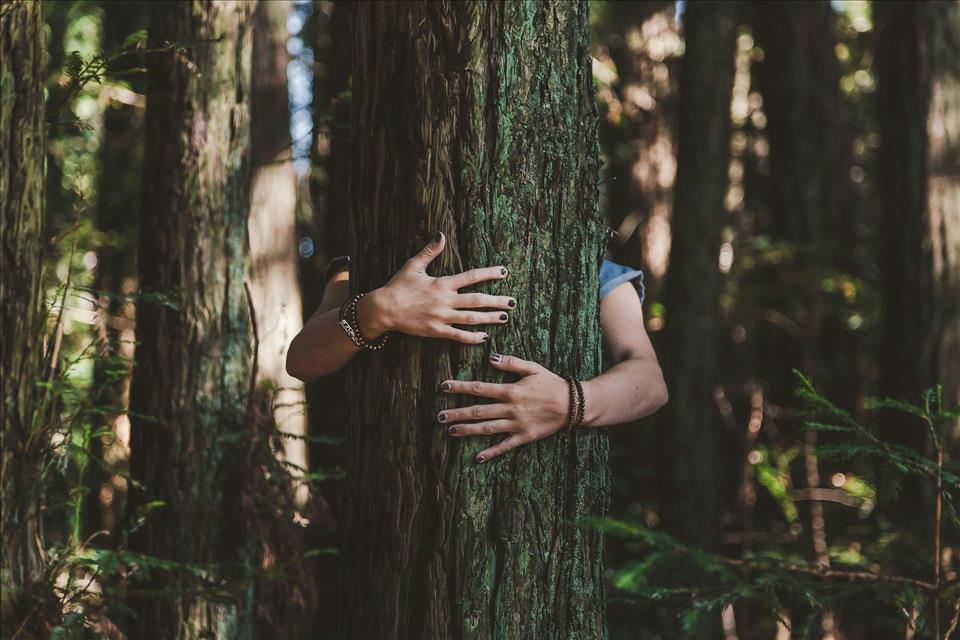
What Can Trees Teach Us About Resilience And Loss? A Grieving Daughter Reflects
Author: Gemma Nisbet
(MENAFN- The Conversation) Tessa McWatt begins her new book, The Snag, on“the last day of the hottest year in recorded history”. In the previous two years, the Guyanese-born author has moved her elderly mother, who has developed dementia, from her beloved home and travelled between the United Kingdom, where McWatt lives and works, and Canada, where she grew up, to support her family.![]()
Tessa McWatt. Scribe![]()

At the same time, in other parts of the globe, people have been forced to leave their homes due to the effects of climate change - the scale of which registers as enormous, overwhelming:
From her London home, McWatt, the author of a nonfiction book on race and several novels, asks herself:“Why bother?”
With that question, she wonders on her role as an individual and a writer to help effect meaningful change. It also points to another issue at the heart of The Snag: how to navigate grief, in all its multifaceted forms.
Trees: a model for human growthIn another early scene, McWatt travels to visit her family in Canada, where her ailing mother has moved to live with McWatt's sister (an arrangement all the siblings agree on). Troubled by her mother's distress at this change, McWatt takes an early morning walk in a nearby pine forest. In nature, she finds solace – but also something more.
McWatt begins to study trees“to uncover their secrets”. In their life cycles, she finds“a model for growth, for ways of being”. She writes:“Now that the world is more imperilled than ever before in human history, we can call upon the tree as a model of behaviour.”
Grieving the places we call homeInvestigating the question of how we grieve, McWatt, a professor of creative writing at the UK's University of East Anglia, adeptly connects the personal and the political, the local and the global. In doing so, she illustrates how they are inextricably linked.
Tessa McWatt. Scribe
Key to the book's exploration of loss is its invocation of the notion of solastalgia –“the homesickness you have when you are still at home” – to describe a kind of environmental grief that acknowledges the importance of place, particularly the places we call home, to our sense of belonging, identity and wellbeing.
The associative, digressive qualities of McWatt's prose evoke some of the sensation of what she calls“the newsfeed that has been looping in my brain”. We witness her fury and despair at the catastrophic effects of climate change and the way these effects are often most acutely felt by those most marginalised within global systems of power.
This feeling of powerlessness in the face of negative environmental change is part of what environmental philosopher Glenn Albrecht aimed to describe in coining the term solastalgia.
It is fitting, then, that McWatt asks not only how we grieve, but also how it might prove generative.“How can this grief be transformed?” she asks. Answers, she suggests, can be found in forests.
The Snag argues the ways trees live and relate to one another might offer a regenerative alternative to the individualistic, capitalistic systems of value that are, the book suggests, the source of much of what plagues us. McWatt draws on the work of scientists such as Suzanne Simard, who have described the ways trees and plants communicate with one another, thriving in networks of complex interdependence. Of particular interest are trees at the end of their lives, known as snags.
This example suggests the systems of care that exist in forest ecosystems, which might inspire similar transformations in human societies, McWatt writes. Snags also offer possibilities for reframing death and loss, wherein ageing becomes“a triumph”.
Collective problems – and solutionsIn exploring the entanglements of human and nonhuman lives, McWatt casts her net wide. She is particularly attentive to the cultural practices of Indigenous communities around the globe, as well as the ways they disproportionately bear the brunt of the effects of climate change. She also writes with an awareness that, as she notes,“some current conservation efforts displace people from ancestral homes”.
It's difficult to encompass the scope of McWatt's thinking here. In the space of a single page, she goes from drinking Californian wine by a Canadian lake while listening to the call of a loon, and thinking of a friend who has cancer, to reflecting on news of birds falling from the sky in India due to excessive heat, and remembering a visit to the Himalayas.
Elsewhere, she considers how notions of sacredness might meaningfully connect humans to the natural world, and finds joy in family celebrations and a burgeoning relationship with a man known only as“the musician”. She asks“what would the world look like if care became our organising principle?”
In connecting these seemingly disparate subjects, McWatt demonstrates how they are meaningfully interrelated. In this way, her prose enacts her thematic interest in interdependence.
Throughout, she is clear that collective problems require collective solutions. Yet she is also keenly aware that collectives are comprised of individuals.“What is my role?” she asks.“In a forest, what kind of tree am I?”
McWatt doubts herself, questioning her ability to pull her weight in the kinds of“care communities” she advocates for, following a challenging stint looking after her mother. She feels guilt at flying back and forth between the UK and Canada, and questions whether“the ritual of writing [is] enough to earn me a place in any new form of cooperation?”
In this sense, The Snag can be read as a search for belonging. It is also a heartfelt affirmation of the potential of storytelling to make connections and imagine better futures.“Remaking stories”, McWatt writes,“is an important act of communal survival and hope, an act of creativity that helps us keep the world we value alive.”
Institution:Curtin University

Legal Disclaimer:
MENAFN provides the
information “as is” without warranty of any kind. We do not accept
any responsibility or liability for the accuracy, content, images,
videos, licenses, completeness, legality, or reliability of the information
contained in this article. If you have any complaints or copyright
issues related to this article, kindly contact the provider above.
Most popular stories
Market Research

More Story




Comments
No comment