




403
Sorry!!
Error! We're sorry, but the page you were looking for doesn't exist.
Ontario's Bill 5 Erodes Good Governance In The Province
Author: Kristen Lowitt
(MENAFN- The Conversation) Ontario passed Bill 5, the Protect Ontario by Unleashing Our Economy Act, in June 2025. The omnibus bill amended environmental laws and proposes“special economic zones” where the government can decide what laws will or won't apply.
Protesters and community members chant and wave flags during a demonstration opposing Bill 5, outside the Ontario legislature in June 2025. THE CANADIAN PRESS/Cole Burston
Marten Falls First Nation Chief Bruce Achneepineskum, centre, speaks at a news conference in Toronto in August 2025. In June, the First Nation filed injunctions preventing Ontario and Canada from funding or participating in mining-related activities in the region. THE CANADIAN PRESS/Allison Jones Undermining good governance

The bill eliminates key environmental protections and grants the provincial government sweeping powers to fast-track development with little to no oversight. This risks undermining the rights of Indigenous communities, the public and nature.
As stated by Michel Koostachin, founder of the Indigenous grassroots group the Friends of the Attawapiskat River:“The government is using the 'tariff war' as an excuse for greed, to advance personal and private gain.”
Bill 5 is an affront to Indigenous rights and natural law because it authorizes the government to potentially cause irreparable harm to lands and waters without the free, prior and informed consent of affected First Nations and community members.
Despite widespread opposition from First Nations, the public, municipalities, environmental organizations and labour groups across the province, the government continues to advance the policies, amendments and regulations that could further entrench the regressive legal reforms ushered in by Bill 5.
Protesters and community members chant and wave flags during a demonstration opposing Bill 5, outside the Ontario legislature in June 2025. THE CANADIAN PRESS/Cole Burston
Read more: 'Canada is not for sale' - but new Ontario law prioritizes profits over environmental and Indigenous rights
3 concerning proposalsA series of proposed regulations, amendments and policies were posted on the Environmental Registry of Ontario for public comment for 45 days, with the comment periods closing in mid-November. The government now has to consider these comments before deciding whether to approve the proposals.
We highlight three proposals of particular concern:
Special Economic Zones criteria
This proposed regulation sets out criteria to designate special economic zones. No objective or measurable criteria are provided. Rather, the regulation grants the government discretionary power to decide where, and to whom, legal safeguards that are key to protecting Indigenous rights, nature and the public interest will or won't apply.
Archeological assessment exemption
This proposed regulation will exempt sites that the government deems economically significant from undergoing archeological assessment. Allowing projects to go ahead without considering the archeological value of a site threatens the protection of cultural heritage and jeopardizes Indigenous cultural sovereignty. It allows government to evade their constitutional duty to consult, as it is often these assessments that trigger that duty when a sacred site or artifact is found.
Species Conservation Act
Proposed regulations, amendments and policies under this new legislation would further weaken the protection of species at risk and their habitats. It would remove the public's right under Ontario's Environmental Bill of Rights to have a say in decisions that could have serious ecological impacts.
Marten Falls First Nation Chief Bruce Achneepineskum, centre, speaks at a news conference in Toronto in August 2025. In June, the First Nation filed injunctions preventing Ontario and Canada from funding or participating in mining-related activities in the region. THE CANADIAN PRESS/Allison Jones Undermining good governance
Processes like environmental assessments and opportunities for the public to participate in decision-making are in place for a reason. They are essential safeguards for public health, safety and the environment. Allowing governments to disregard them sets a dangerous precedent for decisions to be made without transparency and accountability.
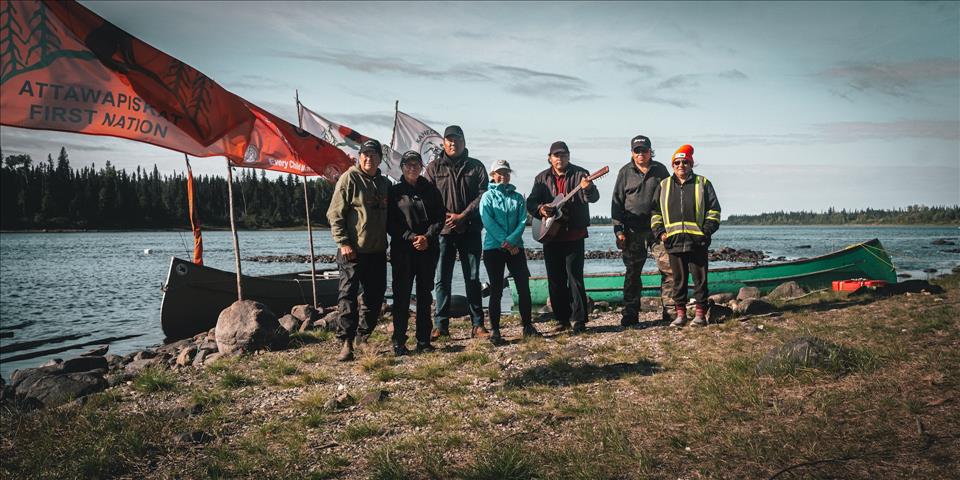
With allied individuals and organizations, Legal Advocates for Nature's Defence (LAND), a non-profit environmental law organization, has been calling on elected officials to uphold Indigenous rights, treaty promises and environmental justice in the wake of Bill 5. LAND represents and works directly with Indigenous land protectors from Treaty 9 - the very lands where the Ring of Fire mining project is proposed and where the government wants to establish the first special economic zone.
The Ring of Fire is the name given by mining companies to a mineral-rich area in the Hudson-James Bay lowlands. The proposed Ring of Fire project has implications for all of us.
The Hudson-James Bay lowlands in Treaty 9 territory is a region of profound cultural and ecological significance that has been declared protected by Indigenous organizers under their laws.
This region is a refuge for wildlife, an immense carbon sink and the homeland for thousands of Omushkego people who have relied on it since time immemorial. Its protection is needed if Indigenous communities are to continue practising their inherent and treaty rights to live, hunt, fish and protect their lands and waters - and for the government to do their part in combating climate change and biodiversity loss.
Significantly, the impacts of Bill 5 and special economic zones aren't limited to the North. There is no assurance that the Ontario government won't set up more special economic zones in the future if it decides it's“strategically important to Ontario's economy.”
Overriding human rights and environmental health to advance economic interests is unacceptable. We must continue to urge our elected officials to repeal Bill 5.
Kanisha Acharya-Patel, a staff lawyer with Legal Advocates for Nature's Defence (LAND), co-authored this article.
Institution:Queen's University, Ontario

Legal Disclaimer:
MENAFN provides the
information “as is” without warranty of any kind. We do not accept
any responsibility or liability for the accuracy, content, images,
videos, licenses, completeness, legality, or reliability of the information
contained in this article. If you have any complaints or copyright
issues related to this article, kindly contact the provider above.
Most popular stories
Market Research








Comments
No comment