



403
Sorry!!
Error! We're sorry, but the page you were looking for doesn't exist.

Why Canada Needs To Recognize The Crime Of Femicide - On Dec. 6 And Beyond
Author: Myrna Dawson
(MENAFN- The Conversation) It's been 36 years since a mass femicide occurred at École Polytechnique in Montréal. A man shot and killed 14 women because of their sex.
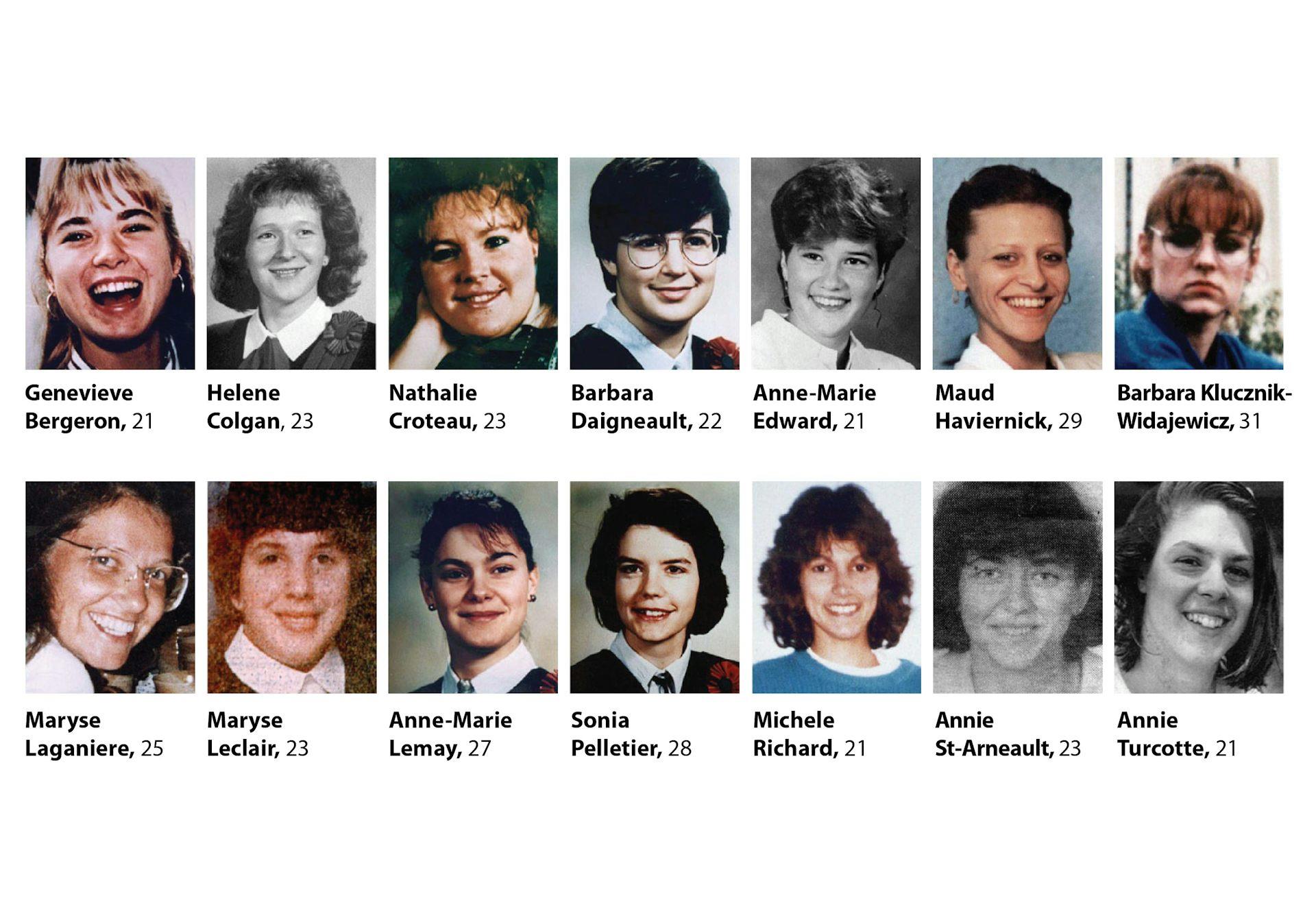
The 14 victims of the Dec.6, 1989 shootings at Ecole Polytechnique in Montréal. Even though the mass shooting is considered globally one of the most glaring example of femicide, it's still not officially classified as such. THE CANADIAN PRESS Podcast focused on femicide![podcast promotional material]()
The podcast tells the stories of 580 Canadian women and girls killed by men since 2020. (Canadian Femicide Observatory for Justice and Accountability), CC BY![A weeping woman holds up a photo of a younger woman at a public gathering.]()
A woman holds up a photo of Giulia Cecchettin, a 22-year-old university student stabbed to death by her former boyfriend, on International Day for the Elimination of Violence against Women in in Milan, Italy, in 2023. The country now recognizes the crime of femicide and punishes it with life in prison. (AP Photo/Luca Bruno) Changing laws can change cultures
A woman touches the names on a memorial for victims of the École Polytechnique massacre in Montréal on Dec. 6, 2024, the 35th anniversary of the anti-feminist mass shooting that left 14 women dead. THE CANADIAN PRESS/Christinne Muschi Helping women and marginalized populations![Two police cruisers sit at the end of a driveway of a rural home.]()
Ontario Provincial Police cruisers sit at a house near, Cormac, Ont., one of three crime scenes, in September 2015. A 57-year-old was charged with three counts of first-degree murder in the slayings of three women in the area. THE CANADIAN PRESS/Fred Chartrand A whole-of-society response

Described as“violent misogyny” by the federal government, the killings have nonetheless never officially been called femicide in Canada despite its global recognition as one of the most vivid examples of femicide in the western world.
Women and girls continue to be killed every two days somewhere in Canada, mostly by men. And the numbers continue to rise.
The majority of these killings are femicide, according to the United Nations statistical framework for measuring the gender-related killing of women and girls. Femicide is broadly defined as the killing of a woman or girl because of their sex or gender.
The 14 victims of the Dec.6, 1989 shootings at Ecole Polytechnique in Montréal. Even though the mass shooting is considered globally one of the most glaring example of femicide, it's still not officially classified as such. THE CANADIAN PRESS Podcast focused on femicide
The podcast tells the stories of 580 Canadian women and girls killed by men since 2020. (Canadian Femicide Observatory for Justice and Accountability), CC BY
For these reasons, the Canadian Femicide Observatory for Justice and Accountability (CFOJA) launched its Too True Crime podcast on Nov. 25, 2025, the International Day for the Elimination of Violence Against Women. The podcast spotlights the stories of 580 women and girls killed by men in cases of femicide since 2020.
It only includes cases where available information indicated it was a femicide; some may have flown under the radar of authorities and remain unknown. But since the observatory launched in 2018, more than 1,100 women and girls were documented to have been killed by men.
Part of the podcast's calls to action include a petition asking Canada to officially recognize the crime of femicide and include it in the Criminal Code.
Read more: Canada's shadow pandemic: Femicide
Laws help bring about changeItaly is the most recent country to create a stand-alone femicide offence in its national laws. According to the World Bank, 30 countries now define femicide in law.
This approach has its critics. They argue:
- It does not emphasize prevention; It does not address the culture facilitating femicide; It may produce unintended consequences; It's difficult to achieve consensus on a definition of femicide; It has not reduced femicide.
But criminalization versus prevention is not an either/or question.
Laws are a key element of a public health approach to violence prevention. National femicide laws have generally been accompanied by prevention programs, training for law enforcement and public awareness campaigns. Italy's law, for example, includes stronger measures against gender-based crimes like stalking and revenge porn.
Laws are not stand-alone responses. They are only one part of multi-sector responses to a social problem that must include monitoring of implementation processes and outcomes.
A woman holds up a photo of Giulia Cecchettin, a 22-year-old university student stabbed to death by her former boyfriend, on International Day for the Elimination of Violence against Women in in Milan, Italy, in 2023. The country now recognizes the crime of femicide and punishes it with life in prison. (AP Photo/Luca Bruno) Changing laws can change cultures
In Italy, some women's advocates have complained the law doesn't go far enough, especially in changing the country's culture. In Canada, one feminist lawyer suggests that a “radical rethink” about the entire issue may be required instead of creating a new offence in the Criminal Code.
But to call the crime femicide - a sex- or gender-specific term - is in fact a radical rethink in a climate of neutrality that too often masks the disproportionate burden women and girls bear for some forms of male violence.
State responses through laws reflect cultural values. At the moment, these values regard femicide as an individual problem rather than the product of social structures and processes built on entrenched inequalities.
A femicide law would recognize that male violence against women and girls is systemic and requires attitudinal shifts in Canada's cultural values.
A woman touches the names on a memorial for victims of the École Polytechnique massacre in Montréal on Dec. 6, 2024, the 35th anniversary of the anti-feminist mass shooting that left 14 women dead. THE CANADIAN PRESS/Christinne Muschi Helping women and marginalized populations
Laws meant to provide protections for women can have unintended consequences, as documented by mandatory charging for intimate partner violence where police are required to lay charges if they have reasonable grounds to believe an assault occurred. And gender-neutral laws may work against rather than for women, especially some women and girls, when applied within a sexist and racist environment.
Read more: Criminalizing coercive control may seem like a good idea, but could it further victimize women?
That's why Canada needs to include femicide in its Criminal Code. Femicide is not gender-neutral, and recognizing it formally will help define how and why women are killed by men, which is crucial for effective prevention.
Such a law could also benefit particular groups of women and girls whose deaths are often discounted because of who they are and where, how and by whom they were killed.
A femicide law isn't about increasing penalties; it's about ensuring charges, convictions and sentences are appropriate and perpetrators are held accountable in the killings of women and girls from all walks of life.
Achieving consensus is possibleCanada needs to achieve consensus on what is meant by femicide and to clearly identify its elements.
All countries with femicide laws have achieved consensus, although not all have defined femicide the same way. But there is significant guidance to be found in model protocols and model laws available to countries that are considering including femicide in their national laws and criminal codes.
Some research suggests femicide laws are failing; they haven't reduced cases of femicide. But others point out femicide laws have increased accountability and improved reporting, survivor protections and awareness about all forms of gender-based violence.
The varying impacts of a law depends on context, including who knows about it, whether it's clear and concise and whether those tasked with applying it are responsive.
Femicide laws on their own won't immediately reduce the number of women being killed by men or other forms of gender-based violence. Few laws have that kind of power. The key challenge is whether and how a femicide law is implemented.
Ontario Provincial Police cruisers sit at a house near, Cormac, Ont., one of three crime scenes, in September 2015. A 57-year-old was charged with three counts of first-degree murder in the slayings of three women in the area. THE CANADIAN PRESS/Fred Chartrand A whole-of-society response
Femicide laws are about prevention and they can change our culture. They could benefit women and girls, particularly those whose lives and deaths are now marginalized and discounted.
Read more: Missing and murdered Indigenous women and girls: An epidemic on both sides of the Medicine Line
Like many countries have, Canada can reach a consensus on what femicide is and produce a femicide law that leads to meaningful change. But it requires proactive consultations, political will and leaders who listen.
The 580 stories in Too True Crime demonstrate clearly and starkly that the lives of women and girls depend on it.
Institution:University of Guelph

Legal Disclaimer:
MENAFN provides the
information “as is” without warranty of any kind. We do not accept
any responsibility or liability for the accuracy, content, images,
videos, licenses, completeness, legality, or reliability of the information
contained in this article. If you have any complaints or copyright
issues related to this article, kindly contact the provider above.
Most popular stories
Market Research

More Story







Comments
No comment