




403
Sorry!!
Error! We're sorry, but the page you were looking for doesn't exist.
Waiting For A Sudden Surge: The Eurozone's Big 4
(MENAFN- ING)
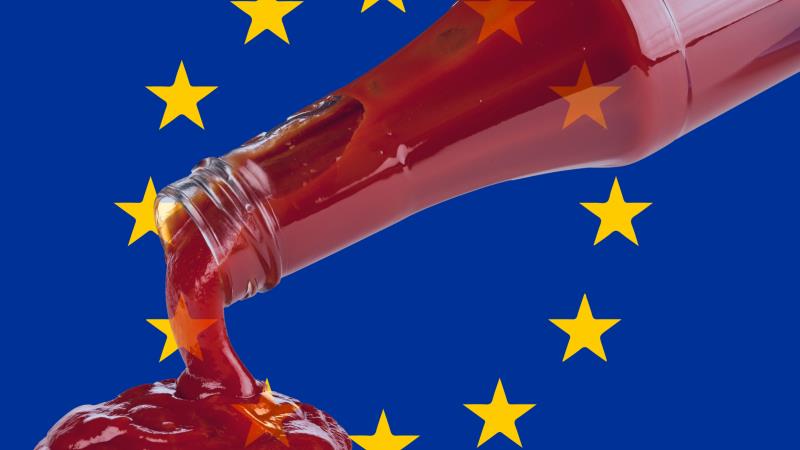
Germany: Waiting for the ketchup bottle effect
Germany has been both the eurozone's greatest disappointment and its main source of hope this year. Mired in prolonged stagnation and burdened by many structural challenges, Germany remained the region's growth laggard. At the same time, its historic U-turn on fiscal stimulus and the announcement of major infrastructure and defence investments raised expectations for a rebound, both for Germany and the eurozone as a whole. However, persistent political tensions and the absence of meaningful structural reforms have dampened these hopes. Even the planned public investments for 2025 have fallen significantly short of target. The sauce is stuck in the bottle.
So, the main question is whether Germany is fundamentally unable to make fiscal stimulus effective – or whether it is simply a matter of time. We believe it is the latter. Fiscal stimulus and investment often resemble a ketchup bottle: nothing comes out at first, and then suddenly everything pours out at once. While this won't solve Germany's structural problems, it should deliver a boost. We expect German GDP growth to approach 1% in 2026 and 2% in 2027.
France: Persistent fiscal deadlock and rising risk of early electionsA new budget is unlikely before year-end as political manoeuvring ahead of the 2027 presidential race is blocking consensus between the Senate and National Assembly. The most probable outcome is a rollover of the 2025 budget, with debates restarting almost from scratch in January. An agreement will remain elusive, raising the risk of government collapse and early legislative elections next year.
Although the right-wing RN leads polls at around 35%, it is unlikely to win a majority, meaning new elections would do little to resolve the deadlock. Without a budget, fiscal efforts will falter, and public finances will deteriorate, with the deficit widening to about 5.7% of GDP if the situation persists throughout 2026, up from 5.4% in 2025, well above the 4.6% target promised by the Lecornu government. While the absence of fiscal tightening may offer some support, higher financing costs and persistent uncertainty will offset this, leaving growth at just 0.8% versus 1.1% for the eurozone.
Italy: Still a domestic demand storyThe effect of higher US tariffs on Italian external accounts will likely play out more clearly over 2026, when we expect net exports to act as a drag on economic growth. This will shift the burden of growth to domestic demand. Gross fixed capital formation should remain the primary driver, supported by infrastructure investment foreseen under the EU-funded National Recovery and Resilience Plan, which is due to formally expire over the summer of 2026.
Non-restrictive European Central Bank monetary policy could also help revive machinery investment. Private consumption, which has been disappointingly weak over 2025, might catch up a little next year. A resilient labour market, the ongoing recovery in purchasing power driven by decent wage dynamics and low inflation, and an extension of personal income tax reductions introduced by the budget might encourage households to reduce their savings ratios from current high levels.
Fiscal policy, however, will provide little additional support. The draft budget under discussion in parliament is neutral by design, reflecting the government's clear priority of maintaining the adjustment path and ensuring Italy exits the Excessive Deficit Procedure in early 2026.
Spain: Looking for a quality turning pointSpain's economy remains a eurozone outperformer, with 2025 growth nearing 3%. However, much of this momentum is quantity-driven: immigration has increased the population, making Spain's performance less impressive when measured by GDP per capita or labour productivity gains. The key challenge now is to make growth more quality-led, driven by higher productivity. This will be especially crucial in 2026, as the contribution of government spending growth will be limited in the absence of a budget, net exports will be muted partly due to the strong euro, and private consumption growth is normalising.
Investment is set to play a pivotal role, with the EU's Recovery and Resilience Facility (RRF) providing significant upside: only about €59 billion of the possible €163 billion has been awarded so far. While the productivity impact may not be immediate, these investments could mark a turning point towards quality-driven growth and help keep Spain ahead of its eurozone peers in 2026 and beyond.

Legal Disclaimer:
MENAFN provides the
information “as is” without warranty of any kind. We do not accept
any responsibility or liability for the accuracy, content, images,
videos, licenses, completeness, legality, or reliability of the information
contained in this article. If you have any complaints or copyright
issues related to this article, kindly contact the provider above.
Most popular stories
Market Research

More Story







Comments
No comment