




403
Sorry!!
Error! We're sorry, but the page you were looking for doesn't exist.
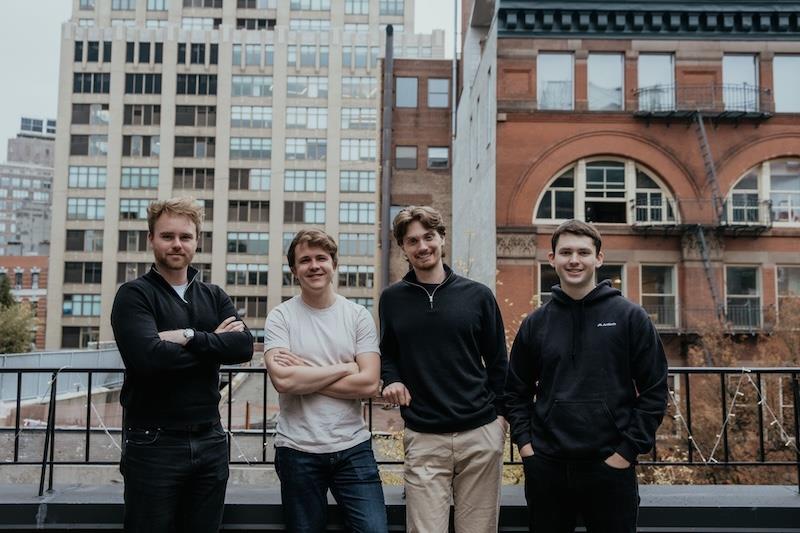
Antioch Raises $4.25M To Give Robotics Developers Access To Tesla-Level Simulation Infrastructure
(MENAFN- Robotics & Automation News) US startup Antioch raises $4.25 million to build simulation infrastructure to the robotics industry
December 4, 2025 by David Edwards
A team of Stanford alumni led by former Tesla Autopilot engineer Harry Mellsop, former Deep Grey Research head of product Alex Langshur, former Google Deepmind engineer Colton Swingle, and former Meta Reality Labs researcher Collin Schlager, has raised $4.25 million to democratise access to advanced robotics development.
The pre-seed round was led by A*, with support from Abstract Ventures, MaC Venture Capital, Box Group, as well as angels Adrian Macneil, the CEO of AI robotics company, Foxglove, Shyam Sankar, the CTO of Palantir, and NZ investment firm Icehouse Ventures.
Founded in early 2025 and headquartered in New York, Antioch is solving one of autonomy's hardest problems: safely validating AI-driven systems that operate in the physical world.
Antioch provides a cloud simulation platform that allows autonomous systems to be built, tested, and deployed entirely in software.
The company's mission is to eliminate lengthy testing cycles that currently throttle robotics progress by giving every robotics team access to Tesla-level infrastructure.
“At Tesla I saw first-hand how the right simulation tools let you develop and iterate exceptionally fast,” says co-founder Harry Mellsop, who previously worked on the Autopilot vision team.“We built Antioch to give every robotics company that same advantage – the ability to test and scale their robotics system at the speed of software.”
Bennett Siegel, Co-founder and General Partner from A*, says the core technology is an equaliser for companies to explore the next generation of robotics.
“Antioch sits at the intersection of AI and robotics and will unlock the scifi future we've often dreamed of,” says Siegel.
“This platform removes the friction from physical-world testing and enables a new generation of embodied AI startups to scale their inventions globally. Companies are currently spending hundreds of millions a year to have a horse in the AI robotics race, but technology like Antioch's can reduce the hurdles considerably, giving more businesses a chance to innovate.”
This sentiment is echoed by Antioch's other co-founders, who shared similar experiences prior to starting Antioch. Swingle previously led several large-scale model validation infrastructure projects at Google's Deepmind, while Schlager played a leading role in foundational research programs for Meta Reality Labs' recently released Neural Band.
Both oversaw the development of significant simulation and testing infrastructure for use in the validation of these products, and saw first-hand the acute need for tooling to bring these capabilities to the wider market.
Schlager says:“At Meta, evaluating our hardware and models – particularly in a manner representative of real-world use – was critical to moving fast and to providing an informative feedback loop. However, developing the platforms and tooling to carry out these evaluations required enormous investment.
“With Antioch, we're making this publicly accessible for the first time, so teams can focus on perfecting their products, and not building the evaluation infrastructure around it.”
Instead of laboriously resetting a physical machine which is taking up energy, space and money every time it's tested, Antioch allows developers to refine their robotics with minimal overheads.
Engineers can spin up thousands of digital twins in parallel using Antioch Cloud, integrate with CI/CD workflows, and track performance metrics before any hardware ever leaves the lab.
“Right now, the way companies train AI for robots is absurdly manual,” Mellsop explains.
“We've talked to teams literally renting Airbnbs just so they can test their household robots overnight, or spending millions building fake warehouses and neighborhoods to simulate the real world. It's slow, expensive, and wildly inefficient. With Antioch, you can do all of that virtually.”
For Mellsop and Langshur, the mission of Antioch is not only about the acute commercial need, but also reflects their ongoing commitment to building infrastructure that they see as critical for national security, but neglected by existing players.
The pair previously built Transpose, which they sold to the US national security contractor Chainalysis in 2023. Transpose grew to serve major intelligence and national security agencies, law enforcement, regulators, and key private sector financial institutions in the United States and abroad, providing a security and intelligence layer that helped government and private sector agencies defend against nation-state cyber threats.
“Over the last 40 years, the manufacturing capability that set the United States apart from the rest of the world has been systematically eroded by offshoring. We see rapid reindustralization as imperative from a national security perspective, and the only economically viable way to do this is through augmenting our workforce with robotics and automation,” says Langshur.
“Efficient, scalable testing to ensure that robots deployed are safe and effective is now the rate-limiting step in making this happen, which is why we decided that Antioch needed to be built now.”
Market leaders in the autonomy space – companies like Tesla, Anduril, and Waymo – spend hundreds of millions of dollars a year on end-to-end system evaluation, creating a significant market opportunity, but also making these tools out of reach to smaller players, and new entrants.
The company has tightly integrated with the technology of industry leaders, including tools like Omniverse and Cosmos from Nvidia, and observability from Foxglove.
Antioch is already working with many leading robotics and autonomy companies, including Fortune 500s, in verticals such as construction robotics, smart security systems, and foundation model AI developers.
A full commercial launch is expected in late 2025.
“We've taught AI to think,” Mellsop adds.“Now it's time to teach it to act in the real world safely, intelligently, and at scale.”

Legal Disclaimer:
MENAFN provides the
information “as is” without warranty of any kind. We do not accept
any responsibility or liability for the accuracy, content, images,
videos, licenses, completeness, legality, or reliability of the information
contained in this article. If you have any complaints or copyright
issues related to this article, kindly contact the provider above.
Most popular stories
Market Research

More Story







Comments
No comment