







403
Sorry!!
Error! We're sorry, but the page you were looking for doesn't exist.
China Hopes AI Can Fix Its Consumer Demand Problem
(MENAFN- Asia Times)
China wants its consumers to spend again. This ambition sits at the center of a newly unveiled action plan issued by Beijing last month, a sweeping attempt to engineer demand by reshaping what households buy rather than how much they earn.

The Red Sea region: where the rules are changing

30 years after Balkans peace deal, US leaders fumbling Ukraine war

Dollars, gold or pork bellies? Your choice

Sign up for one of our free newsletters
The initiative is expansive, technologically ambitious and politically revealing. It also exposes a persistent weakness at the heart of China's economic strategy: confidence that supply alone can do the work of demand.
The plan promises the creation of multitrillion-yuan consumption engines within three years, spanning elderly care products, intelligent-connected vehicles and consumer electronics while elevating dozens of other categories into high-growth national priorities.
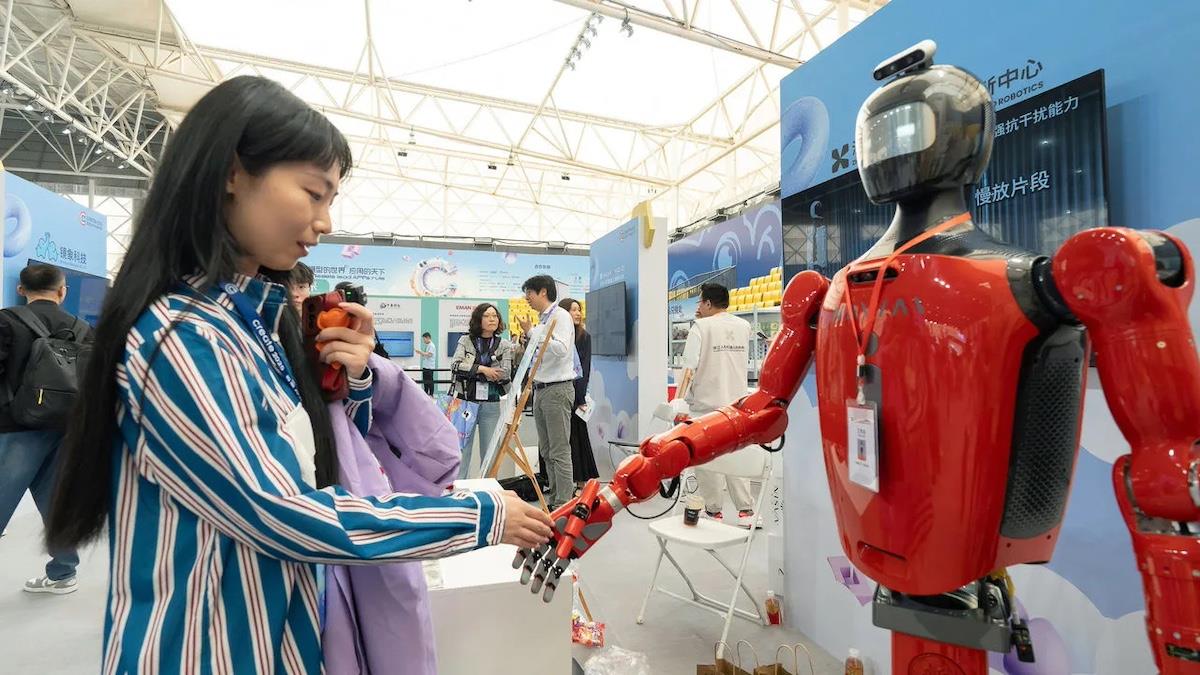
Artificial intelligence runs through the blueprint as both tool and symbol. Smart appliances that curate shopping lists and AI wearables that guide users through daily life are presented as proof that consumption can be revived through technological sophistication.
In official rhetoric, smarter products translate almost automatically into stronger spending.
There's no mistaking the intent. Beijing wants to hardwire AI into the everyday purchasing habits of its population and to move Chinese households up the value curve through innovation.
Officials see technology doing what confidence, wages and job security have struggled to achieve during the protracted post-pandemic slowdown. By upgrading the offer, policymakers expect demand to follow.
The urgency of the program speaks to fragile conditions. Retail sales growth has oscillated throughout 2024 and 2025, youth unemployment remains elevated even after official recalculations and household savings rates remain high by historical standards.
Latest storiesThe Red Sea region: where the rules are changing
30 years after Balkans peace deal, US leaders fumbling Ukraine war
Dollars, gold or pork bellies? Your choice
Chinese consumers have not withdrawn because the products on offer lack intelligence. They have pulled back because income visibility has weakened and economic anxiety lingers.
The heavy emphasis on AI reveals an industrial policy mindset applied to human behavior. Supply chains can be directed, incentives allocated and ecosystems built. But consumer confidence in China resists command.
The action plan reads as an industrial mobilization document dressed up as a consumption strategy. It rallies manufacturers, platforms and developers while leaving households largely as spectators, expected to respond on cue.
Funding mechanisms remain opaque. Local governments already burdened by huge debts are expected to nurture trillion-yuan sectors without clarity on fiscal backstops or risk sharing.
Private enterprises are encouraged to invest aggressively, yet face price competition, margin compression and cautious lenders. Implementation detail is thin compared with the scale of the ambition. Tech roadmaps are clearer than the financing pathways.
All this matters because consumption in China now sits at a crucial juncture.
Household spending accounts for a significantly smaller share of GDP than in most large economies, hovering around the high thirties versus more than 60% in the US and much of Europe.
Beijing has long acknowledged the imbalance, repeatedly pledging a shift toward domestic demand. Each cycle produces industrial initiatives. Structural reform on income and security advances more slowly.
AI will transform consumption patterns over time. There's no dispute there. China already leads the world in smart home adoption rates, electric vehicle penetration and digital payment ubiquity.
Its AI patent filings surpassed 60% of the global total by the early 2020s and investment in generative AI models accelerated sharply through 2024 as competitive pressures mounted with the US. These trends form a powerful base.
Tech, however, amplifies conditions rather than replacing them. Smarter products persuade consumers who already feel secure enough to spend.
They struggle to unlock wallets gripped by uncertainty. When households fear future medical expenses, unstable employment or falling property values, innovation becomes an accessory rather than a catalyst.
Elderly care offers a telling example. Demand is real and rising as China's population ages rapidly.
The country now counts more than 300 million people aged 60 and above. AI-enabled monitoring, health diagnostics and assistive devices can transform care quality. Without stronger pensions, healthcare support and income stability for families, affordability will determine adoption far more than sophistication.
The same tension runs through intelligent vehicles and premium electronics. China already leads the world in EV production and adoption. Sales growth has slowed as subsidies fade and consumer caution grows. Innovation raises desirability, but income determines volume.
Sign up for one of our free newsletters
-
The Daily Report
Start your day right with Asia Times' top stories
AT Weekly Report
A weekly roundup of Asia Times' most-read stories
What emerges is a familiar pattern. Beijing deploys its formidable supply-side machinery to fix a demand-side problem.
Results may appear impressive in production statistics and pilot zones, while the national consumption share remains stubbornly low. Growth becomes increasingly reliant on manufacturing upgrades and exports at a time of intensifying global trade friction.
A more durable path to consumption revival runs through labor markets and incomes. Stronger job creation, particularly for younger workers, clearer wage growth and firmer social safety nets would go a long way to anchor confidence.
Tax relief targeted at households rather than producers, support for private sector employment growth and housing market stabilization (easier said than done) would speak directly to China's reluctant consumer psychology. Spending reflects optimism about tomorrow rather than features embedded in today's products.
China's leadership understands the stakes. The question is whether future policy rounds will move beyond engineering supply toward strengthening the financial footing of consumers themselves. Until that moment arrives, innovation may flourish while robust and full consumption remains elusive.
Sign up here to comment on Asia Times stories Or Sign in to an existing accounThank you for registering!
An account was already registered with this email. Please check your inbox for an authentication link.
-
Click to share on X (Opens in new window)
Click to share on LinkedIn (Opens in new window)
LinkedI
Click to share on Facebook (Opens in new window)
Faceboo
Click to share on WhatsApp (Opens in new window)
WhatsAp
Click to share on Reddit (Opens in new window)
Reddi
Click to email a link to a friend (Opens in new window)
Emai
Click to print (Opens in new window)
Prin

Legal Disclaimer:
MENAFN provides the
information “as is” without warranty of any kind. We do not accept
any responsibility or liability for the accuracy, content, images,
videos, licenses, completeness, legality, or reliability of the information
contained in this article. If you have any complaints or copyright
issues related to this article, kindly contact the provider above.
Most popular stories
Market Research

More Story








Comments
No comment