




403
Sorry!!
Error! We're sorry, but the page you were looking for doesn't exist.
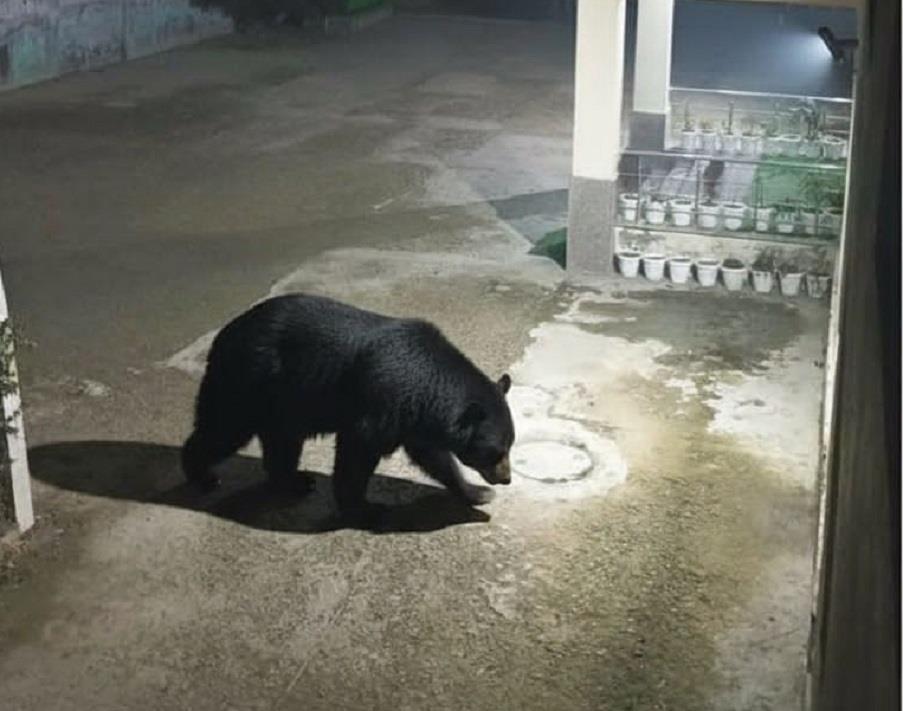
Bear Gone Berserk: Kashmir's Wild Crisis Comes To The City
(MENAFN- Kashmir Observer)
Bear at KU Girls' Hostel
Bear at KU Girls' Hostel
By Dr. Rizwan Rumi
The bear arrived in Srinagar like a restless traveller who refused to read the season.
It should have curled into a den somewhere in the upper forests by now, locked inside the long winter sleep that makes the cold easier to bear.
ADVERTISEMENTInstead it roamed the city with a strange energy, slipping through campuses, brushing past boundary walls, leaving half-seen shadows on security cameras, and finishing its nights with a swim in the chilled waters of Nigeen.
People spoke of it with nervous jokes in daytime markets, then lay awake after sundown, listening for the scrape of claws on tin roofs.
Wildlife officers spent night after night tracing it through lanes that usually host students, shopkeepers and caretakers, instead of a hulking animal shaking droplets from its coat.
They said the bear seemed confused, not aggressive, as if pushed downhill by forces larger than instinct.
Word of the bear moved through the city like whispered gossip. Parents kept their children close, and hostel gates clanged shut long before dusk. In Hazratbal and Naseem Bagh, guards who used to watch for stray dogs now tracked a larger, stranger presence, a figure that might vault over walls without warning.
The story of this bear does not stand alone. It folds into a broader tale that has been unfolding across the valley for years: a slow and steady drift of wild animals toward human life.
Official data up to March 2024 records 264 deaths and more than 3,100 injuries from wildlife encounters over nearly two decades. Assembly figures for 2023-24 and 2024-25 each list 16 deaths.
Every district has lived through its share of shock: a maize field raided in Budgam, a leopard spotted under a streetlight in Kulgam, boar tracks found in Sopore and Pulwama.
These incidents trace back to the forests, where the pace of change has quickened.
Jammu & Kashmir has seen a surge in wildfires, with estimates for the 2024-25 fiscal year crossing a thousand. Hillsides that once held thick undergrowth lie scorched, turning safe shelters into exposed slopes.
When fires run through a forest, herbivores rush for escape, and predators follow the trail of movement. The chain ends in orchards, lanes and backyards that cannot absorb this sudden arrival.
There is another layer to the problem.
Forests have been clipped at the edges over the years through new roads, expanding suburbs and sanctioned clearances. Movement corridors that once guided animals seasonally have been broken into small, confused patches.
In these fractured spaces, a leopard can wander into a nursery school, drawn by the scent of dogs or livestock. A bear can stumble into an abandoned storage shed, searching for food where none exists.
These animals are responding to a landscape where every familiar signpost has shifted.
Prey loss adds pressure. Deer numbers have thinned in many pockets. Predators respond in the only way they can: they widen their search.

Legal Disclaimer:
MENAFN provides the
information “as is” without warranty of any kind. We do not accept
any responsibility or liability for the accuracy, content, images,
videos, licenses, completeness, legality, or reliability of the information
contained in this article. If you have any complaints or copyright
issues related to this article, kindly contact the provider above.
Most popular stories
Market Research

More Story






Comments
No comment