







403
Sorry!!
Error! We're sorry, but the page you were looking for doesn't exist.
Smog Diplomacy Meets Clean Tech: Pakistan's Smog Tower And The Global Decarbonization Arc
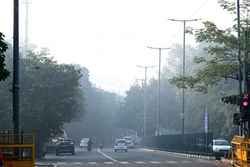
(MENAFN- EIN Presswire) EINPresswire/ -- Amid some of the world's most severe air pollution in Pakistan, a locally engineered breakthrough has emerged as a counterbalance: a smog-cleaning tower deployed by the Government of Punjab's Environmental Protection Agency (EPA). Capable of purifying up to 50,000 cubic meters of air per hour, the tower, manufactured by Rapidev, represents Pakistan's first air-quality technology and a milestone in clean tech innovation. Notably, it stands at the Ravi Urban Development Authority (RUDA), which intersects urban planning, environmental reform, and industrial policy.
Building on the Society for Low Carbon Technologies' (SFLCT) meeting with the Pakistani EPA, which focused on expanding geothermal development, renewables, and smog-reduction strategies, this tower represents a breakthrough: a project that has gained international attention through SFLCT's Smog Diplomacy program, first introduced in January 2024. It later took center stage at the United Nations' COP29 with the World Bank, bringing Pakistan's technological progress and low-carbon leadership into the global spotlight.
This mirrors SFLCT's involvement in collaboratively anchoring Brazil's Carbon Capture Utilization Storage (CCUS) strategy in advance of COP30, and it has also engaged the U.S. Department of Energy in this domain. Rapidev, the EPA, and SFLCT demonstrate how local impact and international collaboration converge to amplify decarbonization initiatives.
SFLCT's Smog Diplomacy framework, conceived as a preemptive response to worsening smog, launched Pakistan's first low-carbon agreement with World Times International, created a scholarship pathway for emerging low-carbon leaders, and outlined scalable clean tech strategies, from early advocacy for Direct Air Capture (DAC) to urban carbon-reduction measures. It cultivated the institutional readiness needed for domestic innovations like Rapidev's tower to emerge. SFLCT's visit to South America's first DAC facility in Brazil reinforces a global decarbonization trajectory.
Rapidev's deployment marks a pivotal moment in Pakistan's clean tech development, showcasing how locally engineered systems can achieve measurable environmental gains. The SFLCT leadership and Co-Founders visited the tower, engaging with Rapidev through Greater Middle East Chairman Osama Rizvi and Chairman Fernando C. Hernandez.“Brazil, Pakistan, and the U.S. show that disciplined organizations can turn clean tech breakthroughs into global pathways that redefine low-carbon futures,” adds Hernandez.
Reinforcing this global trajectory, critical techno-economic and engineering papers with regional and global relevance were presented at the 2025 Society of Petroleum Engineers' (SPE) U.S. Energy Transition Symposium, officially endorsed by SFLCT. Co-authored by distinguished advisory board members Hamza Tasneem and Osama Tasneem, these include“Techno-Economic Analysis for Decarbonization and Broader Climate Objectives” and“Accelerating the Energy Transition: Optimizing Natural Gas Combined Cycle with CCUS, CO2 Utilization, and Renewable Integration.” These papers underscore SFLCT's fluency in technical work that advances policy, engineering practice, and cross-border decarbonization.
H. Tasneem outlines how project economics and battery energy storage systems can support CCUS infrastructure across jurisdictions, while O. Tasneem describes integrating these components with solar for grid-support services-a notable contribution as many nations, including Pakistan, expand solar and low-carbon deployment.
Hernandez, a multi-award-winning mentor with the U.K.'s Net Zero Technology Centre and an XPRIZE-recognized innovator, emphasized that the tower represents pragmatic optimism, proof that solutions for complex environmental problems can be engineered locally, and scaled globally. Rizvi concluded,“As Pakistan looks toward a low-carbon future, Rapidev's domestic manufacturing model reduces costs, creates skilled jobs, and positions the nation as a regional leader in sustainable engineering.” He also emphasized that the techno-economic and engineering papers presented at the Energy Transition Symposium are“blueprints for action across every jurisdiction where SFLCT operates.”

Legal Disclaimer:
MENAFN provides the
information “as is” without warranty of any kind. We do not accept
any responsibility or liability for the accuracy, content, images,
videos, licenses, completeness, legality, or reliability of the information
contained in this article. If you have any complaints or copyright
issues related to this article, kindly contact the provider above.
Most popular stories
Market Research

More Story






Comments
No comment