





403
Sorry!!
Error! We're sorry, but the page you were looking for doesn't exist.
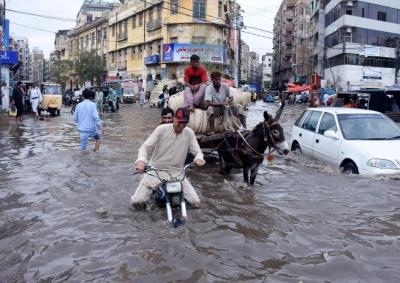
Pakistan's Karachi Racing Towards Becoming Unliveable Amid Rapid Unregulated Urbanisation
(MENAFN- IANS) Islamabad, Dec 3 (IANS) Pakistan's Karachi city has witnessed rampant illegal land reclamation and a surge in unregulated construction --from concrete sprawl to high-rises---endangering coastal communities, traditional fishing practices and the city's few remaining protected parks. This has resulted in worsening the urban heat island effect, making the metropolis feel like a furnace, a report said on Wednesday.
Citing the United Nations' latest Asia-Pacific Disaster Report 2025, it warned that Karachi's rapid concrete growth and vanishing green cover are pushing the city towards extreme temperatures that could exceed most of Asia.
“This is an especially grim reality for a metropolis where heat waves have increasingly become a feature of its climate over the last decade, making the prospect of an even hotter city all the more frightening. Without urgent interventions, unplanned urbanisation, dense construction and shrinking natural buffers could push temperatures a disturbing 2°C-7°C above global warming levels, intensifying the urban heat island effect and pushing the country's financial hub increasingly towards unliveability,” a report in Pakistan's leading newspaper, Business Recorder, detailed.
While the UN report ranks Karachi among nine Asian cities most at risk from rising temperatures in the coming years, it also predicts that Pakistan could become one of the world's most arid countries between 2041 and 2060, facing life-threatening heat and acute water shortages, reshaping the country's disaster landscape.
“There is, of course, a persistent - and justified - tendency to highlight how advanced industrialised economies have driven global ecological breakdown through decades of unchecked emissions, leaving countries like ours to bear the harshest consequences. That reality, however, does not excuse the self-serving, short-sighted and often incompetent governance frameworks that have compounded our own vulnerability,” the report mentioned
“Nowhere is this starker than in Karachi, which is routinely ranked among the least livable urban centres in the world, a status shaped not just by climate exposure but also by years of institutional neglect, fragmented authority and policy paralysis that have, in turn, intensified environmental stresses, locking the city into a destructive cycle,” it added.
According to the report, Karachi has had six master plans since independence, with a seventh - the Greater Karachi Regional Plan 2047 - unveiled earlier this year. However, these plans have failed to address the city's fundamental challenges, including rapid population growth, unplanned urbanisation, crumbling municipal services, chronic transport breakdowns, encroached waterways, poor waste mismanagement and the shrinking public and green spaces.
“The fact remains that urban planning in Karachi - as in Pakistan's other major cities - remains driven more by political interests and the desire for centralised control than by scientific evidence or the input of local experts on population growth and climate needs,” the report noted.

Legal Disclaimer:
MENAFN provides the
information “as is” without warranty of any kind. We do not accept
any responsibility or liability for the accuracy, content, images,
videos, licenses, completeness, legality, or reliability of the information
contained in this article. If you have any complaints or copyright
issues related to this article, kindly contact the provider above.
Most popular stories
Market Research

More Story



Comments
No comment