


Zambia's Factories Burn Too Much Coal How Reusing Hot Water Can Cut Energy Use


Zambia is badly affected by the climate crisis, with six extended countrywide droughts since 2000. In 2024 the drought was declared a state of emergency and caused nation-wide power cuts.
Read more: Cameroon could be turning waste to energy: study uncovers why it's not, and sets out solutions
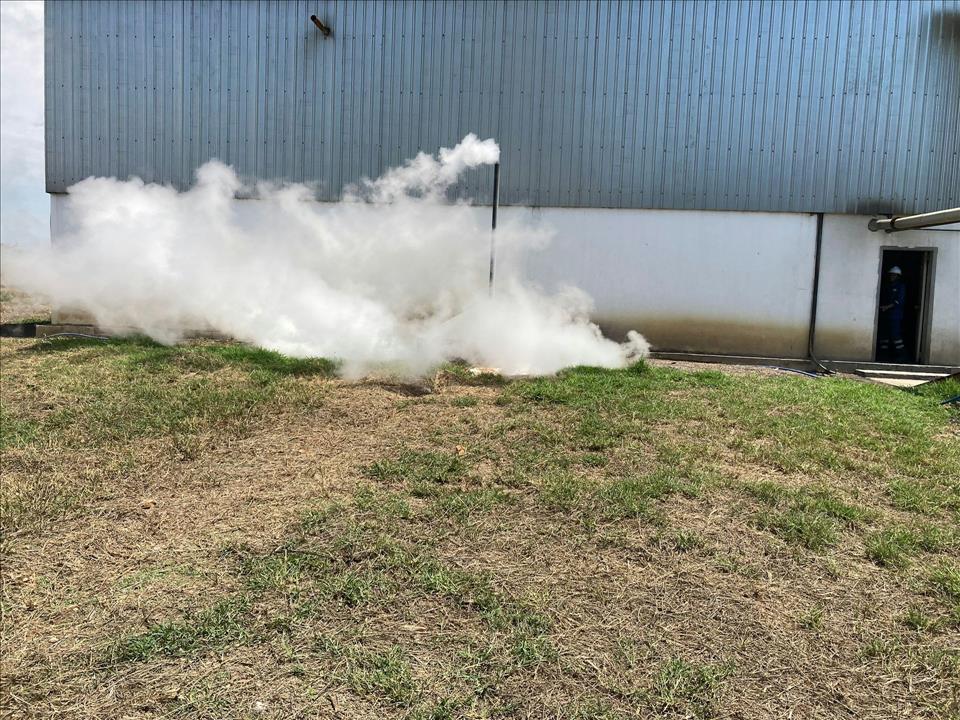
Testing how hot the wastewater is. Courtesy Eleanor Mancusi-Ungaro
We are a transdisciplinary research team of engineers, geographers, social and political scientists, and managers from Zambia and Ireland. Together with our co-authors, Eleanor Mancusi-Ungaro, Madhu K. Murali, Godfrey Hampwaye and Derrick Bwalya Tembo, we spent two years visiting 19 food and beverage manufacturers in Central and Lusaka provinces, looking for ways they could become more energy efficient through a process called wastewater heat recovery.
Factories can use a lot of hot water, and it often goes down the drain while it's still hot. Wastewater heat recovery captures and recycles the heat from this hot wastewater and uses it to preheat cold water. This pre-heated water can be re-used in the factory for any task that needs hot water. This reduces the amount of fuel needed for heating.
Wastewater heat recovery has been around for a long time, especially in colder climates like Canada, Norway and the Netherlands, but research about its use in Zambia hadn't been published before our project.
Hot Well Animation. By Eleanor Mancusi-Ungaro.
Our work shows that wastewater heat recovery could work in hot climates, opening the door to other new applications of existing technology. It means there are ways of reducing coal-fired energy that can be put into practice easily, reducing damage to the climate.
On the ground in ZambiaThe easiest way to reduce carbon emissions is to reduce the use of fossil fuels and replace them with solar, wind and hydropower. In Zambia, the new Kabwe and Chisamba solar plants will help with this transition.
However, solar plants can generate clean electricity for homes and schools but it's harder to replace coal in factories. Switching from a coal or diesel boiler to a solar one would cost over US$12,000. A factory using solar would require a constant backup supply of electricity in case of blackouts. In comparison, a wastewater heat recovery system could cost around US$10,000 depending on the size and type of factory.
Read more: Wastewater is an asset – it contains nutrients, energy and precious metals, and scientists are learning how to recover them
Food and beverage factories are not the biggest emitters of greenhouse gases in Zambia. But wastewater heat recovery is a known viable renewable heating resource in food and beverage sectors in other countries, so we wanted to see if it would work in Zambia too – and contribute to reducing global warming.
The researchers and the wastewater heat recovery system. Courtesy Eleanor Mancusi-Ungaro
We asked the Zambian Environmental Management Agency how many factory boilers were registered in Zambia, and from this, calculated how large the Zambian food and beverage sector was.
Subsequently, we designed, developed and installed a pilot system at a major food producer and, learning from that, installed a full-scale system in 2025. Every week since, we have visited the system to collect data, and we use those data to calculate the fuel and carbon dioxide savings on-site.
Read more: Not just hot air: turning Sydney's wastewater into green gas could be a climate boon
Our assessment is that if wastewater heat recovery was installed in the Zambian food and beverage sector, it could save up to 2,500 tonnes of carbon dioxide a year – that's equivalent to over 1,000 tonnes of coal or almost 1,000 litres of diesel.
Although that may not seem like much, food and beverage processing is only about 2% of Zambia's GDP. Our plan is to look at how much energy could be saved by factories in other sectors of the Zambian economy.
The wastewater heat recovery systems have other benefits to the economy too – they're made of steel and could be manufactured in Zambia by local workers.
What needs to happen nextBusiness owners should conduct energy audits to figure out where the main sources of wasted energy are at their factories. From there, they can consider installing low-cost energy efficiency upgrades like wastewater heat recovery. Mining, healthcare and hospitality could all potentially benefit from wastewater heat recovery.
More broadly, sustainable development in Zambia should consider all innovative options outside the traditional renewable energy methods of solar, wind and hydro power.


Legal Disclaimer:
MENAFN provides the
information “as is” without warranty of any kind. We do not accept
any responsibility or liability for the accuracy, content, images,
videos, licenses, completeness, legality, or reliability of the information
contained in this article. If you have any complaints or copyright
issues related to this article, kindly contact the provider above.


Comments
No comment