




403
Sorry!!
Error! We're sorry, but the page you were looking for doesn't exist.
Parallel And Taper Threads In Instrument Connection
(MENAFN- GetNews) In process systems, threaded connections are essential mechanical elements used to join devices that handle fluid or gas transfer. These fittings feature helical grooves machined either on the exterior (male) or interior (female) surfaces, enabling secure and leak-resistant connections. When mated, the threads form a robust mechanical bond capable of withstanding varying operational pressures.
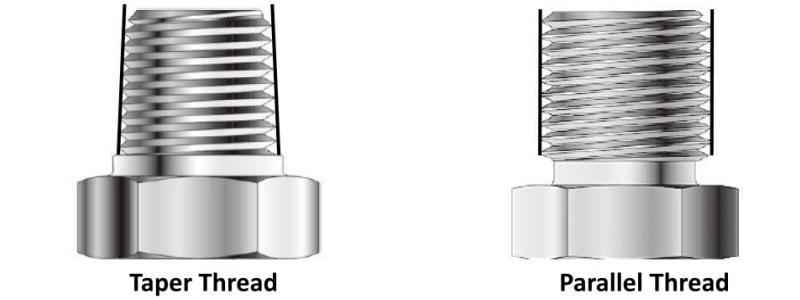
Threaded connections serve not only to hold components together but also to prevent media leakage. There are two primary thread types: parallel and taper threads. Each differs in geometry and sealing mechanism.
Parallel Thread
Also known as straight thread, parallel thread has a consistent diameter and thread profile along their entire length. This uniform shape simplifies alignment and installation. However, as the thread does not taper, it does not inherently create a seal through radial compression. Instead, it may depend on auxiliary sealing elements-such as O-ring, gasket, or washer-to prevent leakage in high pressure application. The main function of the thread is to provide mechanical strength. This design makes parallel thread well-suited for applications requiring frequent assembly and disassembly, since the replaceable seal simplify maintenance without damaging the thread.
Taper Thread
Taper thread is machined with a gradually reducing diameter, creating a conical form. As male and female components are engaged, the taper produces a wedging effect that increases thread contact and creates a mechanical interference fit. This radial compression forms a metal-to-metal seal, which becomes tighter under pressure, making taper thread highly effective in high-pressure or dynamic systems involving gases or liquids. The sealing performance of taper thread improves with tightening and pressure increase, eliminating the need for additional seals in many applications.
Selection Consideration
Parallel threads are often preferred in low-pressure systems or where modularity and ease of maintenance are prioritized. It is critical to select compatible gaskets or O-rings to ensure leak-tightness.
Taper threads excel in high-pressure environments, especially in hydraulic, pneumatic, or process fluid systems. Their self-sealing capability under pressure makes them a reliable choice under demanding conditions.
For instruments installation, common thread standards include Metric and BSPP (parallel), as well as NPT and BSPT (tapered). When selecting a connection type, it is essential to consider operating conditions, pressure levels, and compatibility with existing system interfaces. With over 20 years of experience in manufacturing measurement instruments, Shanghai Wangyuan offers a wide range of thread options for transmitters and supports custom configurations for process connection. Please feel free to contact us for further inquiry or specific requirements.

Legal Disclaimer:
MENAFN provides the
information “as is” without warranty of any kind. We do not accept
any responsibility or liability for the accuracy, content, images,
videos, licenses, completeness, legality, or reliability of the information
contained in this article. If you have any complaints or copyright
issues related to this article, kindly contact the provider above.
Most popular stories
Market Research









Comments
No comment