



403
Sorry!!
Error! We're sorry, but the page you were looking for doesn't exist.
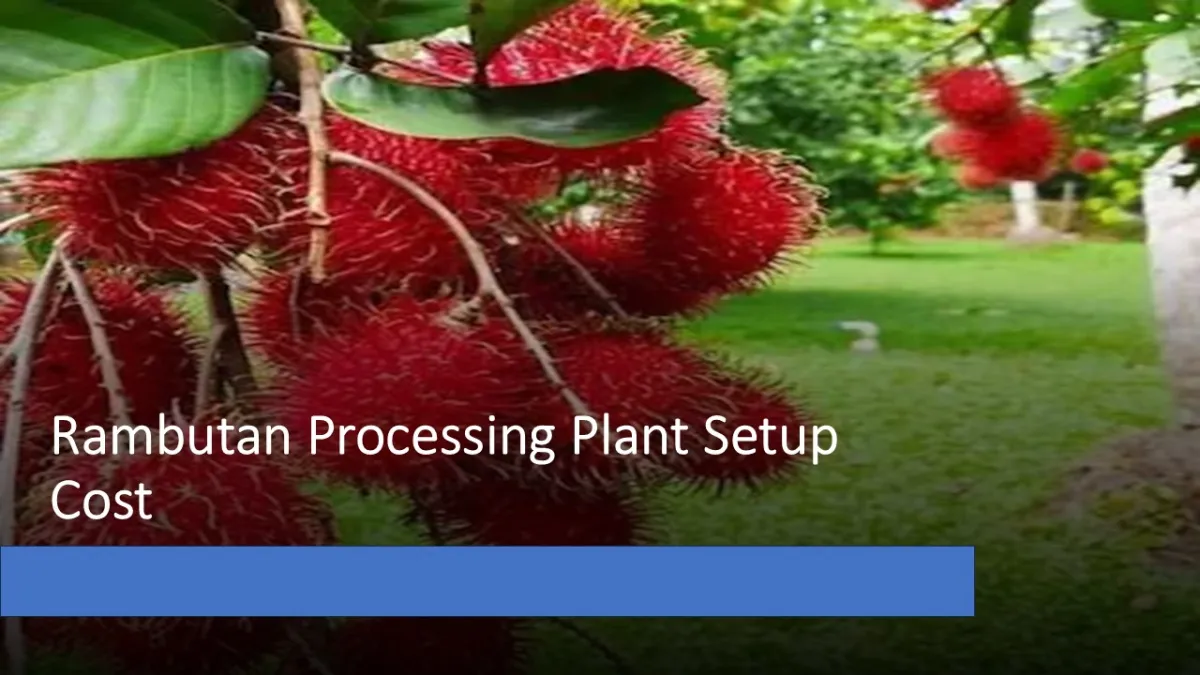
Rambutan Processing Plant Cost 2025: Setup Details, Capital Investments, And Business Plan
(MENAFN- IMARC Group)
Setting up a rambutan processing facility necessitates a detailed market analysis alongside granular insights into various operational aspects, including unit processes, raw material procurement, utility provisions, infrastructure setup, machinery and technology specifications, workforce planning, logistics, and financial considerations.
IMARC Group's report titled“ Rambutan Processing Plant Project Report 2025: Industry Trends, Plant Setup, Machinery, Raw Materials, Investment Opportunities, Cost and Revenue ” offers a comprehensive guide for establishing a rambutan processing plant, covering everything from product overview and production processes to detailed financial insights.
Request Sample: https://www.imarcgroup.com/rambutan-processing-plant-project-report/requestsample
Rambutan processing refers to the systematic handling, preservation, and transformation of fresh rambutan fruit into various value-added products to extend shelf life and enhance marketability. Rambutan, a tropical fruit native to Southeast Asia, has a short harvesting season and is highly perishable, making processing essential for reducing post-harvest losses. The processing steps generally begin with sorting and washing the harvested fruits to remove dirt and contaminants. The outer hairy rind is removed to extract the juicy, translucent pulp, which is then processed into multiple forms such as canned rambutan, jams, jellies, juices, syrups, and candies. Advanced methods like freezing, dehydration, and vacuum packaging are also employed to maintain the fruit's flavor, texture, and nutritional properties. In addition, the seeds and rind, which are often discarded, can be utilized in the production of animal feed, natural colorants, and cosmetics, ensuring minimal waste. Strict hygiene standards, quality control measures, and food safety regulations are followed to maintain product integrity during processing. Rambutan processing not only meets domestic demand but also supports exports, as preserved and packaged rambutan products are popular in international markets. By extending usability beyond the short harvest period, rambutan processing plays a vital role in value creation, food security, and farmer income generation.
The rambutan market is being driven by rising global demand for exotic and tropical fruits, fueled by increasing consumer awareness of health, nutrition, and dietary diversity. Rambutan is rich in vitamin C, antioxidants, and essential minerals, making it highly appealing to health-conscious consumers seeking natural immunity-boosting foods. The expansion of international trade and improved cold chain logistics has enabled rambutan to reach markets in Europe, North America, and the Middle East, where exotic fruits are considered premium offerings. Additionally, the growing popularity of functional foods and beverages is driving demand for rambutan-based products such as juices, jams, desserts, and nutraceuticals. Cosmetic and pharmaceutical industries are also contributing to market growth, as rambutan extracts are increasingly used in skincare products due to their anti-aging and hydrating properties. Rising incomes in developing economies, combined with the expansion of supermarkets and online retail channels, are making rambutan more accessible to consumers. Furthermore, government initiatives to promote tropical fruit exports and investments in modern processing facilities are boosting production capacity and global reach. Collectively, factors such as health trends, globalization of diets, product diversification, and value-added applications are accelerating the growth and long-term potential of the rambutan market worldwide.
Request For Customization: https://www.imarcgroup.com/request?type=report&id=10896&flag=E
Key Steps Required to Set Up a Rambutan Plant
1. Market Analysis
The report provides insights into the landscape of the rambutan industry at the global level. The report also provides a segment-wise and region-wise breakup of the global rambutan industry. Additionally, it also provides the price analysis of feedstocks used in the processing of rambutan, along with the industry profit margins.
. Segment Breakdown
. Regional Insights
. Pricing Analysis and Trends
. Market Forecast
2. Product Processing: Detailed Process Flow
Detailed information related to the process flow and various unit operations involved in the Rambutan processing plant project is elaborated in the report. These include:
. Land, Location, and Site Development
. Plant Layout
. Plant Machinery
. Raw Material Procurement
. Packaging and Storage
. Transportation
. Quality Inspection
. Utilities
. Human Resource Requirements and Wages
. Marketing and Distribution
3. Project Requirements and Cost
The report provides a detailed location analysis covering insights into the plant location, selection criteria, location significance, environmental impact, and expenditure for the rambutan processing plant setup. Additionally, the report also provides information related to plant layout and factors influencing the same. Furthermore, other requirements and expenditures related to machinery, raw materials, packaging, transportation, utilities, and human resources have also been covered in the report.
Machinery and Equipment
. List of machinery needed for Rambutan production
. Estimated costs and suppliers
Raw Material Costs
. Types of materials required and sourcing strategies
Utilities and Overheads
. Electricity, water, labor, and other operational expenses
4. Project Economics
A detailed analysis of the project economics for setting up a rambutan processing plant is illustrated in the report. This includes the analysis and detailed understanding of capital expenditure (CAPEX), operating expenditure (OPEX), income projections, taxation, depreciation, liquidity analysis, profitability analysis, payback period, NPV, uncertainty analysis, and sensitivity analysis.
Capital Expenditure (CAPEX)
. Initial setup costs: land, machinery, and infrastructure
Operating Expenditure (OPEX)
. Recurring costs: raw materials, labor, maintenance
Revenue Projections
. Expected income based on production capacity, target market, and market demand
Taxation
Depreciation
Financial Analysis
. Liquidity Analysis
. Profitability Analysis
. Payback Period
. Net Present Value (NPV)
. Internal Rate of Return
. Profit and Loss Account
Uncertainty Analysis
Sensitivity Analysis
Economic Analysis
5. Legal and Regulatory Compliance
. Licenses and Permits
. Regulatory Procedures and Approval
. Certification Requirement
6. Hiring and Training
. Total human resource requirement
. Salary cost analysis
. Employee policies overview
The report also covers critical insights into key success and risk factors, which highlight the aspects that influence the success and potential challenges in the industry. Additionally, the report includes strategic recommendations, offering actionable advice to enhance operational efficiency, profitability, and market competitiveness. A comprehensive case study of a successful venture is also provided, showcasing best practices and real-world examples from an established business, which can serve as a valuable reference for new entrants in the market.
About Us:
IMARC is a global market research company offering comprehensive services to support businesses at every stage of growth, including market entry, competitive intelligence, procurement research, regulatory approvals, factory setup, company incorporation, and recruitment. Specializing in factory setup solutions, we provide detailed financial cost modelling to assess the feasibility and financial viability of establishing new processing plants globally. Our models cover capital expenditure (CAPEX) for land acquisition, infrastructure, and equipment installation while also evaluating factory layout and design's impact on operational efficiency, energy use, and productivity. Our holistic approach offers valuable insights into industry trends, competitor strategies, and emerging technologies, enabling businesses to optimize operations, control costs, and drive long-term growth.
Contact Us:
IMARC Group
134 N 4th St. Brooklyn, NY 11249, USA
Email: sales[@]imarcgroup.com
Tel No:(D) +91 120 433 0800
United States: (+1-201971-6302)

Legal Disclaimer:
MENAFN provides the
information “as is” without warranty of any kind. We do not accept
any responsibility or liability for the accuracy, content, images,
videos, licenses, completeness, legality, or reliability of the information
contained in this article. If you have any complaints or copyright
issues related to this article, kindly contact the provider above.
Most popular stories
Market Research

More Story








Comments
No comment