







403
Sorry!!
Error! We're sorry, but the page you were looking for doesn't exist.
Reimagining Entry-Level Tech Careers in the AI Era: Unveiling High-Growth Opportunities
(MENAFN- bursonglobal) Reimagining Entry-Level Tech Careers in the AI Era: Unveiling High-Growth Opportunities
by Michelle Vaz, Managing Director, AWS Training and Certification
July 2025
AI presents an unprecedented opportunity to accelerate innovation and create new types of jobs. For early-career professionals who embrace this transformation, AI offers the potential to have meaningful impact and open up new possibilities.
To better understand the AI-driven transformation of the workforce and its implications, we partnered with Draup, a data intelligence firm specializing in workforce planning and talent analytics, to conduct a comprehensive study: “The Evolution of Early-Career Technical Roles in the AI Era.”
Our research reveals a compelling paradox: while young adult unemployment has reached 6.6%, the highest in a decade outside the pandemic, AI is simultaneously making many technical roles more accessible to those just starting their careers. The catch? These roles now require mastery of more complex skills, as AI has automated many traditional entry-level tasks.
The findings are striking: 50-55% of early-career workloads are now AI-augmented. This isn’t a future scenario—it’s today’s reality, where entry-level workers are contributing to complex projects on day one and delivering insights in hours instead of weeks.
As someone who has spent decades at the intersection of technology and workforce development, I’ve witnessed many transformations. But none compare to this fundamental shift. AI is revolutionizing both how work gets done and who can do it, creating unprecedented opportunities for those willing to embrace these new, more sophisticated skillsets.
To address this shifting landscape, we’re launching a new initiative through AWS Academy aimed at equipping early-career professionals with these essential skills. Let’s explore the high-growth roles that are being transformed by AI.
Five high-growth roles transformed by AI
AI-assisted tools are democratizing tasks that once required years of experience, creating new opportunities across the tech industry. Let’s examine these opportunities in detail. Our research identified five key roles where AI’s impact is creating significant opportunities:
1. Software development: The AI revolution
Software development engineers are experiencing perhaps the most dramatic transformation. With over 283,000 current entry-level job postings, and a 28% growth rate over the past year (June 2024-June 2025), it’s one of our most in-demand entry-level positions. Where junior developers once spent hours on manual coding and debugging, they now leverage AI-assisted development tools to contribute to complex projects from day one. The role has evolved to focus more on innovation and problem-solving rather than routine coding tasks.
2. Data analysis: From processing to insights
Data analyst roles represent another high-growth opportunity, with nearly 125,000 current job postings and 16% growth in the past year. Today’s junior analysts use AI to automate data cleaning and preparation, allowing them to focus on what matters most: generating meaningful business insights. Rather than spending weeks on manual data processing, they can deliver strategic analysis within days.
3. Cloud engineering: Building the technology systems that power our digital world
Cloud engineers are increasingly critical as organizations accelerate their digital transformation. With almost 45,000 current job postings and 9.5% year-over-year growth, this role offers early-career professionals the chance to architect and manage the infrastructure powering our digital world. What’s remarkable is that 90% of these entry-level workloads are now cloud-enabled, meaning they’re designed to run on cloud computing platforms rather than traditional on-premises systems, creating a natural entry point for those with the right skills.
4. Cybersecurity: Protecting the digital future
Cybersecurity engineering roles, particularly in the financial services sector, represent an emerging opportunity with 62.5% growth in job postings over the past year. As AI automates threat detection and response, entry-level professionals can focus on more sophisticated security challenges, making this historically experience-heavy field more accessible to newcomers.
5. Data engineering: Powering AI innovation
Data engineers round out our top five, with over 103,000 current job postings and nearly 12% growth since June 2024. As organizations increasingly rely on AI and machine learning, junior data engineers play a crucial role in building the data foundations that power these technologies. The automation of routine data pipeline creation and management means early-career professionals can contribute to more strategic data architecture decisions.
What’s particularly encouraging about these evolving roles is that they’re not just technical positions; they’re becoming strategic business enablers. AI may replace some traditional entry-level tasks, but it’s also creating new opportunities and elevating the work of many early-career professionals.
Seizing the opportunity
With nearly 90% of early-career workloads now cloud-enabled, we’re seeing an unprecedented opportunity for the next generation of tech professionals. I call these emerging talents “AI-native professionals”—individuals who enter the workforce ready to collaborate with AI tools to drive innovation and solve complex problems from day one.
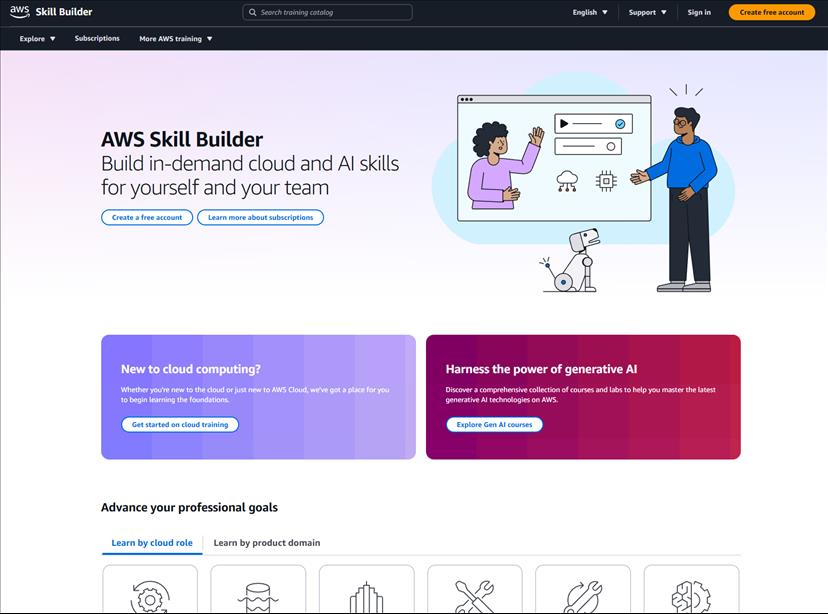
I’m excited to share details about our initiative announced at AWS Summit in New York City that aims to reach 2.7 million college students and early-career professionals worldwide within its first year. Through this initiative, we’re providing AWS Academy students globally with a free subscription to AWS Skill Builder for 12 months, empowering them to learn foundational and specialized AI content. AWS Academy provides more than 6,600 higher education institutions around the globe with free, ready-to-teach cloud computing and generative AI curricula that prepare students to pursue AWS certifications and in-demand jobs. In addition to the free subscription to AWS Skill Builder, students can earn AWS Certification vouchers. AWS certifications enable learners to validate their cloud or AI expertise with industry-recognized credentials.
Conclusion
The transformation we’re witnessing in early-career tech roles is just the beginning. Our research has illuminated how AI is democratizing access to technical roles, accelerating skill development, and creating new pathways to success.
There’s more to explore. In the coming months, I’ll be sharing additional insights, diving deeper into topics like the evolving skill requirements across industries, the impact of AI on career progression, and the emerging opportunities in specific sectors. We’ll examine how organizations are adapting their hiring practices, what this means for educational institutions, and most importantly, how early-career professionals can position themselves for success.
-ENDS-
About the author
Michelle Vaz is the Managing Director of AWS Training and Certification, where she leads the global strategy to prepare individuals and organizations for the future of work through cloud computing and AI skills development. With over two decades of leadership experience across the technology and public sectors, Michelle brings a strategic and deeply human approach to workforce transformation.
Her mission is to drive workforce transformation at scale by making cutting-edge technology education accessible to all, regardless of background, role, or geography. Michelle firmly believes that unlocking the full potential of AI to solve global challenges requires a workforce that is not only AI-aware, but AI-capable.
by Michelle Vaz, Managing Director, AWS Training and Certification
July 2025
AI presents an unprecedented opportunity to accelerate innovation and create new types of jobs. For early-career professionals who embrace this transformation, AI offers the potential to have meaningful impact and open up new possibilities.
To better understand the AI-driven transformation of the workforce and its implications, we partnered with Draup, a data intelligence firm specializing in workforce planning and talent analytics, to conduct a comprehensive study: “The Evolution of Early-Career Technical Roles in the AI Era.”
Our research reveals a compelling paradox: while young adult unemployment has reached 6.6%, the highest in a decade outside the pandemic, AI is simultaneously making many technical roles more accessible to those just starting their careers. The catch? These roles now require mastery of more complex skills, as AI has automated many traditional entry-level tasks.
The findings are striking: 50-55% of early-career workloads are now AI-augmented. This isn’t a future scenario—it’s today’s reality, where entry-level workers are contributing to complex projects on day one and delivering insights in hours instead of weeks.
As someone who has spent decades at the intersection of technology and workforce development, I’ve witnessed many transformations. But none compare to this fundamental shift. AI is revolutionizing both how work gets done and who can do it, creating unprecedented opportunities for those willing to embrace these new, more sophisticated skillsets.
To address this shifting landscape, we’re launching a new initiative through AWS Academy aimed at equipping early-career professionals with these essential skills. Let’s explore the high-growth roles that are being transformed by AI.
Five high-growth roles transformed by AI
AI-assisted tools are democratizing tasks that once required years of experience, creating new opportunities across the tech industry. Let’s examine these opportunities in detail. Our research identified five key roles where AI’s impact is creating significant opportunities:
1. Software development: The AI revolution
Software development engineers are experiencing perhaps the most dramatic transformation. With over 283,000 current entry-level job postings, and a 28% growth rate over the past year (June 2024-June 2025), it’s one of our most in-demand entry-level positions. Where junior developers once spent hours on manual coding and debugging, they now leverage AI-assisted development tools to contribute to complex projects from day one. The role has evolved to focus more on innovation and problem-solving rather than routine coding tasks.
2. Data analysis: From processing to insights
Data analyst roles represent another high-growth opportunity, with nearly 125,000 current job postings and 16% growth in the past year. Today’s junior analysts use AI to automate data cleaning and preparation, allowing them to focus on what matters most: generating meaningful business insights. Rather than spending weeks on manual data processing, they can deliver strategic analysis within days.
3. Cloud engineering: Building the technology systems that power our digital world
Cloud engineers are increasingly critical as organizations accelerate their digital transformation. With almost 45,000 current job postings and 9.5% year-over-year growth, this role offers early-career professionals the chance to architect and manage the infrastructure powering our digital world. What’s remarkable is that 90% of these entry-level workloads are now cloud-enabled, meaning they’re designed to run on cloud computing platforms rather than traditional on-premises systems, creating a natural entry point for those with the right skills.
4. Cybersecurity: Protecting the digital future
Cybersecurity engineering roles, particularly in the financial services sector, represent an emerging opportunity with 62.5% growth in job postings over the past year. As AI automates threat detection and response, entry-level professionals can focus on more sophisticated security challenges, making this historically experience-heavy field more accessible to newcomers.
5. Data engineering: Powering AI innovation
Data engineers round out our top five, with over 103,000 current job postings and nearly 12% growth since June 2024. As organizations increasingly rely on AI and machine learning, junior data engineers play a crucial role in building the data foundations that power these technologies. The automation of routine data pipeline creation and management means early-career professionals can contribute to more strategic data architecture decisions.
What’s particularly encouraging about these evolving roles is that they’re not just technical positions; they’re becoming strategic business enablers. AI may replace some traditional entry-level tasks, but it’s also creating new opportunities and elevating the work of many early-career professionals.
Seizing the opportunity
With nearly 90% of early-career workloads now cloud-enabled, we’re seeing an unprecedented opportunity for the next generation of tech professionals. I call these emerging talents “AI-native professionals”—individuals who enter the workforce ready to collaborate with AI tools to drive innovation and solve complex problems from day one.
I’m excited to share details about our initiative announced at AWS Summit in New York City that aims to reach 2.7 million college students and early-career professionals worldwide within its first year. Through this initiative, we’re providing AWS Academy students globally with a free subscription to AWS Skill Builder for 12 months, empowering them to learn foundational and specialized AI content. AWS Academy provides more than 6,600 higher education institutions around the globe with free, ready-to-teach cloud computing and generative AI curricula that prepare students to pursue AWS certifications and in-demand jobs. In addition to the free subscription to AWS Skill Builder, students can earn AWS Certification vouchers. AWS certifications enable learners to validate their cloud or AI expertise with industry-recognized credentials.
Conclusion
The transformation we’re witnessing in early-career tech roles is just the beginning. Our research has illuminated how AI is democratizing access to technical roles, accelerating skill development, and creating new pathways to success.
There’s more to explore. In the coming months, I’ll be sharing additional insights, diving deeper into topics like the evolving skill requirements across industries, the impact of AI on career progression, and the emerging opportunities in specific sectors. We’ll examine how organizations are adapting their hiring practices, what this means for educational institutions, and most importantly, how early-career professionals can position themselves for success.
-ENDS-
About the author
Michelle Vaz is the Managing Director of AWS Training and Certification, where she leads the global strategy to prepare individuals and organizations for the future of work through cloud computing and AI skills development. With over two decades of leadership experience across the technology and public sectors, Michelle brings a strategic and deeply human approach to workforce transformation.
Her mission is to drive workforce transformation at scale by making cutting-edge technology education accessible to all, regardless of background, role, or geography. Michelle firmly believes that unlocking the full potential of AI to solve global challenges requires a workforce that is not only AI-aware, but AI-capable.

Legal Disclaimer:
MENAFN provides the
information “as is” without warranty of any kind. We do not accept
any responsibility or liability for the accuracy, content, images,
videos, licenses, completeness, legality, or reliability of the information
contained in this article. If you have any complaints or copyright
issues related to this article, kindly contact the provider above.
Most popular stories
Market Research

More Story








Comments
No comment