




403
Sorry!!
Error! We're sorry, but the page you were looking for doesn't exist.
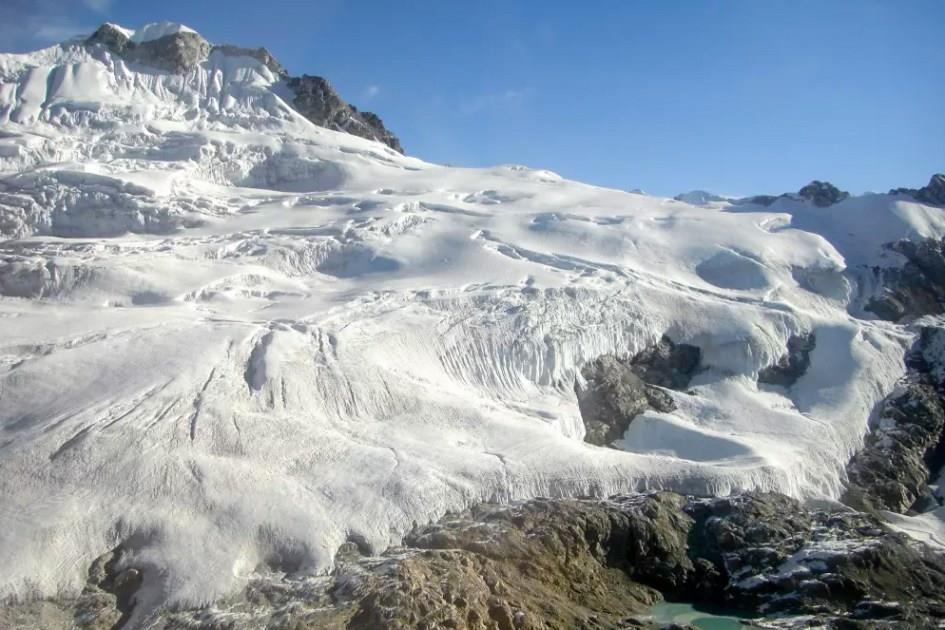
Nepal And The Himalayas, The Agony Of Glaciers On The Roof Of The World
(MENAFN- Swissinfo)
Melting Himalayan glaciers increase the risk of catastrophic flooding and reduce freshwater resources for nearly two billion people. The challenges for climate adaptation in a poor country like Nepal are immense.
This content was published on
April 12, 2025 - 10:30
6 minutes
Sharad Joshi is the national correspondent in Nepal of the World Glacier Monitoring Service. ICIMOD
I cover climate change and energy through reportages, articles, interviews and in-depth reports. I am interested in the impacts of global warming on everyday life and solutions for an emission-free planet. Passionate about travel and discovery, I studied biology and other natural sciences. I have been a journalist for SWI swissinfo for more than 20 years.
-
More from this auth
Italian Departme
At 8,848 metres, Mount Everest is the highest peak on the planet. But its altitude does not shelter the mountain from the effects of the warming climate. The thickness of the South Col glacier, Everest's highest, has shrunk by more than 54 metresExternal link since the late 1990s.
“Recent studies show that Himalayan glaciers are melting at an accelerated pace,” says Sharad Joshi, a cryosphere expert at the International Center for Integrated Mountain Development (ICIMOD).
The Nepal-based organisation works for the sustainable development of the Hindu Kush Himalaya Mountain regions. Joshi is also the national correspondent in Nepal for the World Glacier Monitoring Service (WGMSExternal link ), based in Switzerland.
The World Glacier Monitoring Service (WGMSExternal link ) collects and analyses data on the mass balance, volume, area and length of the world's glaciers. It was established in 1986 and is based at the University of Zurich, Switzerland. The WGMS has a network of national correspondents in more than 40 countries.
During the International Year for the Conservation of Glaciers, we contacted some of them to find out about the state of glaciers in their region, the consequences of ice melt and adaptation strategies.
The end of one of the most studied glaciers in NepalThe melting of glaciers in the Hindu Kush HimalayaExternal link (HKH), a region spanning eight countries, is caused by rising global temperatures and local weather conditions (dry and cold with strong winds). Precipitation patterns are changing, and even at higher altitudes, there is more rainfall and less snowfall.
Sharad Joshi is the national correspondent in Nepal of the World Glacier Monitoring Service. ICIMOD
Between 2011 and 2020, the HKH's approximately 56,000 glaciers melted 65% faster than in the previous decade, according to an ICIMOD studyExternal link . They could lose up to 80% of their volume by the end of the century.
Yala Glacier in Nepal's Langtang Valley is among the most-studied glaciers in the country. It is also one of the glaciers monitored by the WGMS and the only one in the Himalayan region to be included on the Global Glacier Casualty ListExternal link , a kind of world atlas of recently disappeared or critically endangered glaciers.
Its area shrank by more than a third between 1974 and 2021External link , and the glacier may disappear in the next 20 to 25 years.“Every time I visit the glacier I feel deep sadness to see its massive loss,” Joshi tells SWI swissinfo.
The danger of collapsing proglacial lakesMelting glaciers in Nepal, Joshi explains, create a cascade of effects that have consequences for communities and ecosystems both locally and globally.
Retreating glaciers lead to the formation of proglacial lakes. These are basins bounded by natural dams made up of ice or debris, called moraine. A landslide or earthquake could cause the sudden failure of these dams, leading to flooding (Glacial Lake Outburst Floods or GLOFs) and to devastating effects on villages, roads, bridges, hydropower plants and other infrastructure.
>> Watch the animation below to learn how a GLOF flood occurs:
External ContentIn October 2023, a landslide that collapsed into South Lhonak Lake in the Himalayan region of India triggered a tsunami-like impact wave up to 20 metres high. The flood caused extensive damage along a 386-kilometre valley. At least 55 people were killed and 70 others were reported missing.
“This event impressively demonstrates how vulnerable high mountain regions are to the effects of climate change,” says Christian Huggel, professor of environment and climate at the University of Zurich and co-author of a recent studyExternal link on the South Lhonak disaster.
The number of proglacial lakes in the Himalayas is rapidly growingExternal link , according to ICIMOD. In Nepal, 21 lakes are considered at risk of flooding.
>> Vulnerable Himalayan border regions are facing an increasing risk of glacial lake outburst flooding. The Swiss approach is part of their strategy to deal with an uncertain future, as this article explains:
More More Himalayan nations can no longer ignore an environmental time bombThis content was published on Jun 22, 2021 Vulnerable Himalayan border regions are at risk from glacial lake outburst flooding. The Swiss approach is part of the solution.
Read more: Himalayan nations can no longer ignore an environmental time bom
Legal Disclaimer:
MENAFN provides the
information “as is” without warranty of any kind. We do not accept
any responsibility or liability for the accuracy, content, images,
videos, licenses, completeness, legality, or reliability of the information
contained in this article. If you have any complaints or copyright
issues related to this article, kindly contact the provider above.
Most popular stories
Market Research

More Story






Comments
No comment