








403
Sorry!!
Error! We're sorry, but the page you were looking for doesn't exist.

The US Election And North Korean Denuclearization
(MENAFN- Asia Times)
To no one's surprise, 2024 is turning out to be a unique US election year in which speculation about changes in US foreign policy under each of the two candidates if elected far exceeds actual comments or insights provided by either camp.
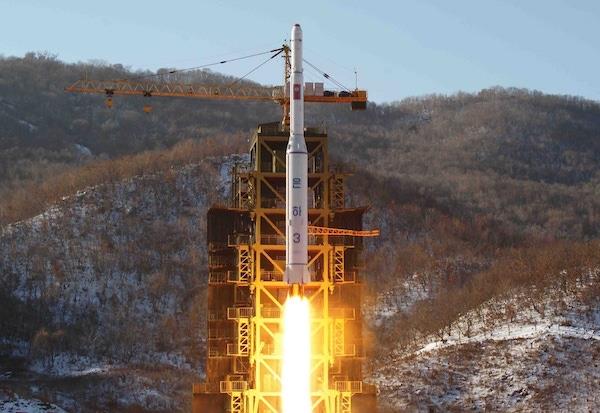
This file picture taken by North Korea's official Korean Central News Agency (KCNA) on December 12, 2012, shows North Korean rocket Unha-3, carrying the satellite Kwangmyongsong-3, lifting off from the launching pad in Cholsan county, North Pyongan province in North Korea. Photo: KCNA vis KNS / FILES
Candidate Trump has, not surprisingly, left options open and spoken more in terms of where President Biden allegedly failed.
Meanwhile, the Biden-Harris team [as of this writing, before President Joe Biden's July 21 withdrawal from the race and endorsement of Vice President Kamala Harris as his successor] has defended its current policy and avoided suggestions that fundamental changes are necessary.
Filling the vacuum of substantial policy debate thus far are experts across the political spectrum. There is much rumination about possible new policy directions regarding North Korea and its growing nuclear weapons program.
There is universal consensus that North Korea's nuclear capability poses a growing, dangerous threat that will challenge the winner of this year's election for the coming four years. The foundational questions being asked boil down to two:“Do the Democrats have any North Korea Plan B for the next term?” and“What would a resumed Trump-Kim Jong Un relationship yield?”
There is a predictable claim that Washington's current policy toward Pyongyang failed and that the status quo is unacceptable. It's predictable since this is what foreign policy wonks are paid to do – not necessarily because there exist alternative policies, superior to those in place now, that would have a better chance of success.
There are growing calls for shifting away from the goal of complete and verifiable denuclearization of North Korea to an allegedly more reasonable arms control approach that would accept the reality that North Korea has nuclear weapons and find ways in which the threat those weapons posed might be mitigated or at least controlled.
Other critics focus on the need for Washington to somehow identify the right incentives that would bring Pyongyang back to the table. They assume that Washington is largely to blame for the stand-off while asserting, despite evidence to the contrary, that somehow Pyongyang is ready to talk in a way that it so far has refused to do under the current Biden administration.
Missing or marginalized as distant, secondary considerations are Pyongyang's agency, what its current diplomatic goals might be and whether Kim Jong Un will ever envision the need to put all or part of his nuclear program on the table.
If these questions are considered at all, the discussion is usually accompanied by the claim that North Korea wants nothing more than dialogue with the United States, is frustrated with US policy inaction and will continue to build its arsenal until it has Washington's attention.
It has been hard for such commentators to accept that – to borrow from the movie title – Pyongyang is just not that into us.
All that said, January 20, 2025, will be upon us before we know it and it is worth examining what Pyongyang might be looking for over the coming four years. The US election results (hopefully) will be final, additional North Korea missile launches and other shows of force will have taken place and an authoritative statement of some type from Kim Jong Un will have been issued around New Year's Day that will fuel even more discussion about possibilities for dialogue going forward.
Examining the past history of North Korea policy shifts tied to the US election cycle can provide insights into how the current situation unfolded over the past years, and how much skepticism – or, on the contrary, how much optimism – is warranted regarding any change going forward.
L essons of the recent pastHaving been the Korea director on the National Security Council staff during the transition from Obama term one to Obama term two in 2013, I can understand the optimistic view, even if guarded, holding that presidential transitions provide new opportunities for change with North Korea.
Candidate Obama had promised he would reach out his hand to adversaries who would unclench their fists. This openness to dialogue extended to Pyongyang throughout the first term – despite the response to it with:
-
North Korea's second nuclear test in May 2009; and
Pyongyang's abrogation of the modest but important February 2012 Leap Day Understanding with the United States, which had sought to lay the groundwork for improving US-DPRK ties while opening a path back to multilateral Six-Party Talks that had closed in late 2008.
a Taepo Dong-2 long-range rocket launch in April 2009;
Those actions did not discourage the administration in the last half of 2012 from exploring how it might use a second term to work with Pyongyang to move diplomacy forward. What the United States sought from North Korea in terms of a phased approach to denuclearization was quite clear, as were the political economic, diplomatic, and security benefits to Pyongyang for moving down the path.
How would North Korea greet Obama in term two? It did not take long to find out. Just after the November 2012 election, North Korea
-
again – in December 2012 – launched a Taepo Dong-2 long-range rocket;
conducted, in February 2013, its third nuclear test; and
shortly thereafter, declared that it was going to expand its nuclear program even further as it pursued its so-called byungjin policy of parallel pursuit of both nuclear and economic development.
This file picture taken by North Korea's official Korean Central News Agency (KCNA) on December 12, 2012, shows North Korean rocket Unha-3, carrying the satellite Kwangmyongsong-3, lifting off from the launching pad in Cholsan county, North Pyongan province in North Korea. Photo: KCNA vis KNS / FILES
From that point onward, Pyongyang rejected denuclearization talks, ignoring repeated calls from both Washington and Seoul for dialogue, and rejecting Beijing's efforts to coax Pyongyang back to negotiations on its nuclear program.
Despite South Korean President Moon Jae-in's assertion to the contrary, although Kim Jong Un put the“denuclearization” word back into play in 2018 there was little optimism at the time among experts that Kim was prepared to move beyond Pyongyang's definition of“denuclearization of the whole Korean Peninsula.”
First and foremost in Pyongyang's view was the elimination of the threat posed by the United States to North Korea – in other words, the removal of the US security commitment to the Republic of Korea.

Legal Disclaimer:
MENAFN provides the
information “as is” without warranty of any kind. We do not accept
any responsibility or liability for the accuracy, content, images,
videos, licenses, completeness, legality, or reliability of the information
contained in this article. If you have any complaints or copyright
issues related to this article, kindly contact the provider above.
Most popular stories
Market Research

More Story







Comments
No comment