




403
Sorry!!
Error! We're sorry, but the page you were looking for doesn't exist.
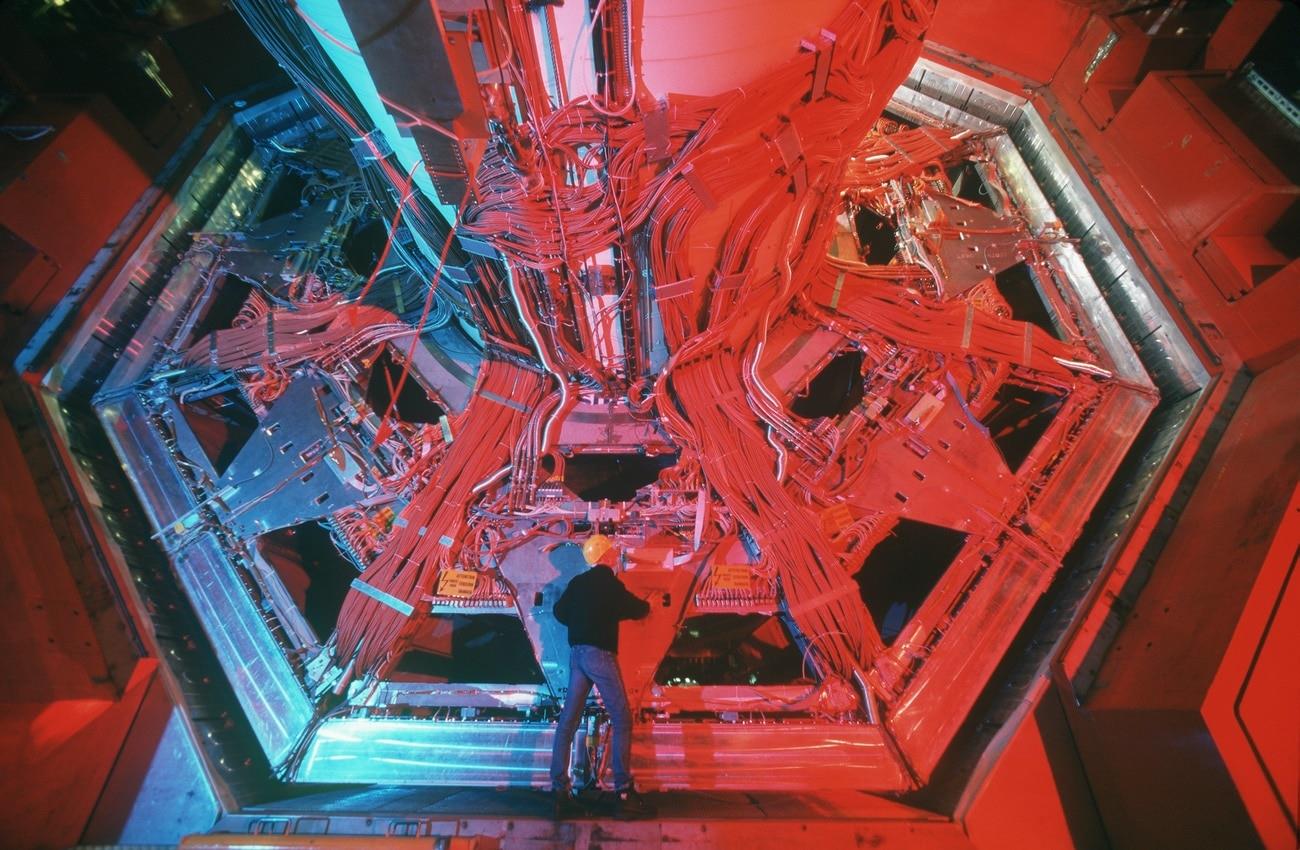
CERN Celebrates 70 Years Of Particle Physics Research
(MENAFN- Swissinfo) The first public event, entitled“Unveiling the Universe", is scheduled for January 30, CERN said in a press release. It will combine science, art and culture, and will also feature a round table where scientists will discuss the evolution of particle physics and CERN's contribution.
Other events on March 7 and April 18 will showcase the practical applications of high-energy physics research in everyday life. In mid-May, the focus will be on the importance of international collaboration in carrying out research.
In June and July, scientists will discuss some of the unsolved particle physics enigmas, and the infrastructure planned to help provide answers. Various conferences and exhibitions are planned.
'Open science'“We will demonstrate how, over the past seven decades, CERN has been at the forefront of scientific knowledge and technological innovation, a model for training and education, collaboration and open science, and an inspiration for citizens around the world,” said Fabiola Gianotti, CERN Director-General, in the press release.
+ In the bowels of the monster
CERN was founded in 1954, shortly after the Second World War, to support scientific research in Europe and promote peaceful collaboration in fundamental research.
+ 'Momentum building' around CERN's next particle collider
As more powerful particle accelerators and detectors were built, crucial discoveries and innovations were made, including the Higgs boson in 2012. CERN is also the birthplace of the World Wide Web. It is home to the Large Hadron Collider (LHC), which is the largest and most powerful particle accelerator in the world.
+ CERN detects new 'Higgs-like' particle
Today, CERN comprises 23 member states and 10 associate member states. It brings together a community of over 17,000 people from all over the world, representing more than 110 nationalities.
Legal Disclaimer:
MENAFN provides the
information “as is” without warranty of any kind. We do not accept
any responsibility or liability for the accuracy, content, images,
videos, licenses, completeness, legality, or reliability of the information
contained in this article. If you have any complaints or copyright
issues related to this article, kindly contact the provider above.
Most popular stories
Market Research

More Story






Comments
No comment