




403
Sorry!!
Error! We're sorry, but the page you were looking for doesn't exist.
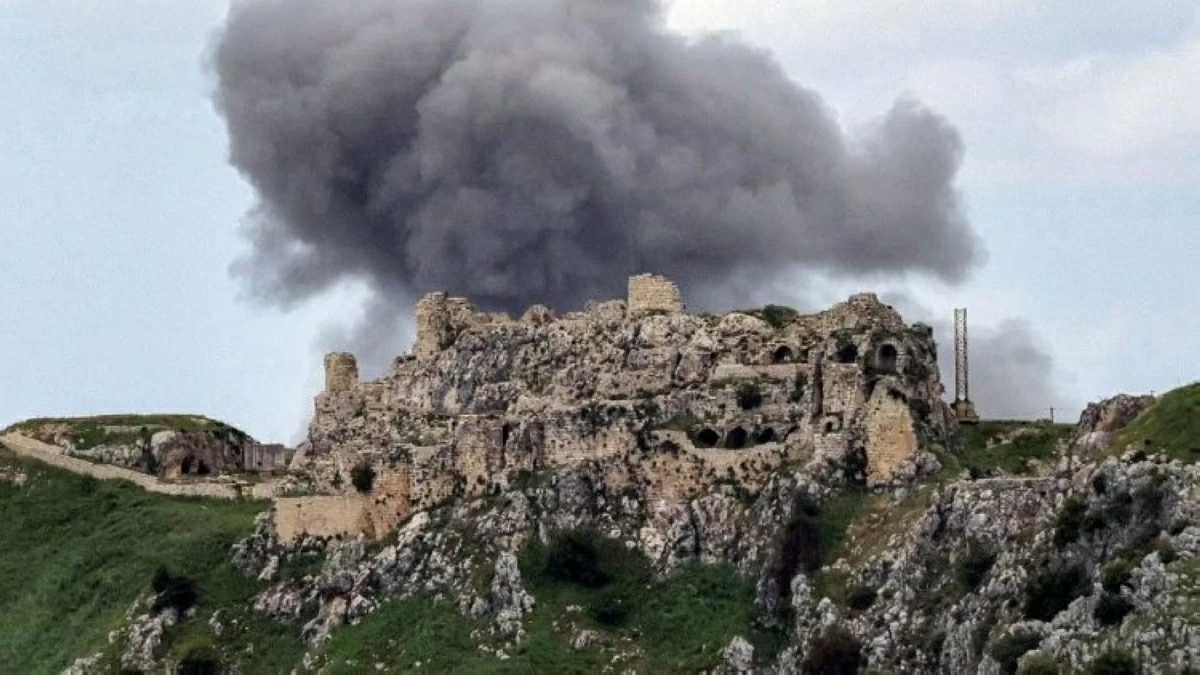
Two Palestinian Fighters Recount The Battle For Lebanon's Beaufort Castle
(MENAFN- Jordan Times)
JERICHO, Palestinian Territories - When former Palestinian fighter Moin Al Taher heard the Israeli flag was once again flying over Lebanon's Beaufort castle, he cast his mind back more than 40 years, recalling its historic walls "blazing" under heavy shelling as his comrades fought to defend it.
Moin Al Taher and Mohammed al Qarout were both fighters for the Palestine Liberation Organisation [PLO] in south Lebanon when the last battle for the castle unfolded in June 1982, which ended with Israel taking over the strategic vantage point and killing all the defending fighters.
"It was on June 6. That day, the castle was subjected to uninterrupted Israeli artillery and air bombardment", Taher, 74, who now lives in Amman, Jordan, told AFP.
"I saw the castle, which had come under heavy fire, blazing under the intensity of the shelling", he recalled.
Following the creation of the state of Israel in 1948, Israel displaced tens of thousands of Palestinians to Lebanon, where some organised into armed factions that launched operations against Israel from Lebanese territory.
In 1978, Israel invaded Lebanon for the first time in response to the attacks, and in 1982 it carried out a second invasion that eventually reached Beirut.
Taher commanded joint Lebanese-Palestinian forces during the 1978 war along Lebanon's border with Israel, and at Beaufort Castle in 1982.
Taher said he was in Beirut where his wife had just given birth to their daughter when the battle started, and reached the area by noon that day.
"That morning, the fighters had managed to shoot down an Israeli warplane and capture its pilot."
He said he later attempted to reach the castle with another fighter to check on the men there, but their vehicle came under Israeli fire and he was wounded by shrapnel.
Inside the castle were about 30 fighters with the "Jarmaq Battalion", whose members hailed from the Palestinian Territories, Lebanon and Yemen, and fought under Fatah, the faction of historic Palestinian leader Yasser Arafat.
Trenches and bunkers
Taher explained that Israeli airstrikes had largely destroyed the castle by 1981.
The fighters subsequently fortified it by digging trenches, bunkers, and a 150-meter tunnel within the fortress.
He said the castle became famous because of the constant Israeli bombardment.
"Every day, a communique would announce that the enemy had shelled Beaufort Castle."
Qarout, 69, also fought in the PLO's ranks in southern Lebanon.
He later held positions within the Palestinian Authority in Jericho, where he now lives, and focuses on collecting documents and information about the history of Fatah, including the battle of Beaufort Castle.
Leafing through printed documents and photographs from that era, Qarout showed AFP images of the castle and its fighters.
One photograph features a long ladder which he explained he personally installed so fighters could access the fortress after its entrance had been destroyed in 1981.
Another photograph shows a group of fighters in military uniforms atop the castle, waving their hands.
"The fighters held out in the castle for more than 60 hours until they were all martyred," Qarout recalled.
Both Qarout and Taher pointed to Beaufort's historic significance, having passed through the hands of many armies since its construction by the Crusaders, from Saladin to the Ottomans.
Its strategic importance lies in the fact that it overlooks northern Israel as well as the Israeli-occupied Golan Heights, they said.
The goal of Israel's 1982 invasion was to force the PLO out of Lebanon.
The operation ultimately succeeded in expelling the organisation's leadership, headed by Yasser Arafat, from Lebanon after Israeli forces laid siege to the capital Beirut.

Legal Disclaimer:
MENAFN provides the
information “as is” without warranty of any kind. We do not accept
any responsibility or liability for the accuracy, content, images,
videos, licenses, completeness, legality, or reliability of the information
contained in this article. If you have any complaints or copyright
issues related to this article, kindly contact the provider above.
Most popular stories
Market Research

More Story






Comments
No comment