

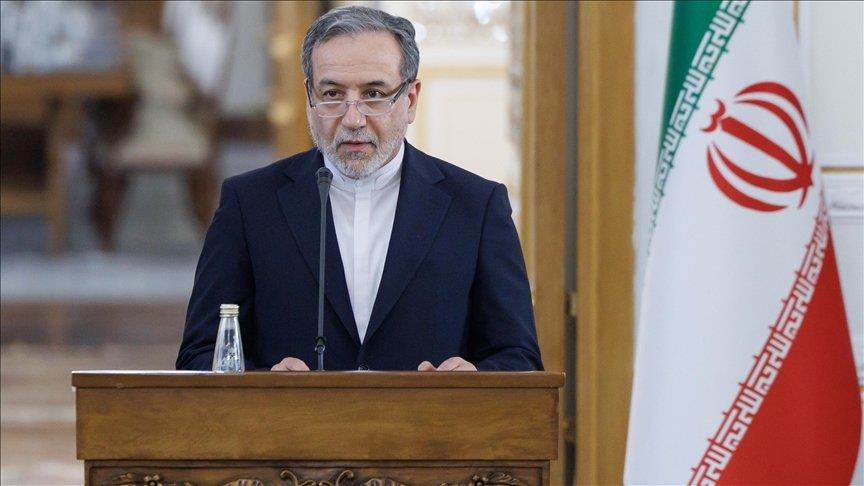
Iran's Araghchi Hits Back At Lebanese President Over Iran Criticism


In a post on X on Saturday, Araghchi rejected Aoun's remarks and argued that Iran had supported Lebanon rather than exploited it.
“If Lebanon were a pressure card for Iran, we would have reached an agreement long ago,” Araghchi wrote.“Save Lebanon from your real enemy, Mr. President.”
The exchange followed an interview with CNN in which Aoun accused Iran of interfering in Lebanese affairs and using the country as leverage in its negotiations with Washington and its confrontation with Israel.
“Lebanon is tired of the wars,” Aoun said, adding that it was unacceptable for outside actors to use the country as a bargaining chip in broader regional disputes.
Responding to the criticism, Araghchi suggested that Aoun's comments ignored what Tehran sees as the primary threat facing Lebanon. He said the Lebanese president's argument implied that Iran, rather than Israel, was responsible for the country's security challenges and repeated Israeli military operations.
The dispute comes at a sensitive moment for Lebanon, which is attempting to implement a recently announced ceasefire agreement with Israel following months of cross-border fighting and military escalation involving Hezbollah. Despite the ceasefire, tensions remain high, with reports of continued military incidents and mutual accusations of violations.
Under the terms of the agreement, efforts are underway to secure the withdrawal of armed Hezbollah elements from southern Lebanon and prevent a renewed outbreak of hostilities. Hezbollah, however, has publicly criticized the arrangement and said it does not provide sufficient guarantees for a full Israeli withdrawal from contested areas.
Iran has long been Hezbollah's principal political and military backer, providing financial support, training and weapons to the group over several decades. Tehran views Hezbollah as a key component of its regional network of allies, while Israel, the United States and several Western governments consider the group a major security threat.
The disagreement between Tehran and Beirut also reflects broader debates within Lebanon about the country's future security policy and the role of non-state armed groups. Lebanese officials have increasingly emphasized state sovereignty and the authority of national institutions, while critics argue that Hezbollah's military capabilities continue to influence the country's domestic and foreign policy.

Legal Disclaimer:
MENAFN provides the
information “as is” without warranty of any kind. We do not accept any
responsibility or liability for the accuracy, content, images, videos,
licenses, completeness, legality, or reliability of the information
contained in this article. If you have any complaints or copyright issues
related to this article, kindly contact the provider above.
Comments
No comment