




403
Sorry!!
Error! We're sorry, but the page you were looking for doesn't exist.
Pea Protein Market Size, Share, Growth, Analysis, Report, 2034
| Packed with Nutrition The global pea protein market is driven by consumer adoption due presence of essential amino acids important for muscle growth and recovery. According to a study published on the National Library of Medicine, pea protein significantly helped in muscle repair in athletes and beginners returning to exercising regularly. It also serves as a nutritious meat alternative to vegans and patients suffering from gluten sensitivity. | Increased Adoption in Food Industry Pea protein is used increasingly in the food industry due to properties such as emulsification which help in preserving oil-water mixtures found in dressings. Foaming is another characteristic of this healthy source of plant protein. It is being incorporated in bakery items such as cakes and meringues, providing them with a perfect air whipped consistency suitable for decoration. |
| Pea Protein Vs Aquafaba Pea protein is thriving by serving as a competitor to aquafaba which is made from canned legumes. By emulating the texture of eggs it provides the same consistency to bakery items as aquafaba. Vegetarians and Vegans leverage the properties of pea proteins the most by incorporating it in bakery goods. While Aquafaba is limited to only confectionery items, pea protein can additionally also be combined with nutritional supplements making it scalable in commercial food processing. Aquafaba is unable to resonate with consumers due to 97% less protein content than pea protein thus making it the less preferable choice as a protein source. Due to pea protein's easy digestible nature, it has seen widespread adoption globally. | Shift towards Clean-Label Food Widespread awareness pertaining to clean label products and non GMO food are some of the drivers propelling this lucrative market. People are stealthily turning to clean label products. This report also covers purchasing patterns of health-conscious consumers who are increasingly scrutinizing ingredients and demanding transparency protein, derived from natural, non-genetically modified yellow peas, has gained strong appeal. According to Ingredion's latest ATLAS study, 75% of consumers choose clean labelled products; making a conscious effort to study the ingredients before purchasing. Awareness about food intolerances, particularly to soy and dairy, has fueled the demand for hypoallergenic protein alternatives. |
The report states that the global pea protein market is gaining momentum, particularly driven by constant research in sports nutrition. Athletes and fitness enthusiasts are increasingly seeking plant-based alternatives to whey and soy proteins. Pea protein offers a complete amino acid profile, easy digestibility, and allergen-free benefits.
-
In December 2024, Burcon NutraScience Corporation announced the launch of its next-generation pea protein isolate, Peazazz®C. Designed to meet the rising demand for plant-based protein ingredients, Peazazz®C boasts over 90% protein purity, low sodium and a neutral taste, making it suitable for numerous applications such as beverages, nutrition bars, lifestyle nutrition products and vegetarian and vegan offerings.
Such advancements are expanding the versatility of pea protein in sports nutrition, reinforcing its role as a mainstream protein choice.
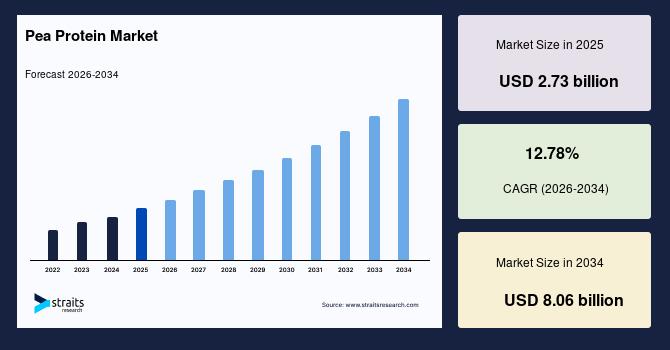
Market Summary| Market Metric | Details & Data (2025-2034) |
|---|---|
| 2025 Market Valuation | USD 2.73 billion |
| Estimated 2026 Value | USD 3.08 billion |
| Projected 2034 Value | USD 8.06 billion |
| CAGR (2026-2034) | 12.78% |
| Study Period | 2022-2034 |
| Dominant Region | North America |
| Fastest Growing Region | Europe |
| Key Market Players | Burcon, Roquette Frères, The Scoular Company, DuPont, Cosucra |
Download Free Sample Report to Get Detailed Insights.
Pea Protein Market Drivers Rising Demand for Plant-Based Diets GloballyAccording to this report, the global market is witnessing significant growth driven by the rising demand for plant-based and vegan diets. Consumers are now prioritizing health, environmental sustainability, and ethical food choices, leading to a surge in plant-based lifestyles.
-
79 million people globally identify as vegan, as per our latest reports, reflecting a steady increase in plant-based lifestyles. Major institutions such as the University of Stirling in the UK have transitioned to 100% plant-based catering. Uppsala University in Sweden has also embraced this shift and endorsed a full plant-based shift with a 90% majority vote.
This growing acceptance of plant-based diets across diverse sectors is directly influencing the demand for high-quality alternatives like pea protein, further propelling market growth.
Restraining Factors Competitive Pressure from Other Plant ProteinsAccording to this report, growing competitive pressure from other plant-based protein sources such as soy, rice, hemp, and chickpea protein are one of the key restraints which are likely to hamper the growth of this market. These alternatives are well-established and often preferred due higher protein content, lower cost and better taste and texture profiles.
Soy protein continues to dominate as the traditionally preferred choice in meat substitutes and as dairy alternatives due to its versatility and widespread consumer acceptance. This intense competition challenges the market share, especially in regions where traditional plant proteins are more ingrained in consumer habits and food manufacturing.
Market Opportunities Technological Advancements in Taste, Texture, and Protein ConcentrationResearch-backed technological advancements in taste, texture, and protein content are creatingopportunities for growth in the global pea protein market. Companies are heavily investing in research to overcome longstanding limitations like raw flavors, chalky textures, and inadequate protein levels.
Ingredion's VITESSENCE® Pea 100 HD, launched in July 2024, serves as a notable example. Tailored for cold-pressed bars, this protein solution is ensures softness throughout the shelf life of the product.
VITISSENCE® provides 84% protein and offers a delectable taste by minimizing the powdery mouthfeel commonly found in other proteins. Its proprietary processing technology delivers a consistently functional product with improved texture.
As companies continue to refine the taste and texture of pea protein, its adoption across mainstream food categories is expected to grow rapidly, opening new market opportunities.
Pea Protein Faring Better than Aquafaba as A Plant-Based Protein SourceThis report also includes data on how pea protein surpasses Aquafaba in terms of protein content by a substantial amount. It shows an increase in protein content by upto 97% and is preferred over aquafaba as a plant-based protein source due to its superior nutritional valueand scalability making it a good choice for large-scale food manufacturing.
Key Differences between Pea Protein and AquafabaWith a high protein content of approximately90%, pea protein serves as a complete protein powerhouse for muscle recovery, vegan diets, and clean-label formulations. In contrast, aquafaba, which is typically derived from canned peas contains only 1–2% protein and is mainly used as an egg alternative in vegan confectionery items.
Pea protein is more versatile, widely used in protein shakes, meat substitutes, dairy alternatives, and functional foods, making it suitable for sports nutrition and mainstream food manufacturing. Its longer shelf-life attribute also adds to its selection in a variety of food products.
Its long shelf life, allergen-friendly profile, and sustainability further reinforce its dominance. Backed by leading brands like Beyond Meat, which has a longstanding deal with French-based pea protein supplier Roquette since 2020 and incorporates 20 g of protein in its burger patty, continues to gain traction as the preferred alternative to traditional proteins and limited-use ingredients like aquafaba.
Regional InsightsAccording to Straits Research, North America currently leads the global pea protein market, driven by the rising adoption of plant-based diets and the growing demand for clean-label food products. The region's well-established food and beverage industry, coupled with strong consumer awareness about sustainable protein sources, supports this dominance.
In addition, innovation in product development, such as pea protein-based meat alternatives, sports nutrition, and functional foods, continues to expand market presence. The increasing focus on health and wellness trends, alongside a preference for allergen-free protein sources, further strengthens North America's leading position.
|
|
This report also states that Europe is witnessing remarkable growth, fueled by a surge in veganism and heightened environmental concerns among consumers. The rising interest in ethical food production and sustainability is boosting the demand for plant-based protein alternatives.
European food manufacturers are rapidly innovating to meet the growing appetite for high-protein and allergen-free food products. Moreover, advancements in food technology and widespread investment in alternative protein research are enhancing product offerings across multiple sectors, from ready-to-eat meals to nutritional supplements, positioning Europe as a key region for rapid expansion.
Key Players in Europe
|
|
Asia-Pacific presents significant potential for growth due to the region's evolving dietary patterns and increasing focus on health and wellness. Rising disposable incomes, growing urbanization, and a shifting preference toward plant-based nutrition are creating opportunities for pea protein applications across a wide range of food and beverage products.
Moreover, heightened awareness of food safety and quality is pushing manufacturers to explore plant-derived ingredients. As demand for fortified foods rises, coupled with expanding vegan and vegetarian populations, Asia-Pacific is set to become a major contributor to the future market growth.
Key Players in Asia-Pacific Region
|
|
Pea protein isolates are the dominant segment due to their high protein content, typically around 90%. They are widely used in meat substitutes, beverages, protein bars, and dietary supplements.
Smooth texture, neutral flavour and excellent solubility make them a preferred choice for manufacturers. The increasing demand for plant-based proteins and their ability to meet the nutritional needs of consumers is driving growth in this segment.
Form InsightsDry pea protein is the leading form in the market due to its versatility and ease of storage. It has a longer shelf life compared to wet forms, which makes it cost-effective for large-scale production and transportation.
The dry segment is primarily used in meat substitutes, dietary supplements, and bakery goods. Its easy incorporation into products enhances its appeal among manufacturers and consumers seeking convenient, high-protein alternatives.
Applications InsightsThis report also states that the meat substitute segment is the largest application for pea protein, driven by the surge in plant-based eating. Pea protein is an essential ingredient in plant-based burgers, sausages, and other meat alternatives because of its high protein content and functional properties.
As consumer interest in vegan and vegetarian diets rises, the market demand in this segment continues to expand rapidly, making it a dominant application in the market.
Company Market ShareIn the global market, companies are actively focusing on expanding their product portfolios to cater to diverse application areas such as meat alternatives, dairy substitutes, nutritional supplements, and functional foods. They are investing heavily in research and development to improve the taste, solubility, and functional properties of pea protein ingredients.
List of Key and Emerging Players in Pea Protein Market-
Burcon
Roquette Frères
The Scoular Company
DuPont
Cosucra
Nutri-Pea
Shandong Jianyuan Group
SOTEXPRO
Yantai Oriental Protein Tech Co
PURIS
Ingredion
Axiom Foods Inc.
FENCHEM
Martin & Pleasance
The Green Labs LLC
-
March 2025 – Daily Harvest expanded its plant-based offerings with the launch of a new Organic Pea Protein Powder, designed to meet the growing demand for clean, sustainable protein sources. This USDA-certified organic powder delivers 24 grams of protein per serving and is crafted from just one ingredient organic yellow peas ensuring a clean label with no additives or preservatives.
| Report Metric | Details |
|---|---|
| Market Size in 2025 | USD 2.73 billion |
| Market Size in 2026 | USD 3.08 billion |
| Market Size in 2034 | USD 8.06 billion |
| CAGR | 12.78% (2026-2034) |
| Base Year for Estimation | 2025 |
| Historical Data | 2022-2024 |
| Forecast Period | 2026-2034 |
| Report Coverage | Revenue Forecast, Competitive Landscape, Growth Factors, Environment & Regulatory Landscape and Trends |
| Segments Covered | By Product, By Form, By Applications |
| Geographies Covered | North America, Europe, APAC, Middle East and Africa, LATAM |
| Countries Covered | US, Canada, UK, Germany, France, Spain, Italy, Russia, Nordic, Benelux, China, Korea, Japan, India, Australia, Taiwan, South East Asia, UAE, Turkey, Saudi Arabia, South Africa, Egypt, Nigeria, Brazil, Mexico, Argentina, Chile, Colombia |
Download Free Sample Report to Get Detailed Insights.
Pea Protein Market Segments By Product-
Isolates
Concentrates
Textured
Hydrolysate
-
Dry
Wet
-
Meat Substitutes
Bakery Goods
Dietary Supplements
Beverage
-
North America
Europe
APAC
Middle East and Africa
LATAM

Legal Disclaimer:
MENAFN provides the
information “as is” without warranty of any kind. We do not accept
any responsibility or liability for the accuracy, content, images,
videos, licenses, completeness, legality, or reliability of the information
contained in this article. If you have any complaints or copyright
issues related to this article, kindly contact the provider above.
Most popular stories
Market Research

More Story








Comments
No comment