




403
Sorry!!
Error! We're sorry, but the page you were looking for doesn't exist.
Non-Surgical Skin Tightening Market Size, Share, Growth, 2034
| Market Metric | Details & Data (2025-2034) |
|---|---|
| 2025 Market Valuation | USD 2.2 Billion |
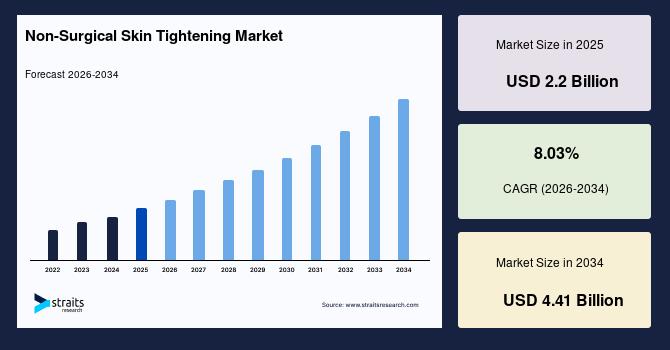
| Estimated 2026 Value | USD 2.38 Billion |
| Projected 2034 Value | USD 4.41 Billion |
| CAGR (2026-2034) | 8.03% |
| Study Period | 2022-2034 |
| Dominant Region | North America |
| Fastest Growing Region | Europe |
| Key Market Players | Sisram Medical, Bausch Health Companies Inc, ENDYMED, F Care Systems, Lutronic |
Download Free Sample Report to Get Detailed Insights.
Non-Surgical Skin Tightening Market Dynamics Market DriversRising Approvals for Skin Tightening Products
The rise in treatment approvals and devices for non-surgical skin tightening promotes the market. These devices and treatments are mandatory to get FDA-approved before they go on the market. The FDA has cleared numerous devices and treatments for non-surgical skin-tightening procedures. These treatments and devices have a unique mechanism to achieve the desired results.
Treatments like Ultherapy received FDA clearance for ultrasound non-surgical skin tightening. RF treatments have also received FDA clearance for their services. Profound RF, Exilis, Morpheus8, and Thermage offer RF treatments. A combination of treatments like intense pulsed light with RF has experienced higher use and FDA clearance. Hence, a rise in approvals for skin-tightening products aggrandizes the market.
Focus on Physical Appearance among 25 to 65-Year-Olds'
Concerns over appearance and medical aesthetics about beauty ideals are a subject of great interest to people. There is social pressure to maintain a decent physical and facial appearance. The aged demographic opts for various cosmetic procedures. The cosmetics business places a significant emphasis on maintaining a youthful aesthetic. Hence, in the age range of 25 to 65, the desire to have beautiful skin and nice facial features is significant.
The main problem the older population faces is sagging skin on the face, neck, and body, and the solution to this problem is non-surgical skin tightening. Per the Plastic Surgery Statistics Report of 2020, non-surgical skin tightening procedures contributed to 1.4% of minimally invasive cosmetic procedures. The total expenditure for non-surgical skin tightening in the US in 2020 was estimated to be USD 462,988,577. Thus, the growing older population and their desire to maintain a youthful look boost the market to a greater extent.
Market RestraintsIncreasing Availability and Adoption of Alternative Beauty and Cosmetic Products
Alternative cosmetic products for skin tightening can be a major restraint for the non-surgical skin tightening market. Many tropical products retain the laxity of the skin. Dermatology has seen a trend toward complementary and alternative therapies. Homemade remedies are other alternatives that affect the market moderately. Tropical creams, facial packs, and home remedies take a long time to show results that are safer, painless, and scar-free.
Many alternatives for skin tightening include platelet-rich plasma, hyaluronic acid fillers, Aqua Gold Fine Touch facial, SiO beauty patches, retinoids, vitamin C, facial exercises, skin tightening supplements, Sculptra, and many more. Traditional methods, such as SPA treatments and homemade treatments, are used to compensate for cosmetic procedures. Many regions provide attractive and affordable traditional therapy packages, such as Spas for tourists, instead of clinical cosmetic procedures, which is also expected to restrain the market growth.
Market OpportunitiesAdoption of Aesthetic Procedures in Men
Men are rapidly adopting aesthetic procedures and are keenly interested in non-invasive and minimally invasive procedures. Expenditure by men on their aesthetics has also surged. This is due to awareness of cosmetic procedures' benefits and side effects. Social media is an effective way to improve culture and heighten awareness of cosmetic interventions in men. Gender conventions promote and blur gender behavior, making men conscious of their appearance. This trend is expected to drive the market during the forecast period as men of this era understand the importance of maintaining healthy skin.
-
According to the Aesthetic Guide, about 4% of men opt for surgical procedures for better appearance, and the ones who wish to have non-surgical procedures are nearly 6%. Treatments for men are more affordable than those for women. The growth in male patients for cosmetic procedures is multifactorial. The trend in growing male cosmetic procedure patients will lead to innovative, better treatment and attract more male patients to cosmetic procedures, thereby creating opportunities for market growth.
North America is the most significant global non-surgical skin tightening market shareholder and is estimated to exhibit a CAGR of 6.59% during the forecast period. Major industrial firms are heavily concentrated in the region and are active in the aesthetics sector, particularly in non-surgical skin tightening devices, which has led to spectacular market growth. Awareness and preference for non-invasive cosmetic procedures further foster the region's potential for advanced devices and procedures. In addition, the propensity of the US population to spend on high-value cosmetic procedures offers many growth opportunities to the market.
As per the International Society of Aesthetic Plastic Surgery-International Survey on Aesthetic/Cosmetic Procedures Performed in 2019, the US has the most non-surgical procedures, with 2,630,832 in 2019. According to Ulthera, Inc., more than 1.7 billion patients in the US spent on non-surgical cosmetic procedures in 2018. Therefore, there is a surge in non-surgical procedures due to the increased awareness of non-surgical cosmetic procedures and the easy availability of commercialized procedures and skilled professionals in the country.
Europe: Fastest Growing Region with the Highest CAGREurope is expected to exhibit a CAGR of 7.25% over the forecast period. Countries in the region have skilled and board-certified cosmetic surgeons for aesthetic procedures. The prevalence of skin laxity in the population and the awareness of different cosmetic procedures drive the market in the region. According to the International Society of Aesthetic Plastic Surgeons (ISAPS), there was a rapid increase in the number of non-surgical procedures in Germany by 194% from 2016 to 2019. In addition, sophisticated technologies and quick outcomes for non-surgical procedures, including reduced laxity, painless procedures, no scars, and many more, have brought on this increase in adoption. Laser and other energy devices used for non-surgical skin tightening procedures have increased in popularity due to low pain, minimally invasive procedures, lower hospital stay, and faster recovery. Therefore, the increasing use of laser devices in non-surgical skin tightening treatment and other conditions is driving the market in the region.
In Asia-Pacific, laser energy devices have evolved further than in Europe and North America because of the region's emphasis on beauty standards such as tight, hairless, radiant skin. The rising geriatric population and the necessity to look young and beautiful is expected to be the vital driving factors for the high market growth in the region. According to the UN, the geriatric population in China is one-fourth of the geriatric population in the world and is expected to double in the next 20 years. In addition, countries like Japan, South Korea, and Thailand are known for their attraction to aesthetic medicine. Places such as mainland India, China, and Taiwan accept the production market share for the aesthetic medicines industry. This is due to advanced technologies and the rise in disposable income. The market within the region is primarily influenced by a heightened level of awareness and a strong inclination toward aesthetic medical technologies.
Latin America compresses large territory with Brazil, Mexico, Argentina, and others. Plastic and cosmetic surgery are increasingly popular in Brazil. The availability of the internet and the growth of social networking have made this nation well-known for cosmetic operations. The region's market expansion is boosted by the availability of cutting-edge equipment and materials at affordable rates required for surgeries and treatments. South and Central America have a prominent hold over the advancement in the region, with modern technologies and devices used for the procedures. Several government initiatives promote non-invasive aesthetic procedures and create awareness among the region's population, boosting the market.
In the Middle East, women and men are very beauty-conscious and prefer to be physically good-looking. The woman in the region has certain standards for physical appearance. In order to meet those standards, the population undergoes many cosmetic and aesthetic procedures and treatments. Various treatments and cosmetic procedures enhance the Middle East population's facial structure and texture. The prevalence of skin complexion is one of the main drivers of the region for the growth of the market.
Non-Surgical Skin Tightening Market Segmentation Analysis By ProductThe market is bifurcated into laser-based devices, ultrasound devices, radiofrequency devices, and others. The radiofrequency devices segment is the highest contributor to the non-surgical skin tightening market share and is anticipated to exhibit a CAGR of 6.80% over the forecast period. Radiofrequency therapy has been used in medicine for more than 70 years. In the US in 2016, skin tightening was the sixth most popular non-surgical procedure, and patients looking for non-surgical tightening are increasingly using these therapies. Radiofrequency (RF) devices have improved to tighten and shape the skin and body effectively and noninvasively with little to no downtime.
Based on the number of electrodes used and how the energy is transferred to the tissues beneath the skin, RF devices are classified as monopolar, unipolar, bipolar, or multipolar. The polarity of the RF impacts the treatment's comfort, effectiveness, and frequency. Minimally invasive skin-tightening procedures are approved for use on hands, neck, and face. In addition, RF treatments are combined with micro-needling to treat deeper layers of skin. The result of this treatment is expected to last for three years according to the recommended skin routine. The time taken for this procedure is lower than that of the other treatments.
By Age GroupThe market is segmented into < 35, 35-65, and > 65. The 35-65 segment is the largest revenue contributor to the non-surgical skin tightening market share and is projected to exhibit a CAGR of 7.03% over the forecast period. The population aged between 35 to 50 and 51 to 65 are included in this age group. Per the Aesthetic Society-Aesthetic Plastic Surgery National Databank Statistics 2019, the total number of non-surgical procedures done under this age group was about 21,82,918. The demographic experiences skin sagging and laxity. In addition, skin sagging at this age results in marionette lines, jowls, and nasolabial folds, making suggestions from experienced cosmetic doctors imperative to improve the physical appearance through various cosmetic procedures. This is the working population and needs to keep a physical look on the front to appeal to others.
Physical appearance also boosts self-confidence and attitude toward living. All genders desire a perfect look in this age group. The mothers undergo makeover sessions after pregnancy and childbirth to regain their look and resume work. This age group drives the non-surgical skin tightening market.
By GenderThe market is bifurcated into male and female segments. The female segment dominates the global market and is predicted to grow at a CAGR of 6.96% over the forecast period. According to the Aesthetic Society-Aesthetic Plastic Surgery National Databank Statistics 2019, the total non-surgical procedures done by females in 2019 were about 2,818,219, contributing to about 90.3%. The prevalence of cosmetic operations is higher among females compared to males. The demand for cosmetic enhancements among women increases following birth.
Additionally, the female body undergoes major alterations in response to weight shifts and morphological transformations during pregnancy. This often compels them to consider opting for cosmetic changes. Most cosmetic procedures were performed after and during the pandemic, allowing time for recovery from the comfort of their homes due to lockdowns. Thus, the desire to look better and faultless with perfect body contours facilitates market growth.
By End-UsersThe market is bifurcated into hospitals, dermatology clinics, and beauty clinics. The dermatology clinics segment owns the highest market share and is expected to exhibit a CAGR of 6.96% over the forecast period. Dermatology clinics are the most preferred clinics for cosmetic procedures or treatments. These minimally invasive procedures are more common than surgical ones in dermatology and cosmetic procedures. Dermatology clinics specialize in many cosmetic procedures and consist of excellent, skilled practitioners conducting these treatments.
Treatments and procedures in these clinics are done in one day, and no additional time or day is required. Dermatology clinics also need to offer FDA-regulated and approved treatments and devices for these treatments. The demand for cosmetic dermatology services has increased recently, as evidenced by epidemiological and marketing studies. The rise in demand for aesthetic procedures and cosmetic treatments anticipates the market segment's growth.
List of Key and Emerging Players in Non-Surgical Skin Tightening Market-
Sisram Medical
Bausch Health Companies Inc
ENDYMED
F Care Systems
Lutronic
Cutera
Cynosure
En. S.p.A
Venus Concept Canada
Meyer-Haake
Aesthetics Biomedical
Asclepion Laser Technologies GmbH
BISON Medical
Fotona d.d
-
March 2023- Revolution Medical, a prominent provider of innovative aesthetic solutions, introduced the Pure Plasma Skin Rejuvenation Device. It is designed to provide patients with the most advanced non-invasive skin rejuvenation treatments.
May 2023- Reveal Lasers LLC, a prominent provider of energy-based devices, revealed the launch of Eterna, an FDA-cleared radiofrequency device that minimizes fine lines and wrinkles, tightens skin via soft tissue coagulation, and does not need consumables.
| Report Metric | Details |
|---|---|
| Market Size in 2025 | USD 2.2 Billion |
| Market Size in 2026 | USD 2.38 Billion |
| Market Size in 2034 | USD 4.41 Billion |
| CAGR | 8.03% (2026-2034) |
| Base Year for Estimation | 2025 |
| Historical Data | 2022-2024 |
| Forecast Period | 2026-2034 |
| Report Coverage | Revenue Forecast, Competitive Landscape, Growth Factors, Environment & Regulatory Landscape and Trends |
| Segments Covered | By Product, By Age Group, By Gender, By End-User |
| Geographies Covered | North America, Europe, APAC, Middle East and Africa, LATAM |
| Countries Covered | US, Canada, UK, Germany, France, Spain, Italy, Russia, Nordic, Benelux, China, Korea, Japan, India, Australia, Singapore, Taiwan, South East Asia, UAE, Turkey, Saudi Arabia, South Africa, Egypt, Nigeria, Brazil, Mexico, Argentina, Chile, Colombia |
Download Free Sample Report to Get Detailed Insights.
Non-Surgical Skin Tightening Market Segments By Product-
Laser-Based Devices
Ultrasound Devices
Radiofrequency Devices
Others
-
< 35
35-65
> 65
-
Female
Male
-
Hospitals
Dermatology Clinics
Beauty Clinics
-
North America
Europe
APAC
Middle East and Africa
LATAM

Legal Disclaimer:
MENAFN provides the
information “as is” without warranty of any kind. We do not accept
any responsibility or liability for the accuracy, content, images,
videos, licenses, completeness, legality, or reliability of the information
contained in this article. If you have any complaints or copyright
issues related to this article, kindly contact the provider above.
Most popular stories
Market Research

More Story







Comments
No comment