




403
Sorry!!
Error! We're sorry, but the page you were looking for doesn't exist.
PSEG: Protecting Ospreys And Power Reliability On Petty's Island
(MENAFN- 3BL)
Originally published on PSEG ENERGIZE!
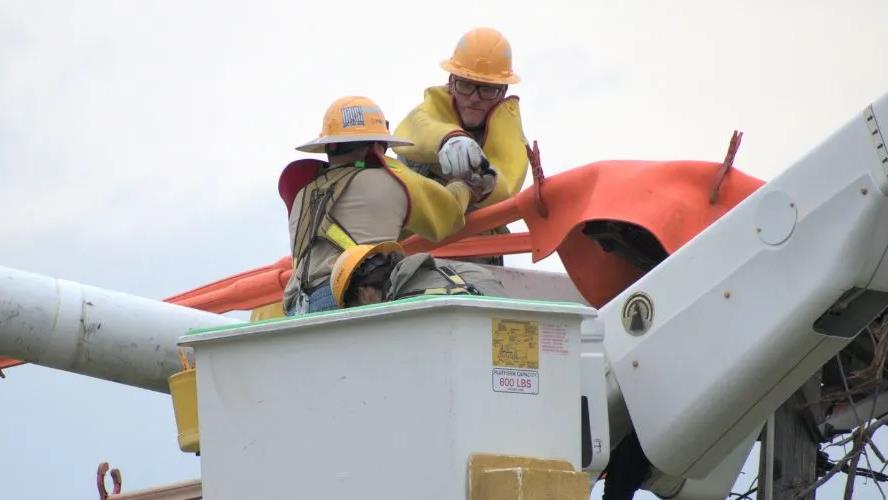
When an osprey pair built a nest atop an energized electrical pole on Petty's Island in Pennsauken, New Jersey, it created both a safety risk for the birds and a potential reliability concern for customers. The nest and three eggs inside needed to be moved - and quickly.
A collaborative effortPetty's Island, located in the Delaware River between New Jersey and Pennsylvania, provides an important habitat for many wildlife species, including nesting ospreys. The effort began when the NJ Natural Lands Trust, which oversees Petty's Island, contacted us to ask for assistance with relocating a newly constructed osprey nest.
During an initial visit, crews discovered that the osprey pair had already laid eggs. Because federal permits are required to relocate active nests containing eggs, the project team quickly coordinated with USDA Wildlife Services, which issues the necessary federal permits for handling migratory bird nests and eggs, allowing the project to move forward safely and legally.
Within days, PSE&G crews coordinated a plan to safely relocate the nest. Working closely with CITGO - the current owner of Petty's Island - the project team secured permission to use an existing pole for a new osprey nesting platform. The Con serve Wildlife Foundation of New Jersey provided a nest box kit, which they helped our lineworkers assemble onsite before it was installed on the designated safe pole.
USDA Wildlife Services carefully removed the three eggs from the nest and placed them in an incubator while our crew deconstructed the original nest atop the electric pole. The crew then transferred as much of the original nesting material as possible to the new nesting platform to help maintain familiarity for the osprey pair.
Once the nest was rebuilt, the eggs were carefully returned. The relocation proved to be an immediate success, with the osprey parents returning to sit on the eggs within 15 minutes of the nest reconstruction being completed.
Why do ospreys nest on utility poles?Ospreys are naturally drawn to elevated structures near waterways, which can sometimes make utility poles attractive - but hazardous - nesting sites.
This successful relocation effort required close coordination and teamwork from many individuals across PSE&G and partner organizations.
Advancing conservation and reliabilityOspreys are one of New Jersey's great conservation success stories. Once severely impacted by pesticides and habitat loss, the state's osprey population declined to fewer than 50 nesting pairs in the 1970s.
Through decades of conservation work, habitat protection and installation of elevated nesting platforms, New Jersey's osprey population has rebounded to more than 800 nesting pairs statewide today. The pairs often nest near waterways like those on Petty's Island or in the Delaware River Estuary, where we have restored and maintain over 20,000 acres as part of our conservation efforts.
Working together to protect wildlife and reliabilityThe project highlights how utility companies like ours and conservation organizations can work together to protect wildlife and care for our environment while maintaining electric reliability and public safety. Avian protection programs are an important part of utility environmental stewardship, helping reduce the risk of bird electrocutions, equipment damage and outages while providing safer nesting opportunities for protected species.
Learn more about our environmental stewardship and wildlife conservation efforts across New Jersey at pseg/ESG .

Legal Disclaimer:
MENAFN provides the
information “as is” without warranty of any kind. We do not accept
any responsibility or liability for the accuracy, content, images,
videos, licenses, completeness, legality, or reliability of the information
contained in this article. If you have any complaints or copyright
issues related to this article, kindly contact the provider above.
Most popular stories
Market Research

More Story







Comments
No comment