




403
Sorry!!
Error! We're sorry, but the page you were looking for doesn't exist.
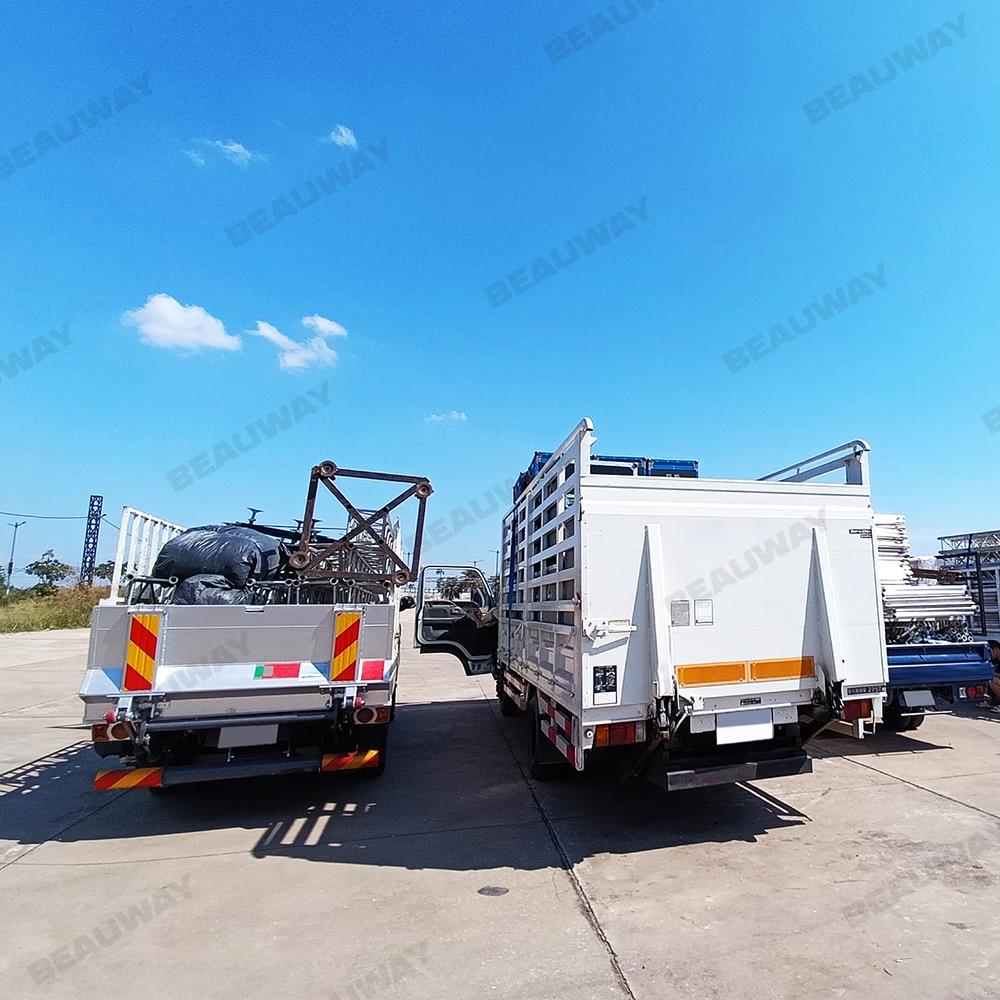
Dump Truck Hydraulic Tail Lift Types and Structure Guide
(MENAFN- MENAFNEditorial) Dump Truck Tail Lift Types Explained: Engineering-Based Field Selection Guide
In real transport and unloading operations, the hydraulic tail lift is not just a standard add-on. It is a functional system that directly affects how efficiently a dump truck can complete its unloading cycle.
From field experience, most performance issues are not caused by insufficient equipment strength, but by a mismatch between the tail lift system configuration and the actual working environment.
Load-Balanced Structural Concepts
In some heavy-duty dump truck applications, the design focuses on distributing forces more evenly across the structure. The goal is not speed, but stability under uneven loading conditions.
In this type of setup, the hydraulic tailgate is designed to reduce stress concentration during unloading. It performs better when dealing with irregular bulk materials such as gravel, concrete, or mixed aggregates.
A lifting tailgate used in this way tends to behave more consistently under repeated loading cycles, especially in long-term field operations where impact forces cannot be controlled precisely.
Standard Rear-Mounted Configuration
The most common solution in transport operations is a direct rear installation layout.
This approach follows the typical logic of a truck lift gate, where simplicity and serviceability are prioritized over structural complexity.
In urban logistics and light construction transport, a truck loading lift is widely used because it integrates easily with standard truck bodies and does not require major structural modification.
Side Access and Space-Constrained Designs
Not every job site allows full rear clearance. In narrow or restricted environments, alternative movement directions become necessary.
This is where designs based on side-opening hydraulic tail lift concepts are used. The unloading direction is adjusted to match the physical constraints of the working site.
Although not the most common configuration, this type of hydraulic lift platform becomes important when access space is limited or when rear operations are not practical.
Heavy-Duty Operating Conditions
Once the application moves into mining areas or large construction sites, the equipment is exposed to continuous impact loads and high-frequency operation.
In these cases, a heavy-duty hydraulic tail lift is required to maintain structural reliability over time.
For construction transport, a construction hydraulic tail lift is typically used for materials like steel, cement, and bulk aggregates.
In mining operations, a mining hydraulic tail lift must handle even harsher conditions, including uneven terrain, extended duty cycles, and minimal downtime.
These systems are generally reinforced compared to standard cargo tail lift configurations, with durability prioritized over weight or cost efficiency.
Trailer-Based Transport Systems
In trailer logistics, the key requirement is independent loading capability without external lifting equipment.
A trailer hydraulic tail lift allows the trailer to operate independently during loading and unloading operations, improving flexibility in distributed logistics environments.
In long-distance freight networks, the semi-trailer tail lift system becomes part of the operational flow, directly influencing turnaround time at transfer points.
Integrated Systems and Custom Engineering
As vehicle structures become more specialized, tail lift systems are increasingly designed as part of the vehicle rather than added later.
This approach is commonly referred to as a truck-mounted hydraulic tail lift, where the system is integrated during vehicle configuration rather than retrofitted.
In real applications, most setups require adjustment based on payload, chassis layout, and operational workflow. This is where custom hydraulic tail lift solutions are used.
At this stage, supplier capability becomes critical. A reliable hydraulic tail lift manufacturer or hydraulic tail lift supplier often determines long-term system stability and maintenance performance.
Final Summary
A dump truck tail lift is not a single standardized product, but a group of structural solutions developed for different working conditions.
Each hydraulic tail lift configuration has a specific operating boundary. The differences are not about which one is better, but which one fits the job.
In practice, selection depends on load type, site conditions, and vehicle design rather than theoretical performance comparisons.
Beauway has been specializing in logistics loading and unloading equipment for many years, covering a full range of products including tail lifts, dock levelers, and lifting platforms. If you need a tailored solution based on your working conditions, you are welcome to schedule a technical consultation.
In real transport and unloading operations, the hydraulic tail lift is not just a standard add-on. It is a functional system that directly affects how efficiently a dump truck can complete its unloading cycle.
From field experience, most performance issues are not caused by insufficient equipment strength, but by a mismatch between the tail lift system configuration and the actual working environment.
Load-Balanced Structural Concepts
In some heavy-duty dump truck applications, the design focuses on distributing forces more evenly across the structure. The goal is not speed, but stability under uneven loading conditions.
In this type of setup, the hydraulic tailgate is designed to reduce stress concentration during unloading. It performs better when dealing with irregular bulk materials such as gravel, concrete, or mixed aggregates.
A lifting tailgate used in this way tends to behave more consistently under repeated loading cycles, especially in long-term field operations where impact forces cannot be controlled precisely.
Standard Rear-Mounted Configuration
The most common solution in transport operations is a direct rear installation layout.
This approach follows the typical logic of a truck lift gate, where simplicity and serviceability are prioritized over structural complexity.
In urban logistics and light construction transport, a truck loading lift is widely used because it integrates easily with standard truck bodies and does not require major structural modification.
Side Access and Space-Constrained Designs
Not every job site allows full rear clearance. In narrow or restricted environments, alternative movement directions become necessary.
This is where designs based on side-opening hydraulic tail lift concepts are used. The unloading direction is adjusted to match the physical constraints of the working site.
Although not the most common configuration, this type of hydraulic lift platform becomes important when access space is limited or when rear operations are not practical.
Heavy-Duty Operating Conditions
Once the application moves into mining areas or large construction sites, the equipment is exposed to continuous impact loads and high-frequency operation.
In these cases, a heavy-duty hydraulic tail lift is required to maintain structural reliability over time.
For construction transport, a construction hydraulic tail lift is typically used for materials like steel, cement, and bulk aggregates.
In mining operations, a mining hydraulic tail lift must handle even harsher conditions, including uneven terrain, extended duty cycles, and minimal downtime.
These systems are generally reinforced compared to standard cargo tail lift configurations, with durability prioritized over weight or cost efficiency.
Trailer-Based Transport Systems
In trailer logistics, the key requirement is independent loading capability without external lifting equipment.
A trailer hydraulic tail lift allows the trailer to operate independently during loading and unloading operations, improving flexibility in distributed logistics environments.
In long-distance freight networks, the semi-trailer tail lift system becomes part of the operational flow, directly influencing turnaround time at transfer points.
Integrated Systems and Custom Engineering
As vehicle structures become more specialized, tail lift systems are increasingly designed as part of the vehicle rather than added later.
This approach is commonly referred to as a truck-mounted hydraulic tail lift, where the system is integrated during vehicle configuration rather than retrofitted.
In real applications, most setups require adjustment based on payload, chassis layout, and operational workflow. This is where custom hydraulic tail lift solutions are used.
At this stage, supplier capability becomes critical. A reliable hydraulic tail lift manufacturer or hydraulic tail lift supplier often determines long-term system stability and maintenance performance.
Final Summary
A dump truck tail lift is not a single standardized product, but a group of structural solutions developed for different working conditions.
Each hydraulic tail lift configuration has a specific operating boundary. The differences are not about which one is better, but which one fits the job.
In practice, selection depends on load type, site conditions, and vehicle design rather than theoretical performance comparisons.
Beauway has been specializing in logistics loading and unloading equipment for many years, covering a full range of products including tail lifts, dock levelers, and lifting platforms. If you need a tailored solution based on your working conditions, you are welcome to schedule a technical consultation.

Legal Disclaimer:
MENAFN provides the
information “as is” without warranty of any kind. We do not accept
any responsibility or liability for the accuracy, content, images,
videos, licenses, completeness, legality, or reliability of the information
contained in this article. If you have any complaints or copyright
issues related to this article, kindly contact the provider above.
Most popular stories
Market Research

More Story








Comments
No comment