




403
Sorry!!
Error! We're sorry, but the page you were looking for doesn't exist.
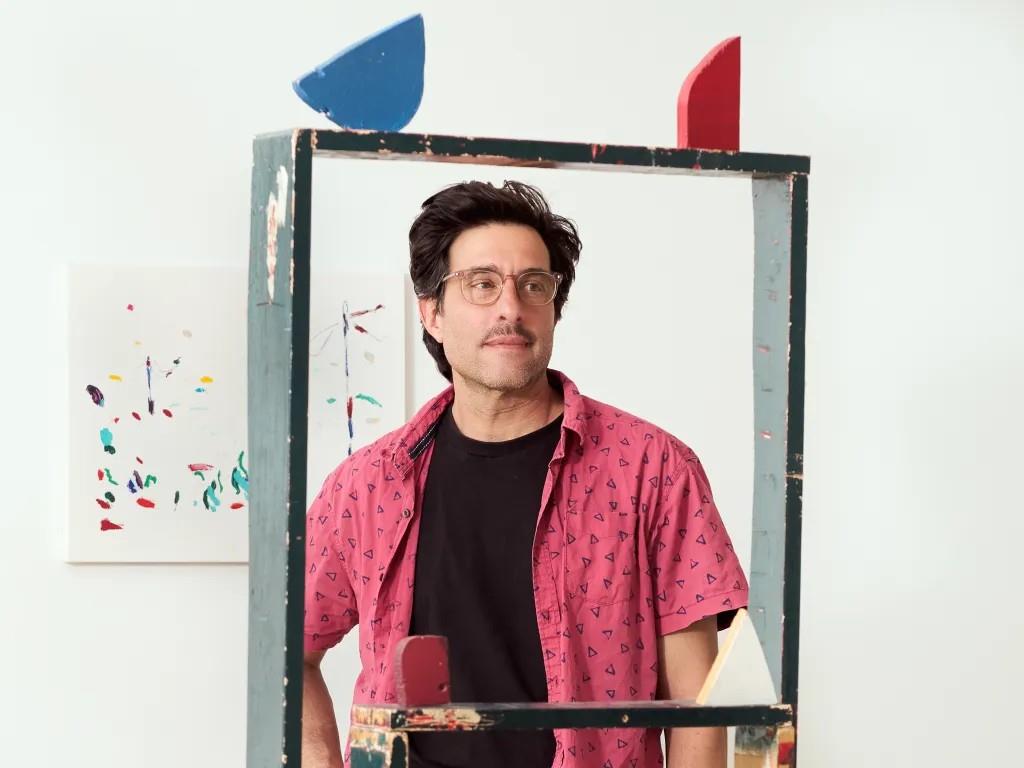
How Gedi Sibony Makes A Show: Making Street Finds Into 'Frozen Moments'
(MENAFN- USA Art News)
Gedi Sibony Turns Discarded Materials Into a Quietly Charged World at Greene Naftali
At Greene Naftali in New York, Gedi Sibony's latest exhibition,“The Invisible Point,” finds the artist doing what he has long done best: making sculpture and painting from the nearly nothing of everyday life. It is his eighth show with the gallery since 2008, and it gathers works built from castoffs that might otherwise have gone unnoticed - wooden bookshelves, broken plant stands, scraps of wire, and even a broomstick.
The sculptures were developed in the studio over the last three years, Sibony said during a recent visit. Installed in the gallery's north-facing light, they are arranged to loosely echo the relationships formed in his Brooklyn workspace, giving the room the feeling of a private system translated into public view. The effect is spare, but not cold. The works carry a faint charge, as if their materials still remember their former lives.
One of the exhibition's anchors is Using Its Own Resources (2024), a six-and-a-half-foot sculpture assembled from shelves that had been ripped out and discarded. Sibony pointed to the paint on the hidden side of the wood, which he said creates a“shivering border” and a kind of sparkly surface effect. That attention to what is usually unseen is central to his practice: the work does not disguise its origins, but it transforms them through placement, balance, and restraint.
The exhibition also includes paintings, which Sibony said came after the sculptures. He described turning to tropical landscape imagery once the three-dimensional works were complete, extending the show's conversation between object and image. The press release for the exhibition frames that exchange in cosmic terms, but the more persuasive argument is formal: Sibony can make a convincing pictorial and sculptural language out of fragments, leftovers, and minimal gestures.
That approach places him in a lineage that runs from Cubist collage to the assemblages of Louise Nevelson, Robert Rauschenberg, and Richard Tuttle, while remaining distinctly his own. It also helps explain why his work has found a place in major museum collections, including the Museum of Modern Art, New York; the San Francisco Museum of Modern Art; the Whitney Museum of American Art; and the Walker Art Center.
Sibony's achievement in“The Invisible Point” is not scale or spectacle. It is the steadier feat of making castoff material feel alert, exact, and unexpectedly alive.

Legal Disclaimer:
MENAFN provides the
information “as is” without warranty of any kind. We do not accept
any responsibility or liability for the accuracy, content, images,
videos, licenses, completeness, legality, or reliability of the information
contained in this article. If you have any complaints or copyright
issues related to this article, kindly contact the provider above.
Most popular stories
Market Research

More Story








Comments
No comment