




403
Sorry!!
Error! We're sorry, but the page you were looking for doesn't exist.
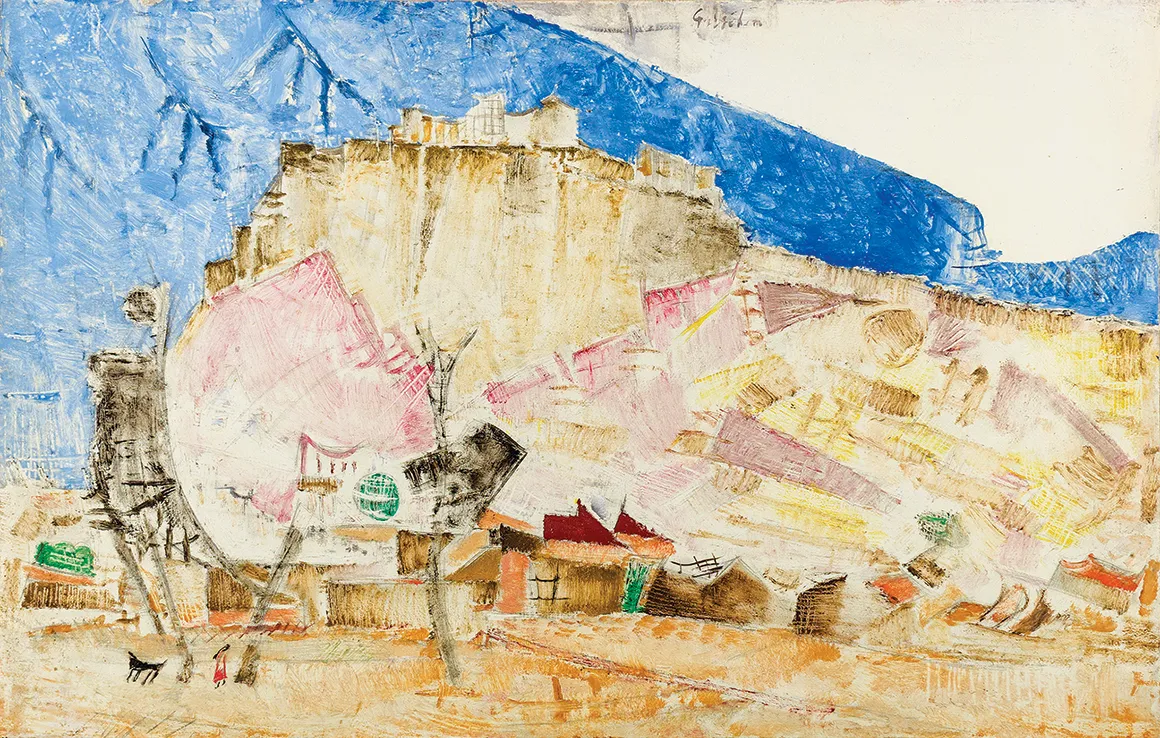
Alexis Gritchenko: The Greek Chapter Of A Ukrainian Avant-Gardist
(MENAFN- USA Art News)
Alexis Gritchenko (1883–1977) is recognized as one of the most distinctive figures of early twentieth-century Ukrainian art. Influenced by both Fauvism and Russian Cubo-Futurism, he later became associated with the École de Paris. Among the most significant periods of his artistic development was the time he spent in Turkey and Greece after leaving revolutionary Russia.
The year 1919 marked a period of profound instability. Civil war, economic decline, and political uncertainty affected every aspect of life, including the cultural sphere. Like many artists of his generation, Gritchenko sought opportunities beyond Russia's borders. Although his ultimate destination was Paris, his journey led him to spend sixteen months in Constantinople and several additional months in Greece. These experiences became the focus of the exhibition The Greek Adventure: A Ukrainian Avant-Gardist in Greece, curated by Michel Lièvre-Markovitch and Maria Tsantsanoglou.
The exhibition brought together more than one hundred works created during Gritchenko's travels through Turkey and Greece, as well as pieces produced during his return visit to Greece in 1922–1923. Working without a permanent studio and constantly on the move, the artist relied on small, portable formats. As a result, the collection consists primarily of watercolors, gouaches, tempera paintings, and graphite drawings executed on paper and cardboard.
Despite their modest scale, many of these works possess remarkable visual power. One notable example is Golden Horn (1921), created in tempera and gouache. Dominated by an intense turquoise-green expanse of water, the composition transforms the sea into a nearly solid field of color. White curved marks suggest waves, while a vivid red flag introduces a striking contrast. A solitary figure standing on a pier anchors the scene, balancing recognizable imagery with an increasing tendency toward abstraction.
The works produced in Turkey largely focus on urban environments. City streets, architecture, and everyday public life serve as recurring subjects. Yet these paintings are more than simple visual records; they explore the relationship between geometric structure and color. Through these compositions, Gritchenko investigated how far abstraction could be developed while maintaining a connection to the visible world.
The paintings created in Greece reveal a different atmosphere. Rural landscapes, ancient ruins, Byzantine monuments, and occasional shepherds replace the bustling city scenes of Constantinople. The palette becomes more restrained, featuring ochres, grays, and subdued blues rather than vibrant contrasts. This shift gives the works a contemplative and almost melancholic character. In Epidaurus (1921), for example, the landscape is constructed from interlocking triangular and trapezoidal color fields that create a carefully balanced and architectonic composition.
Although it may seem natural for a Greek museum to present works inspired by Greece, the exhibition offered a broader perspective on artistic creativity under constraint. It demonstrated how limited resources, the absence of a studio, and the challenges of constant travel influenced Gritchenko's artistic approach. Rather than restricting his imagination, these conditions encouraged experimentation and innovation.
The body of work produced during this period stands among the most original achievements in modernist art on paper. At the same time, the exhibition highlighted the value of a focused curatorial approach, showing how a carefully selected group of works can illuminate a crucial chapter in an artist's career and enrich our understanding of modern art history.

Legal Disclaimer:
MENAFN provides the
information “as is” without warranty of any kind. We do not accept
any responsibility or liability for the accuracy, content, images,
videos, licenses, completeness, legality, or reliability of the information
contained in this article. If you have any complaints or copyright
issues related to this article, kindly contact the provider above.
Most popular stories
Market Research

More Story






Comments
No comment