




403
Sorry!!
Error! We're sorry, but the page you were looking for doesn't exist.
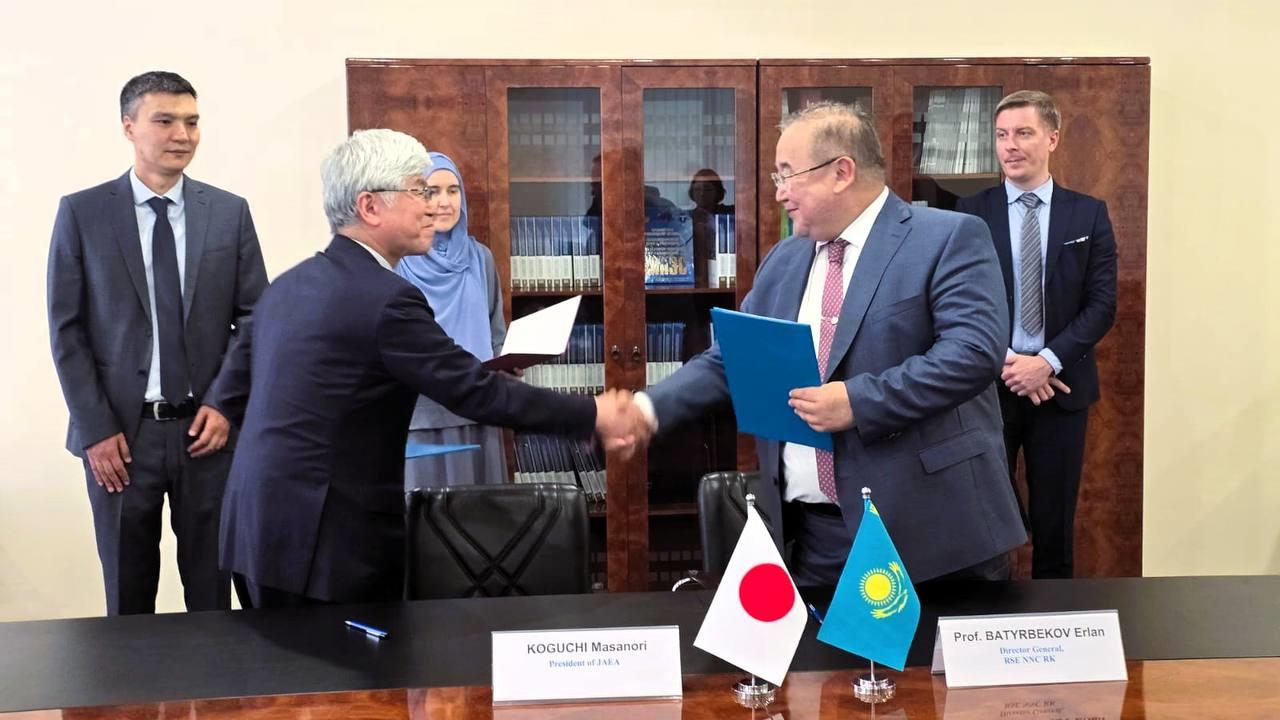
Kazakhstan, Japan Deepen Co-Op On Generation IV Reactor Safety Research
(MENAFN- Trend News Agency)
BAKU, Azerbaijan, June 3. Erlan Batyrbekov,
Director General of Kazakhstan's National Nuclear Center, and
Masanori Koguchi, President of the Japan Atomic Energy Agency
(JAEA), discussed expanding cooperation in nuclear safety research
for Generation IV reactors during a meeting in Almaty, Trend reports via the Kazakh
Agency for Atomic Energy.
The sides reviewed joint achievements and prospects for further cooperation in research on the safety of fast neutron reactors. A key topic of the talks was the continued implementation of the EAGLE experimental project, aimed at studying safety aspects of sodium-cooled fast reactors, including severe accident scenarios involving core melting.
The parties also discussed the signing of a Memorandum of Cooperation between JAEA and Kazakhstan's National Nuclear Center, as well as an agreement on the implementation of the first stage of the next phase of the project.
The EAGLE project has been implemented since the early 2000s and focuses on experimental research into the safety of fast neutron reactors. Over the past two decades, approximately 200 methodological tests, two medium-scale and nine full-scale reactor experiments, as well as more than 65 out-of-reactor experiments, have been conducted.
--
Legal Disclaimer:
MENAFN provides the
information “as is” without warranty of any kind. We do not accept
any responsibility or liability for the accuracy, content, images,
videos, licenses, completeness, legality, or reliability of the information
contained in this article. If you have any complaints or copyright
issues related to this article, kindly contact the provider above.
Most popular stories
Market Research

More Story






Comments
No comment