







403
Sorry!!
Error! We're sorry, but the page you were looking for doesn't exist.
All The Reasons Cambodia Should Join The CPTPP
(MENAFN- Asia Times)
The natural instinct of any government facing a more fragmented global system is to guard its policy flexibility and keep its hands free to respond to whatever comes next. But the countries that consistently attract long-term investment tend to choose a different path.
They bind themselves to rules they cannot easily change because, when trade preferences erode and geopolitical shifts reshape market access, the most valuable asset a developing economy can offer is credibility and predictability.
That choice makes Cambodia's move toward accession to the Comprehensive and Progressive Agreement for Trans-Pacific Partnership (CPTPP) important.
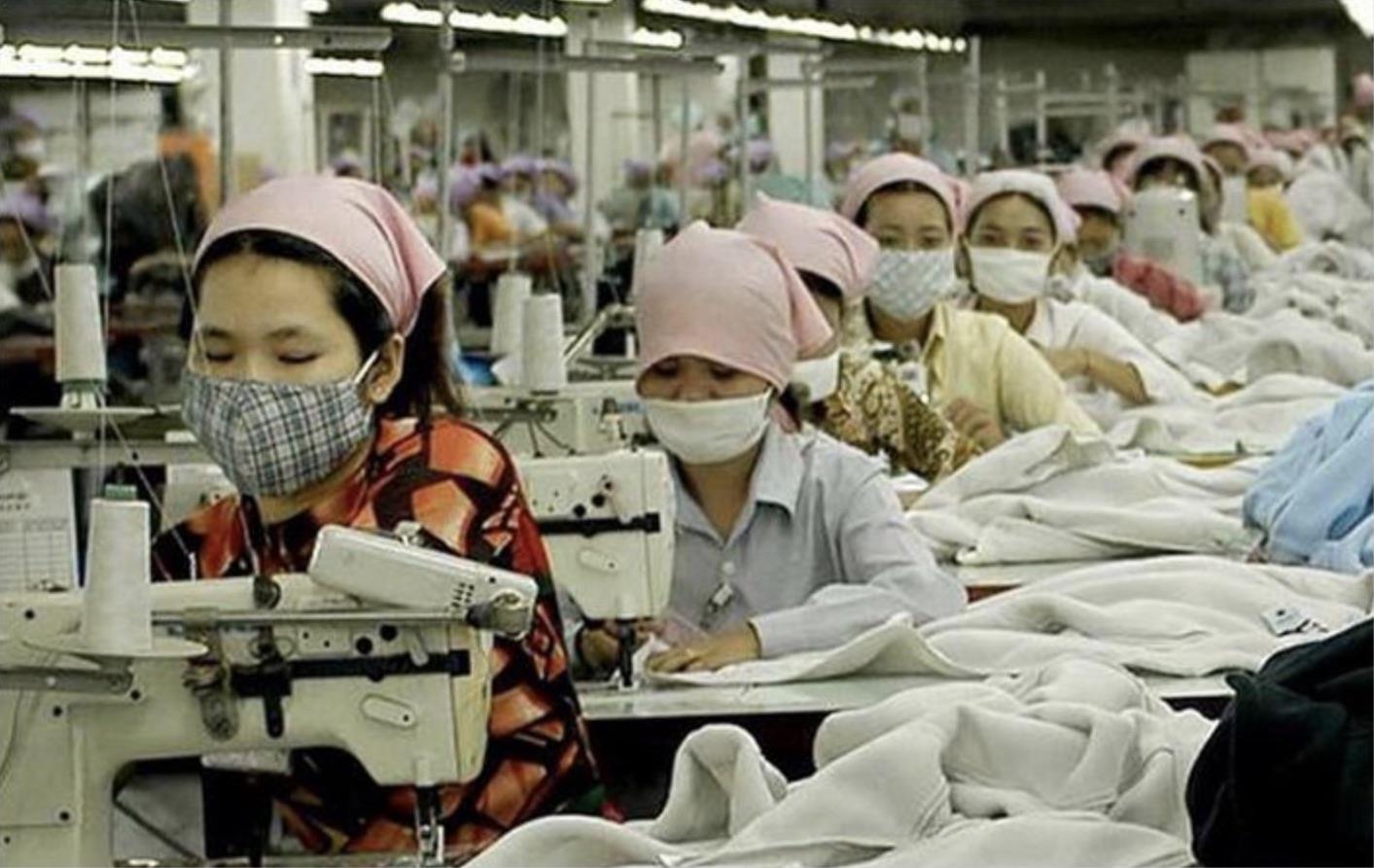
Cambodia is approaching a major transition as the preferential arrangements that have supported its garments and agricultural exports begin to fade with its graduation from Least Developed Country (LDC) status in 2029.
Over the past decades, Cambodia has capitalized on peace and stability as foundations for growth, and now it must build on those gains by deepening integration into predictable international rules.
Senior Minister Sok Siphana, who led Cambodia's World Trade Organization (WTO) accession and now leads Cambodia's CPTPP assessment and negotiating work, has stressed that small and open economies such as Cambodia must deepen their integration into rules-based frameworks as the country moves toward the post-LDC period.
For Cambodia, the deeper logic of joining lies not only in market access but also in credibility and long-term competitiveness. A government seeking long-term investment asks investors to trust that its regulatory environment will remain stable.
Yet such promises have limited force because policy can change when conditions change. That risk raises financing costs, shortens investment horizons, and pushes capital toward quick returns rather than toward investment that supports industrial upgrading.
Latest stories Xi's new US-China formula signals a self-confident shift in terms Xi closes the door after promising US CEOs to open wider Why the Shangri-La Dialogue finally really matteredFor Cambodia, the issue is not just more investment but better investment. The country needs capital that brings technology, skills, stronger links with domestic firms, and lasting productivity gains.
Growth depends less on the sheer volume of money entering the economy and more on whether that capital raises productive capacity, helps firms upgrade, and creates stronger backward linkages between foreign investors and local suppliers.
By attracting more stable, high-quality investment, Cambodia can generate powerful spillover effects through technology transfer and broader economic participation, ultimately supporting the development goals set out in Vision 2050.
However, this hinges on credibility. This problem lies at the center of the institutional economics developed by Acemoglu, Johnson, and Robinson, who argue that the quality of economic institutions is a fundamental driver of long-run growth.
Their core insight is that markets do not operate in a political vacuum. Property rights, contract enforcement, and regulatory consistency all depend on institutions that shape what governments can credibly promise and what private actors can reasonably expect.
If firms believe that rules can be rewritten whenever political incentives change, they will invest less, innovate less, and avoid commitments that are costly to reverse. Where power is concentrated, those who hold it have greater room to reshape economic rules in their own interest.
This is where the CPTPP matters for Cambodia, as the agreement has no country categories. All members must meet the same high standards, and applicants must satisfy the Auckland Principles, which require preparedness to meet the agreement's standards, a demonstrated pattern of compliance with trade commitments, and consensus support from all existing members before accession is granted.
Because Cambodia must meet these rigorous requirements before joining, this pre-accession condition forces domestic reform. In the language of institutional economics, it creates an external constraint on political discretion that can partly substitute for domestic checks and balances, not by removing state authority but by tying it to enforceable commitments.
This is particularly impactful given that the agreement covers a wide range of modern economic activities, including goods, services, investment, and digital trade, while its intellectual property chapter is among the most comprehensive in major trade agreements.
Ultimately, to join the CPTPP, Cambodia must align its legal and regulatory framework with CPTPP standards, which entails reforming domestic systems.
This is why accession is both a reform instrument and a market access mechanism. For Cambodia, the value of CPTPP lies not only in the preferences it may secure but in the discipline it brings to domestic reform.
The process requires legal and regulatory alignment, better coordination across institutions, and a willingness to make domestic systems more predictable for outside actors.
Sign up for one of our free newsletters-
The Daily Report
Start your day right with Asia Times' top stories
AT Weekly Report
A weekly roundup of Asia Times' most-read stories
In practice, accession can help lock in reforms that might otherwise be weakened, delayed, or reversed under domestic pressure. It can also encourage a more coherent policy environment, where rules are clearer, implementation is more consistent, and investors can plan with greater confidence.
To be sure, CPTPP accession carries costs. The agreement requires substantial upgrades to intellectual property protection, environmental standards and regulatory transparency that will strain Cambodia's administrative capacity.
Some domestic industries may face competition for which they are not ready. Yet these challenges are precisely why the reform matters. Without external pressure, other priorities would likely delay or weaken these necessary changes.
Cambodia's preferences will not last forever, so it must build a more durable basis for competitiveness. While the market access benefits of the CPTPP are clear, its deeper value lies in the credibility and discipline it brings.
The real trade-off is between preserving policy flexibility in the short term and building a more predictable environment in the long term. By binding itself to external rules, Cambodia gives investors greater confidence that commitments will endure and strengthens the productivity and investment it needs to realize Vision 2050.
Chhai Bunsonareach is research associate at the Centre for Advanced Research and Legal Studies (CARLS), Asian Vision Institute (AVI), focusing on geopolitics, international affairs, and regional integration. He was previously a Dongfang Scholar at Peking University.
Thank you for registering!
-
Share on X (Opens in new window)
Share on LinkedIn (Opens in new window)
LinkedI
Share on Facebook (Opens in new window)
Faceboo
Share on WhatsApp (Opens in new window)
WhatsAp
Share on Reddit (Opens in new window)
Reddi
Email a link to a friend (Opens in new window)
Emai
Print (Opens in new window)
Prin

Legal Disclaimer:
MENAFN provides the
information “as is” without warranty of any kind. We do not accept
any responsibility or liability for the accuracy, content, images,
videos, licenses, completeness, legality, or reliability of the information
contained in this article. If you have any complaints or copyright
issues related to this article, kindly contact the provider above.
Most popular stories
Market Research

More Story








Comments
No comment