







403
Sorry!!
Error! We're sorry, but the page you were looking for doesn't exist.
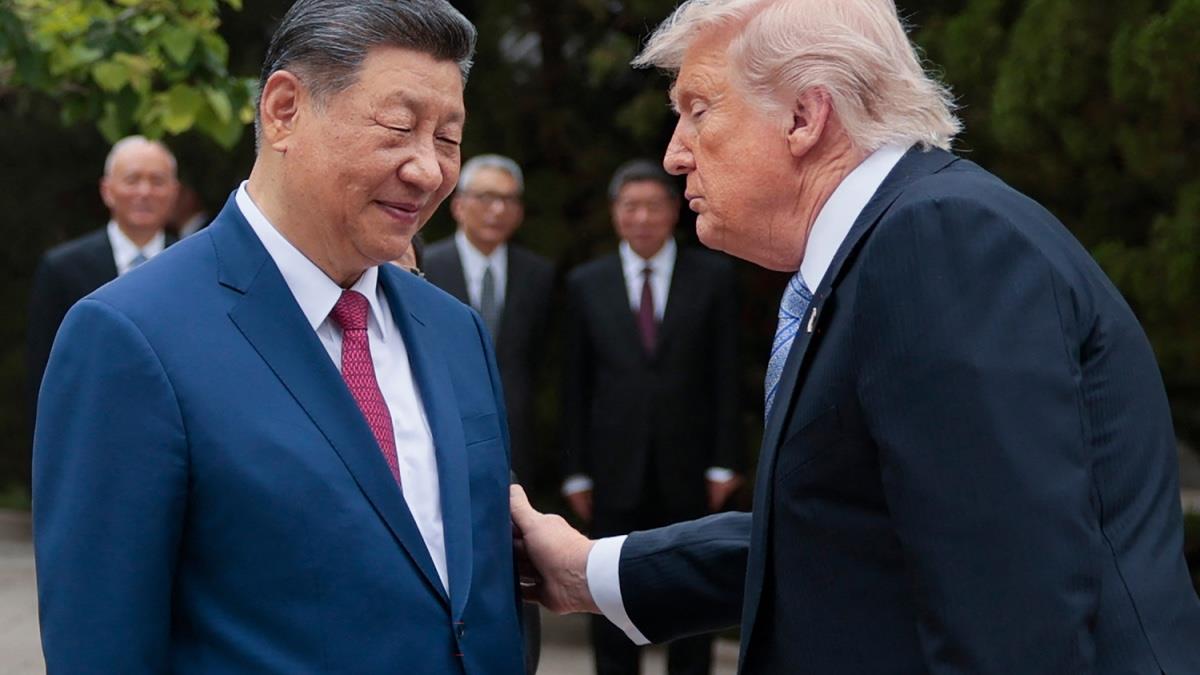
Xi's New US-China Formula Signals A Self-Confident Shift In Terms
(MENAFN- Asia Times)
One of the most notable outcomes of last month's Xi-Trump summit in Beijing was not tangible. Rather, it was Xi Jinping's introduction of a new authoritative formulation, or tífǎ, for US-China relations.
Such authoritative concepts have long been an important means for the Chinese Communist Party (CCP) to convey the top leader's or collective leadership's priorities, strategic assessments, historical judgments and policy programs at a given point in time.
Historically, tífǎ have also been important indicators of shifting ideological and policy terrain, and as a means for top leaders to define and build their political agendas.
This has certainly continued to be the case under Xi's leadership, where tífǎ have been promulgated on all manner of policy domains, ranging from foreign policy to ethnic minority policy.
What, then, does Xi's promulgation of“constructive strategic stability” as the new guiding formulation for US-China relations mean?
As reported by state Chinese outlet Xinhua, the formulation is defined as having four layers:“positive stability with cooperation as the mainstay”,“stability with moderate competition”,“stability with manageable differences,” and“an enduring stability with promises of peace.”
In a subsequent press briefing, Foreign Minister Wang Yi provided more details on each of these.
Latest stories Xi closes the door after promising US CEOs to open wider Why the Shangri-La Dialogue finally really mattered Is Hormuz the US dollar's Suez?“Positive stability with cooperation as the mainstay”, Wang suggested, should be the baseline condition of bilateral relations, reflective of the deep economic interdependence between the two countries where“neither can cut the other out, nor prosper without the other.”
“Stability with moderate competition”, in turn, indicates Beijing's preference for the establishment of guardrails to ensure that“competition is kept within proper limits and is not turned into a zero-sum game.”
Wang then provided a clear indication of what these“proper limits” might be by asserting that the“bottom line” is that both parties must“respect each other's social systems and development paths, respect each other's core interests and major concerns, and respect each other's right to development.”
Only if this“bottom line” is respected can bilateral relations attain the overarching objective of“enduring stability.”
This formulation is significant for at least two reasons. First, it demonstrates that while Beijing clearly sees US-China relations as“competitive” it now wishes to make it a bounded or managed competition.
This stands in contrast to China's position on the issue of guardrails during much of the Biden administration's term, where it was the US side that appeared to have more interest in establishing them. Then, the Chinese position was informed by a perception that the US was a declining power and that, as Xi declared in March 2021,“time is on our side.”
With Trump's return to the White House, China's perception of US decline has not changed but rather has been augmented by a view that the US is now more prone to“use war and conquest and the threat of war” to“compensate for America's declining economic competitiveness.”
This, as vice dean of the School of International Studies at Renmin University, Jin Canrong, argues, means that“America's current toughness and arrogance do not reflect a true rise in strength” but rather demonstrate the acceleration of its decline through“self-depletion” of its military, economic and diplomatic resources.
In this context, as Foreign Minister Wang phrased it, guardrails are now required to ensure“the relationship should not be like a roller coaster.”
Second, and more significantly, the new formulation frames China as a peer and equal of the US in contributing to international order and stability.
Sign up for one of our free newsletters-
The Daily Report
Start your day right with Asia Times' top stories
AT Weekly Report
A weekly roundup of Asia Times' most-read stories
“A positive outlook of China-US cooperation”, Wang argued,“will provide more certainty for both countries' development and for the international situation.” As such,“constructive strategic stability” should“be a goal both sides uphold.”
The implication here, as Zongyuan Zoe Liu notes, is that“the United States should respect China's core interests, refrain from defining the relationship primarily as strategic competition and manage disputes within limits acceptable to Beijing.”
The Trump administration's apparent acceptance of this phraseology – if not its substance – will thus arguably be seen in Beijing as a win in its drive to establish the“proper limits” of US-China rivalry on its terms.
Dr Michael Clarke is associate professor of international politics and strategy at the Centre for Future Defence and National Security, Deakin University, and adjunct associate professor at the Australia-China Relations Institute, University of Technology Sydney.
Sign up here to comment on Asia Times stories OrThank you for registering!
-
Share on X (Opens in new window)
Share on LinkedIn (Opens in new window)
LinkedI
Share on Facebook (Opens in new window)
Faceboo
Share on WhatsApp (Opens in new window)
WhatsAp
Share on Reddit (Opens in new window)
Reddi
Email a link to a friend (Opens in new window)
Emai
Print (Opens in new window)
Prin

Legal Disclaimer:
MENAFN provides the
information “as is” without warranty of any kind. We do not accept
any responsibility or liability for the accuracy, content, images,
videos, licenses, completeness, legality, or reliability of the information
contained in this article. If you have any complaints or copyright
issues related to this article, kindly contact the provider above.
Most popular stories
Market Research

More Story







Comments
No comment