







403
Sorry!!
Error! We're sorry, but the page you were looking for doesn't exist.
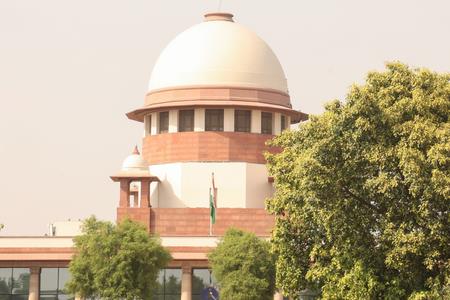
SC Forms Expert Panel To Reassess Definition Of Aravalli Hills
(MENAFN- IANS) New Delhi, June 3 (IANS) The Supreme Court has constituted a five-member High-Powered Committee (HPC) headed by the Director General of the Indian Council of Forestry Research and Education (ICFRE) to undertake a comprehensive scientific assessment of issues relating to the definition and demarcation of the ecologically sensitive Aravalli Hills and Ranges.
A three-judge Bench of Chief Justice of India (CJI) Surya Kant and Justices Joymalya Bagchi and Vipul M. Pancholi said the expert panel would examine the environmental, geological and ecological implications of the parameters adopted for identifying the Aravalli range and submit its report by August 31, 2026.
The apex court appointed the Director General of ICFRE as the ex officio Chairperson of the committee, with former Forest Survey of India Director General Dr Subhash Ashutosh, retired Geological Survey of India Director Dr Rajendra Kumar Sharma, former MoEFCC Joint Secretary Brij Mohan Singh Rathore, and former Delhi University Botany Department head Prof. Ashok K. Bhatnagar as members.
It also named Professor Jagdish Krishnaswamy, Dean of the School of Environment and Sustainability at the Indian Institute for Human Settlements, and Professor Laxmikant Sharma of the Central University of Haryana as special invitees to assist the committee from time to time.
“The objective underlying its constitution is to ensure that the issues arising from the parameters delineated in paragraphs 9 and 10 of our order dated 29.12.2025 are examined by subject-matter experts possessing the requisite technical knowledge and expertise, particularly in light of the fragile ecosystem and rich biodiversity of the Aravalli Hills and Ranges,” the CJI Kant-led Bench said.
Stressing the need for expert scrutiny before any far-reaching decision is taken, the Supreme Court observed:“The proposed Committee would be expected to objectively assess the implications of the measures contemplated and assist this Court in determining whether their implementation may give rise to ecological, environmental, or other consequences that may subsequently prove difficult, if not impossible, to reverse.”
It added that any eventual course of action must be“informed, scientifically sound, and consistent with the principles of environmental protection and sustainable development”.
Directing the HPC to adopt a broad-based consultative approach, the CJI Kant-led Bench said the committee should invite suggestions from all stakeholders, including governments, environmentalists, conservationists, non-profit organisations, mining lease holders, project proponents, farmers, mine workers and local communities.
“Accordingly, we direct the High-Powered Committee to actively invite and consider suggestions from all relevant stakeholders. For this purpose, the Committee shall issue an appropriate public notice inviting representations, suggestions, and inputs from interested persons and entities,” the order said.
The apex court clarified that the issues identified in its earlier order were only indicative and not exhaustive, and the HPC would be free to expand the scope of its inquiry if it considered additional factors relevant to the preservation of the Aravalli ecosystem.
The matter has been posted for further hearing on September 7, following the committee's submission of its report by August 31, after undertaking a“comprehensive, balanced, and informed evaluation” of all relevant issues.
The proceedings stem from a suo motu case on the definition of the Aravalli Hills and Ranges.
In December last year, the Supreme Court had kept in abeyance its earlier directions prescribing a revised definition of the Aravalli Hills, observing that the recommendations of an expert committee and the top court's own observations were being misconstrued.
The CJI Kant-led Bench had then proposed the constitution of a fresh expert body to examine concerns that the revised definition -- which classified only landforms with an elevation of 100 metres or more as Aravalli hills -- could leave large ecologically connected areas outside the protective framework.
It had also sought an assessment of whether regulated mining could be permitted in gaps between hill formations without compromising ecological continuity. Subsequently, in January this year, the Supreme Court extended the stay on its earlier verdict and directed maintenance of status quo, while inviting suggestions from stakeholders for the constitution of a specialised committee to examine all aspects concerning the Aravalli range.
The issue has assumed significance amid concerns over mining activities and environmental degradation in the ancient mountain system spread across Rajasthan, Haryana, Delhi and Gujarat.
In March, Union Environment Minister Bhupender Yadav informed the Rajya Sabha that the Centre remained fully committed to the conservation of the Aravalli range and would extend complete cooperation in implementing the Supreme Court's directions.
“We are fully committed to conserving the Aravalli mountain range. If the top court requires any assistance from the government, we are ready to extend complete cooperation,” Yadav said, highlighting initiatives such as the Aravalli Green Wall Project, which aims to restore and protect the ecosystem across 29 districts linked to the range.

Legal Disclaimer:
MENAFN provides the
information “as is” without warranty of any kind. We do not accept
any responsibility or liability for the accuracy, content, images,
videos, licenses, completeness, legality, or reliability of the information
contained in this article. If you have any complaints or copyright
issues related to this article, kindly contact the provider above.
Most popular stories
Market Research

More Story






Comments
No comment