




403
Sorry!!
Error! We're sorry, but the page you were looking for doesn't exist.
Turning Volatility Into Virtue: How The UAE Is Building Sustainable Sovereignty
(MENAFN- Khaleej Times) The writer is Assistant Undersecretary for Policies and Economic Studies at the Ministry of Economy and Tourism.
In the traditional lexicon of international media, regional tension is often framed through the narrow lens of“uncertainty”. Headlines focus on the fragility of global logistics and the vulnerability of interconnected markets. However, seen from within the UAE, this narrative is being rewritten where rather than acting as a cause for hesitation, external volatility has been a powerful catalyst for progress.
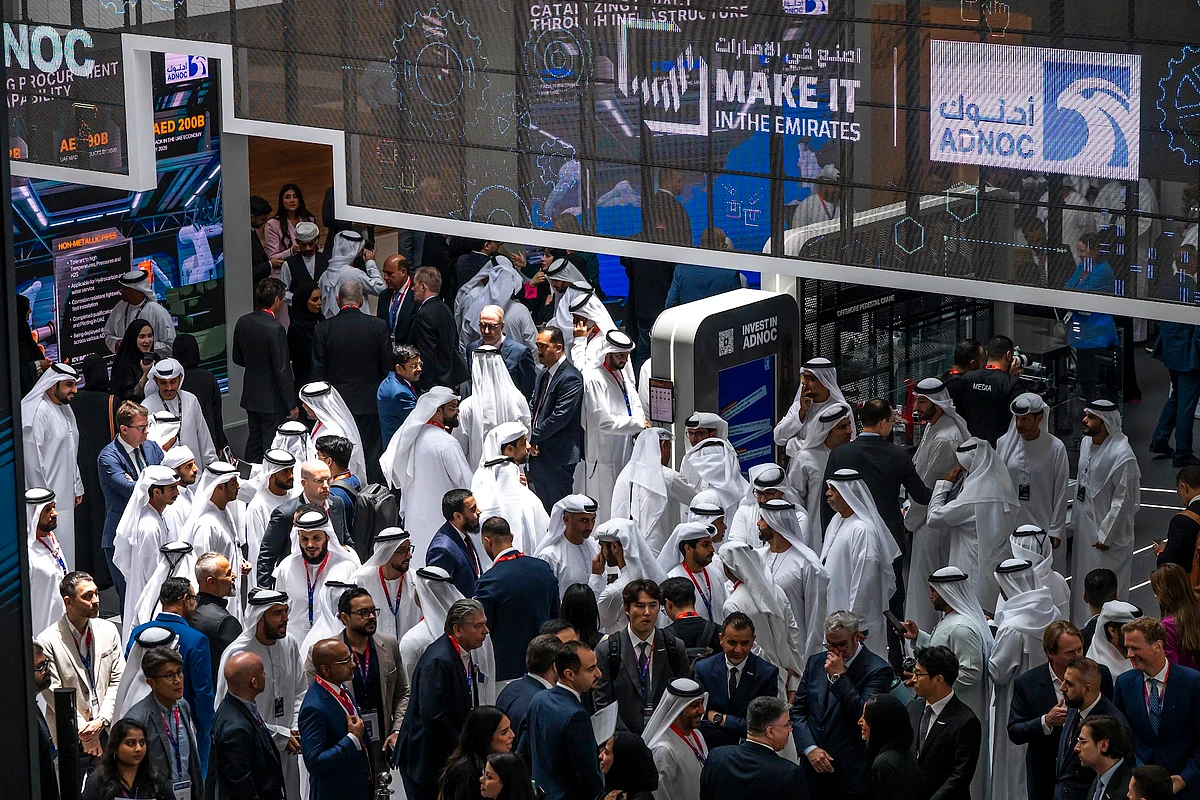
Recommended For You Trump says no more Israel troops going to Beirut; Hezbollah agrees to stop shootingThe current regional landscape – characterised by heightened tensions and the subsequent pressure on global supply chains – is accelerating a transformation that was already underway in the UAE. We are witnessing a strategic“fast-forwarding” of our national agenda, moving from a philosophy of global integration to one of resilient, domestic self-reliance. This was the bedrock of the upcoming 'Make it in the Emirates' forum last month and the driving force behind the newly announced Dh1 billion National Industrial Resilience Fund.
Resilience is not merely the ability to endure a crisis; it is the foresight to build systems that ensure a crisis can no longer impact us. By localising essential manufacturing and pioneering green technologies, the UAE is proving that a nimble, proactive state can turn geopolitical headwinds into a tailwind for sustainable growth.
The fuel of independence: the biodiesel breakthrough
The economic logic of sustainability has never been clearer than it is today. In April 2026, the price of traditional diesel in the UAE surged to Dh4.69 per litre, a staggering 70 per cent increase from the Dh2.72 recorded in March. This volatility, driven by global conflict and increased logistics costs, serves as a stark reminder of the risks of crude-oil dependency.
In response, the UAE is leveraging its position as the GCC's primary biodiesel hub – currently accounting for approximately 91 per cent of regional production. Historically, our biodiesel sector was an export-heavy engine, with 85 per cent of product heading overseas. That model is shifting. By pivoting this capacity toward domestic industrial and heavy transport fleets, we are decoupling our internal logistics from the erratic fluctuations of the global oil market.
The UAE has positioned biodiesel as a cost-competitive, lower-emission alternative, encouraging companies and consumers to reduce operational emissions without major infrastructure changes. Domestic adoption is gaining momentum, with several logistics and delivery companies' fleets already making the switch.
Beyond an environmental enabler, transitioning to waste-feedstock biodiesel is a fiscal imperative that insulates our economy and secures movement.
Securing the table: the National Industrial Resilience Fund
Food security remains the ultimate benchmark of sovereignty. With the UAE currently importing 80-90 per cent of its food, the establishment of the Dh1 billion National Industrial Resilience Fund represents a decisive shift toward domestic security.
The fund is specifically designed to scale local production through the integration of Artificial Intelligence and advanced manufacturing. Phase one focuses on the“essentials of life” – bottled water, dairy, eggs, poultry, bread and seasonal vegetables. A surge in local production is already visible at the retail level, with locally produced fruits and vegetables such as tomatoes, mushrooms and berries becoming increasingly prominent in supermarkets. Major farms are concentrated in Al Ain, Ras Al Khaimah and Dubai, with companies such as Pure Harvest Smart Farms, UNS Farms and Madar Farms leading production. The poultry sector is not lagging behind and has emerged as one of the most important pillars supporting the country's supply of locally produced protein.
By reinforcing these supply chains, we are ensuring that market stability is maintained regardless of external disruptions. This is further bolstered by recent Cabinet approvals to prioritise“Made in the Emirates” products across retail and digital platforms, ensuring that the strength of our national industry is visible and accessible to every resident.
Circularity as a primary resource
In times of crisis, the definition of“waste” changes. What was once discarded is now recognised as a vital source of raw materials, and the UAE is repositioning the circular economy not as a primary resource stream. This shift is embodied in several initiatives like Bee'ah's Sharjah waste-to-energy plant, Tadweer Group's recycling and resource recovery programmes in Abu Dhabi, and Landmark Group's textile recycling initiative in Dubai, which support resource recovery while reducing dependence on primary raw material streams.
Our competitive advantage in this space is clear: relatively low energy costs make light industrial production more cost-effective here than abroad. We are also moving beyond simple import substitution to high-value creation. For example, companies like Palmade are transforming local date-palm waste into biodegradable cutlery, replacing plastic imports with a superior, locally-derived alternative.
This ecosystem of collaboration is formalised through the“Make it in the Emirates” initiative and a unified national mark of quality. We are creating an environment where companies – supported by efficient regulation and accessible leadership – are better and more resilient because they operate together. The rise in the number of UAE EV manufacturers, be it Rabdan, Al Damani, or Sulmi motorbikes, reflects the effectiveness of this model, driven by business-friendly policies and an enabling ecosystem that continues to encourage investment in clean and emerging sectors.
The Green Innovation District
The most tangible manifestation of the UAE's philosophy is the Green Innovation District at Expo City Dubai. Announced last October, the District was designed to be ahead of its time and today's reality has made it essential.
The Green Innovation District is a practical, landmark initiative designed to connect businesses under a shared goal of driving sustainable innovation to maximise environmental and economic impact. By providing specialised R&D facilities and agritech infrastructure, the District allows sustainability-focused businesses to scale independently of global disruptions. The Green Licence is already attracting a new wave of environment-conscious startups that prioritise local resource utilisation.
While the District is open to global players, it is strategically aligned with the needs of locally-oriented SMEs. It offers a city-wide testbed for real-world solutions, creating self-sustaining hubs of productivity that function as the lungs of our new economy.
A proactive defence
The UAE's Net Zero 2050 Strategy and our early adoption of green standards have positioned the nation as a global magnet for light industry looking to decarbonise. However, our motivation is deeper than mere market attraction.
Our commitment to a green, circular and localised economy is our most powerful proactive and defensive strategy. We are demonstrating to the world that when the path ahead is uncertain, the surest way to find your way is to build the road yourself. And as we gather for 'Make it in the Emirates' this May, we do so as a nation that has leveraged a challenge to build an unbreakable foundation for the future.

Legal Disclaimer:
MENAFN provides the
information “as is” without warranty of any kind. We do not accept
any responsibility or liability for the accuracy, content, images,
videos, licenses, completeness, legality, or reliability of the information
contained in this article. If you have any complaints or copyright
issues related to this article, kindly contact the provider above.
Most popular stories
Market Research

More Story





Comments
No comment