

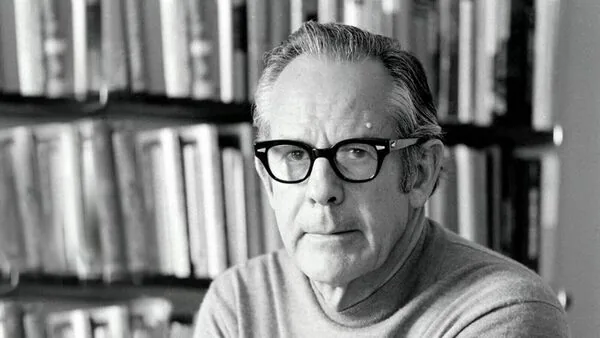
Quote Of The Day By Rollo May:“This Is Me And The World Be Damned” - Life Lessons On Individuality And Authenticity


The quote of the day, “Every human being must have a point at which he stands against the culture, where he says, 'This is me and the world be damned!'”, remains one of the most frequently cited observations associated with May's work on human development, freedom and self-discovery.
Meaning behind the quoteThe statement is commonly referenced alongside May's broader view of psychotherapy and personal growth. As he wrote,“Therapy isn't curing somebody of something; it is a means of helping a person explore himself, his life, his consciousness.” Within that reflection, May argued that every individual eventually reaches a moment when they must affirm their identity rather than rely solely on cultural expectations or social approval.
Also Read | Quote of the day by Sara Blakely: 'Don't be intimidated by what you don't know'The quote continues to resonate because it addresses a universal tension between belonging and individuality. Every society establishes norms about behaviour, success, ambition and acceptable ways of living. While such expectations can provide structure and stability, they can also limit personal expression when individuals feel compelled to suppress their beliefs, values or aspirations to fit in.
For many readers, the significance of May's observation lies in its distinction between authenticity and rebellion. He was not advocating opposition for its own sake, nor encouraging arrogance or reckless defiance. Instead, the psychologist suggested that genuine personal growth requires an inner conviction strong enough to withstand external pressure when necessary.
The phrase“stands against the culture” reflects this idea. Culture can offer community, meaning and shared understanding, but it can also encourage imitation, fear of judgement and silence. May's argument was that becoming fully human requires the ability to protect one's sense of self, even when doing so attracts criticism or disapproval.
Life lessons from Rollo May's quoteSeveral practical lessons emerge from the quote. Authenticity often demands courage, particularly when honesty comes at the cost of comfort or popularity. Persistent conformity, meanwhile, can gradually become self-betrayal if individuals repeatedly ignore their own convictions to satisfy others. The quote also highlights the importance of developing an“inner centre” capable of resisting the shifting pressures of trends, public opinion and social expectations.
May believed that meaningful leadership frequently begins with this willingness to stand apart. Throughout history, many influential figures challenged accepted norms before their ideas gained broader acceptance. In that sense, social change often begins with individuals prepared to defend principles that are initially unpopular.
Also Read | Quote of the day by Jon Bon Jovi: 'You can't win 'til you're not...' Who was Rollo May?Born in 1909, May became one of the leading figures in existential psychotherapy in the United States and played a significant role in the development of humanistic psychology alongside thinkers such as Abraham Maslow and Carl Rogers. His major works included Love and Will, The Meaning of Anxiety, The Courage to Create, Man's Search for Himself and Freedom and Destiny.
Across these works, May explored themes of anxiety, creativity, freedom, love and the search for meaning. His writings argued that psychological wellbeing is not simply the absence of discomfort but also the presence of purpose, self-awareness and personal responsibility.
Rollo May's influence and legacyRollo May is widely recognised for introducing existential ideas into mainstream psychology, encouraging people to confront fundamental questions about freedom, anxiety, courage and the search for meaning. Rather than viewing psychological struggles as problems to be eliminated, he explored how they shape human experience and personal growth.
A key aspect of May's philosophy was his belief that individuals are active participants in their own lives. Humanistic psychology scholars have noted that he emphasised people as conscious beings who interpret, experience and respond to the world, rather than passive subjects shaped entirely by external forces. This perspective is closely reflected in his famous quote about standing against cultural pressures. For May, individuals possess the capacity to make choices, define themselves and act according to their convictions.
His ideas remain relevant because many of the challenges he wrote about-anxiety, social conformity, isolation and uncertainty-continue to define modern life. May argued that psychological wellbeing involves more than seeking comfort or avoiding distress. It requires honesty, self-awareness and the willingness to embrace freedom and responsibility. His work continues to resonate with readers looking to live authentically in an increasingly complex world.
Why this quote still connects with modern readersThe quote's relevance has arguably grown in the digital age. Social media platforms encourage constant comparison, public validation and the pressure to present carefully curated versions of oneself. Young people face expectations around career choices, professionals navigate demands for constant performance, and individuals frequently encounter pressure to conform to social or institutional norms.
Also Read | Quote of the day by Homer: 'Of all creatures that breathe and move...'Against that backdrop, May's words continue to offer a clear message: a meaningful life requires a point at which personal truth takes precedence over approval. Whether in relationships, workplaces or everyday decisions, the challenge remains the same - determining where compromise ends and authenticity begins.
More than half a century after May first articulated these ideas, his observation remains a powerful reminder that personal identity is not discovered through endless adaptation to others' expectations, but through the courage to remain true to oneself when it matters most.

Legal Disclaimer:
MENAFN provides the
information “as is” without warranty of any kind. We do not accept any
responsibility or liability for the accuracy, content, images, videos,
licenses, completeness, legality, or reliability of the information
contained in this article. If you have any complaints or copyright issues
related to this article, kindly contact the provider above.
Comments
No comment